
 English
 русский
 Français
 Español
 Português
 عربى
عربى

-


Model:
-

Model:
-

Model:

Press Brake Machine Guide: Types, Specs & Buying Tips
2026-07-24
Content
What Is a Press Brake Machine?
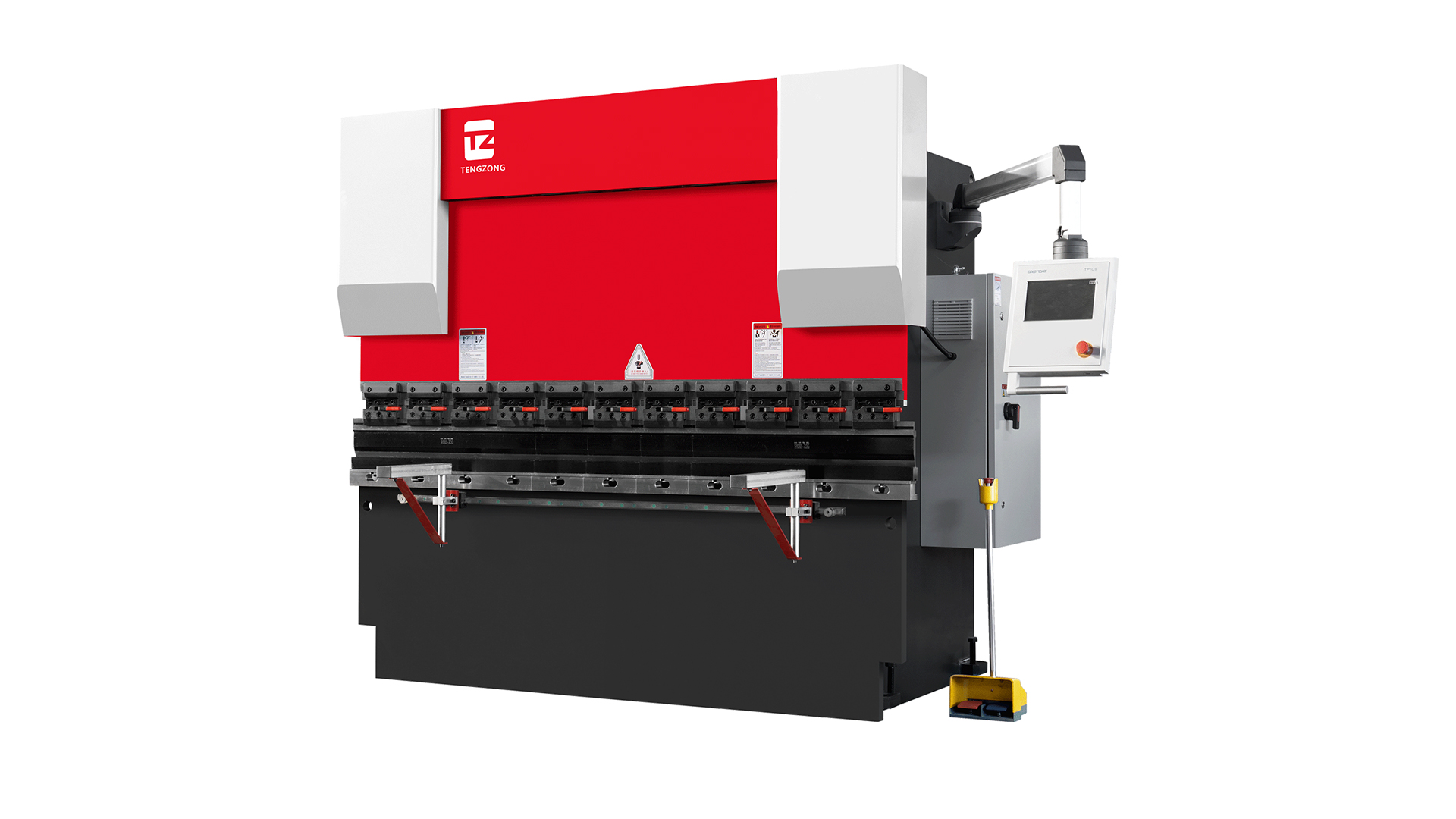
Every fabrication shop that forms sheet metal into brackets, enclosures, or structural panels relies on one core machine: the press brake. At its simplest, a press brake machine is a piece of equipment that clamps a workpiece between a matching punch and die to bend it to a predetermined angle. Unlike shearing or rolling, press brakes create linear bends with controlled force and positioning, making them indispensable in industries from automotive to appliance manufacturing.
The machine’s defining capability is precision repeatability. Whether bending a single prototype or 10,000 identical parts, the press brake delivers consistent angles along the full bending length. Modern systems achieve this through synchronized ram movement, CNC backgauge positioning, and real-time angle correction. In North American job shops, the press brake is often the most heavily utilized forming tool after the laser cutter or turret punch.
How Does a Press Brake Work?
Fundamentally, a press brake operates by driving a top beam (the ram) downward, forcing the punch to press the sheet metal into a V-shaped die on the bottom bed. The bending angle is determined by how deep the punch enters the die opening, commonly called the “stroke depth.” The backgauge—a programmable stop—positions the sheet in the X-axis before each bend, while the Y-axis controls the ram position to within microns in high-end CNC models.
Synchronization is the critical technical detail. A hydraulic press brake uses either a torsion bar (mechanical linkage) or dual proportional valves with linear scales to keep both ends of the ram level. A servo-electric press brake, by contrast, uses ball screws and timing belts driven by independent motors that maintain synchronicity through closed-loop feedback. This choice directly affects bend accuracy, especially when forming long parts or working with high-tensile materials.
Press Brake Machine Types Compared
Selecting the right type determines your bend accuracy, energy consumption, and production speed. The drive system, control sophistication, and frame design separate one press brake from another. Below are the four categories most shops evaluate.
| Type | Drive System | Synchronization | Typical Precision | Best Suited For |
|---|---|---|---|---|
| NC Press Brake (Torsion Bar) | Hydraulic cylinder | Mechanical torsion bar | ±0.15° (dependent on operator) | Low-cost, simple bends; manual adjustments |
| CNC Hydraulic Press Brake | Hydraulic cylinder with servo-valves | Electro-hydraulic proportional valves + linear scales | ±0.05–0.1° | General fabrication, mixed batches |
| Servo-Electric Press Brake | Servo motors + ball screws / belt drive | Digital closed-loop feedback | ±0.01–0.03° | High precision, energy savings, clean-room compatible |
| Tandem CNC Press Brake | Two synchronized press brakes (hydraulic or electric) | Linked CNC control across both frames | Same as single machine | Extra-long or thick parts, structural steel |
For a more detailed breakdown, see our article on comparing NC vs CNC vs servo press brakes, which covers control differences in depth.
NC Press Brake
The NC press brake uses a torsion bar to mechanically couple the two hydraulic cylinders. It is a robust, budget-friendly choice when the required bend angle tolerance is not tighter than ±0.15°. However, the torsion bar synchronizes only during bending—not during approach or return—so deflection under load can produce angular variation, especially on parts longer than 6 feet. Many small shops still run these machines for simple brackets and utility fabrications where cycle time is less critical than capital cost.
CNC Hydraulic Press Brake
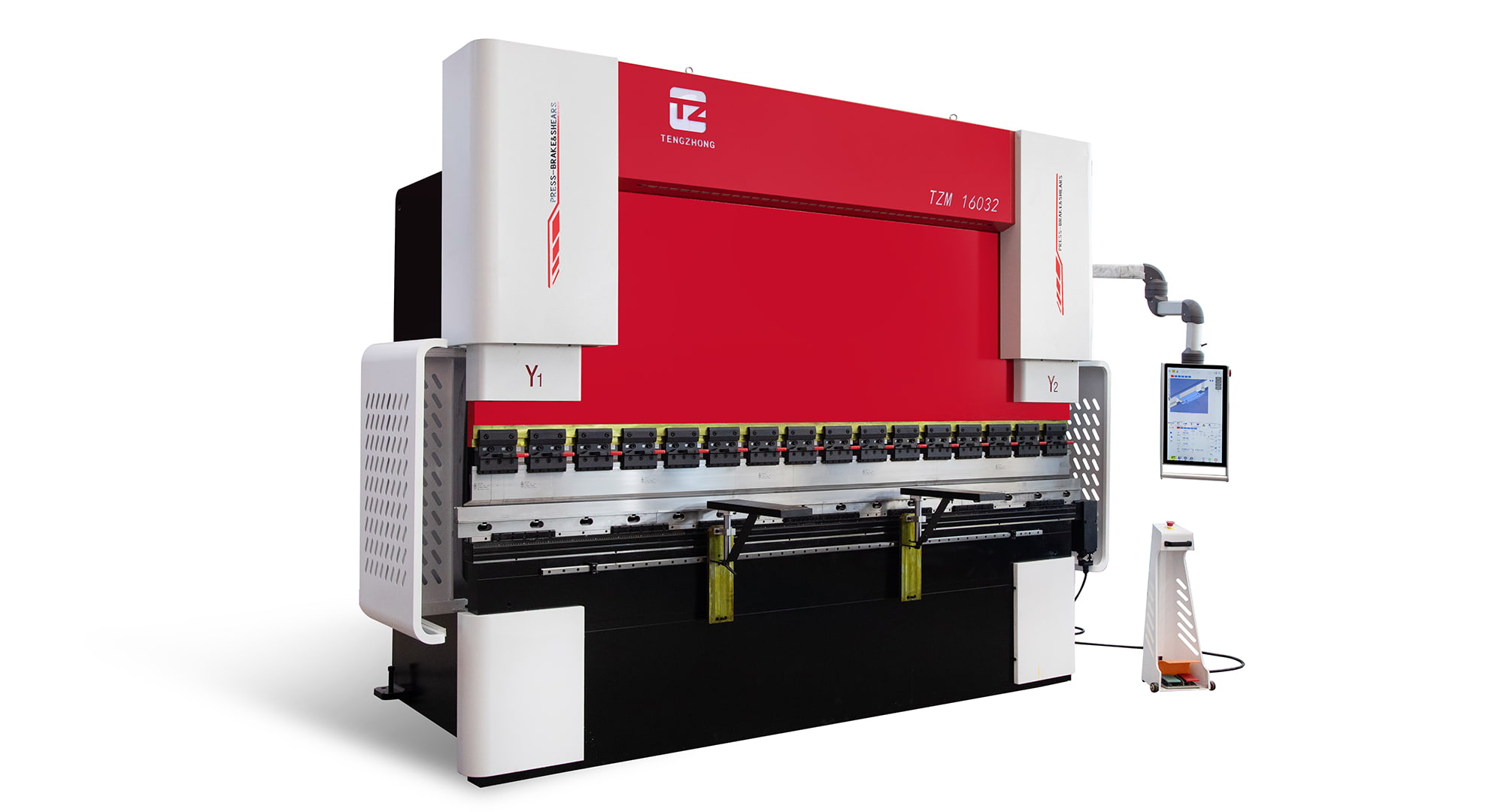
A CNC hydraulic press brake replaces the mechanical torsion bar with electro-hydraulic proportional valves and linear scales mounted on each side of the ram. The CNC controller compares left- and right-side positions in real time and adjusts oil flow to maintain perfect leveling. The result is repeatable accuracy in the ±0.05° range, automated ram movement, and programmable backgauges that store hundreds of bend programs. This category dominates mid- to high-volume fabricators. A modern example is the electric-hydraulic servo press brake, which combines hydraulic force with servo-driven pump control to reduce energy waste during idle.
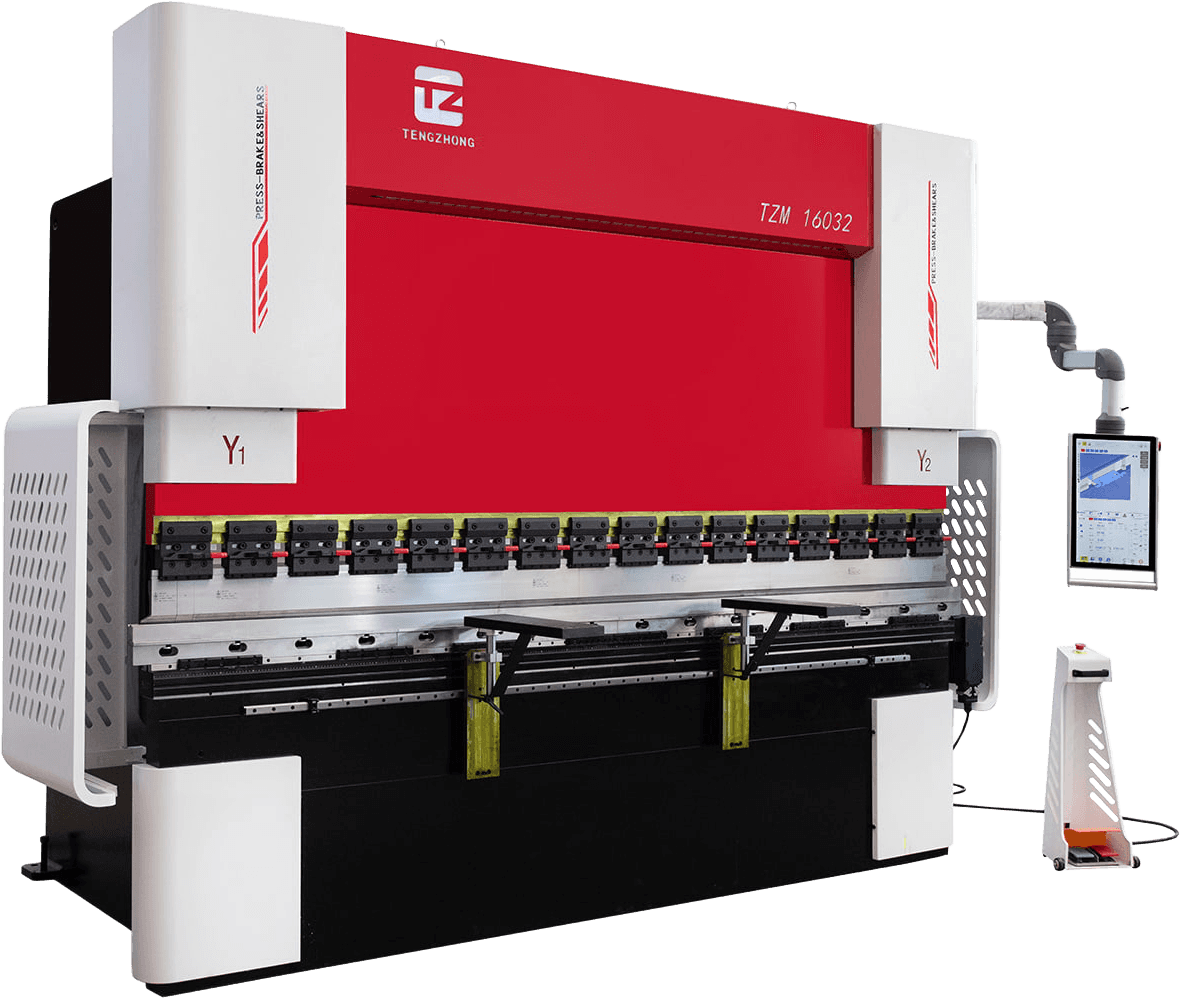 Custom Premium CNC Servo Press Brake Suppliers, OEM/ODM Company - Nantong TengzhNantong Tengzhong Machinery Manufacturing Co., Ltd. is China custom Premium CNC Servo Press Brake suppliers and OEM/ODM company, details:...View Product →
Servo-Electric Press Brake
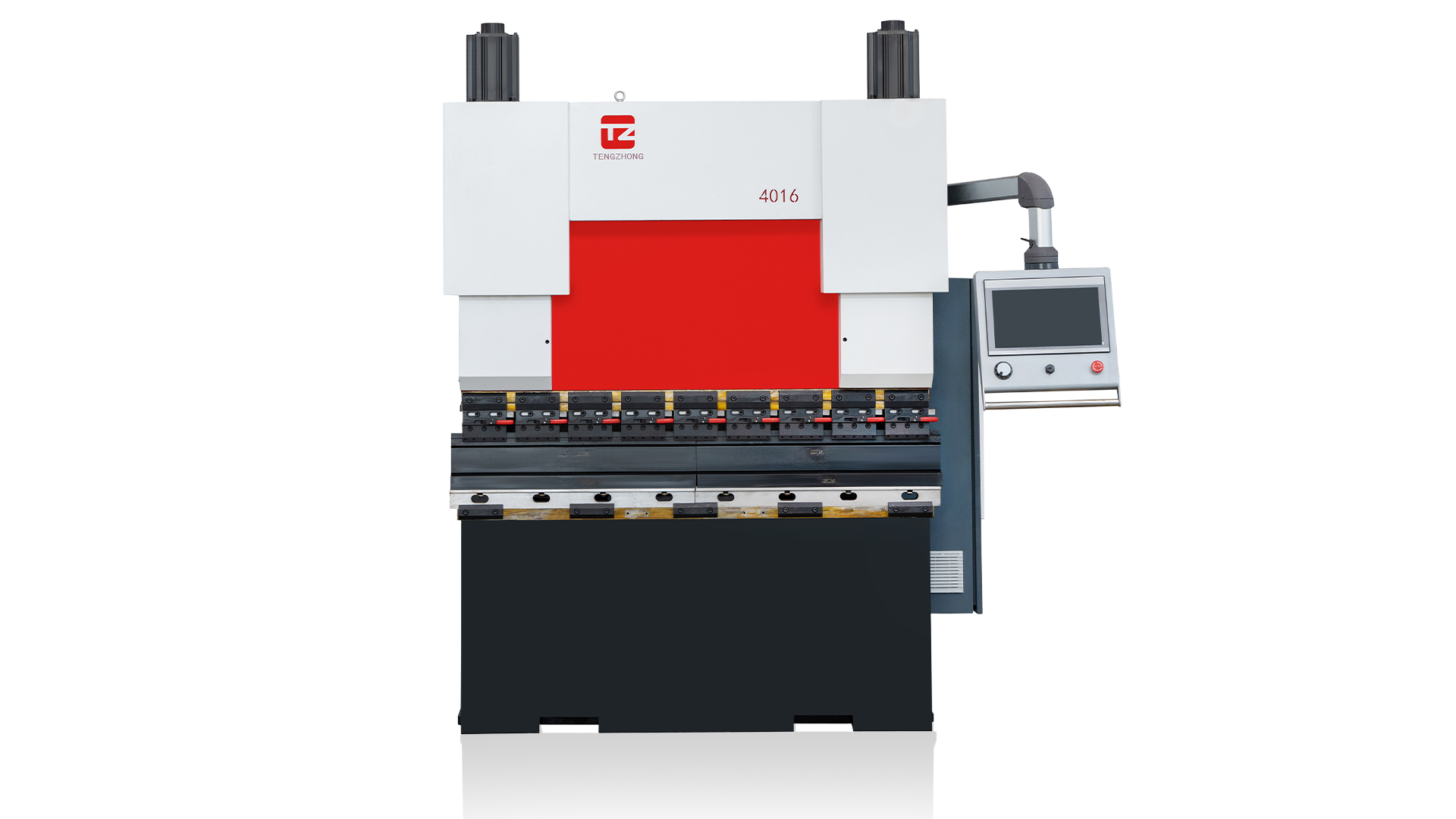
Servo-electric press brakes eliminate hydraulic oil entirely. Instead, a servo motor drives a ball-screw mechanism or high-tension belt that pushes the ram, with power drawn only during the bending stroke. This results in energy savings of up to 60% compared to hydraulic models. Because there is no hydraulic fluid to heat up, cold-start precision is immediate. Shops producing medical, electronics, or clean-room components often specify a CNC electric servo press brake for its silent operation, low maintenance, and the ability to hold angular tolerances below ±0.01° in full-throttle production.
 Custom CNC Servo Electric Press Brake Suppliers, OEM/ODM Company - Nantong TengzNantong Tengzhong Machinery Manufacturing Co., Ltd. is China custom CNC Servo Electric Press Brake suppliers and OEM/ODM company, details...View Product →
Tandem CNC Press Brake
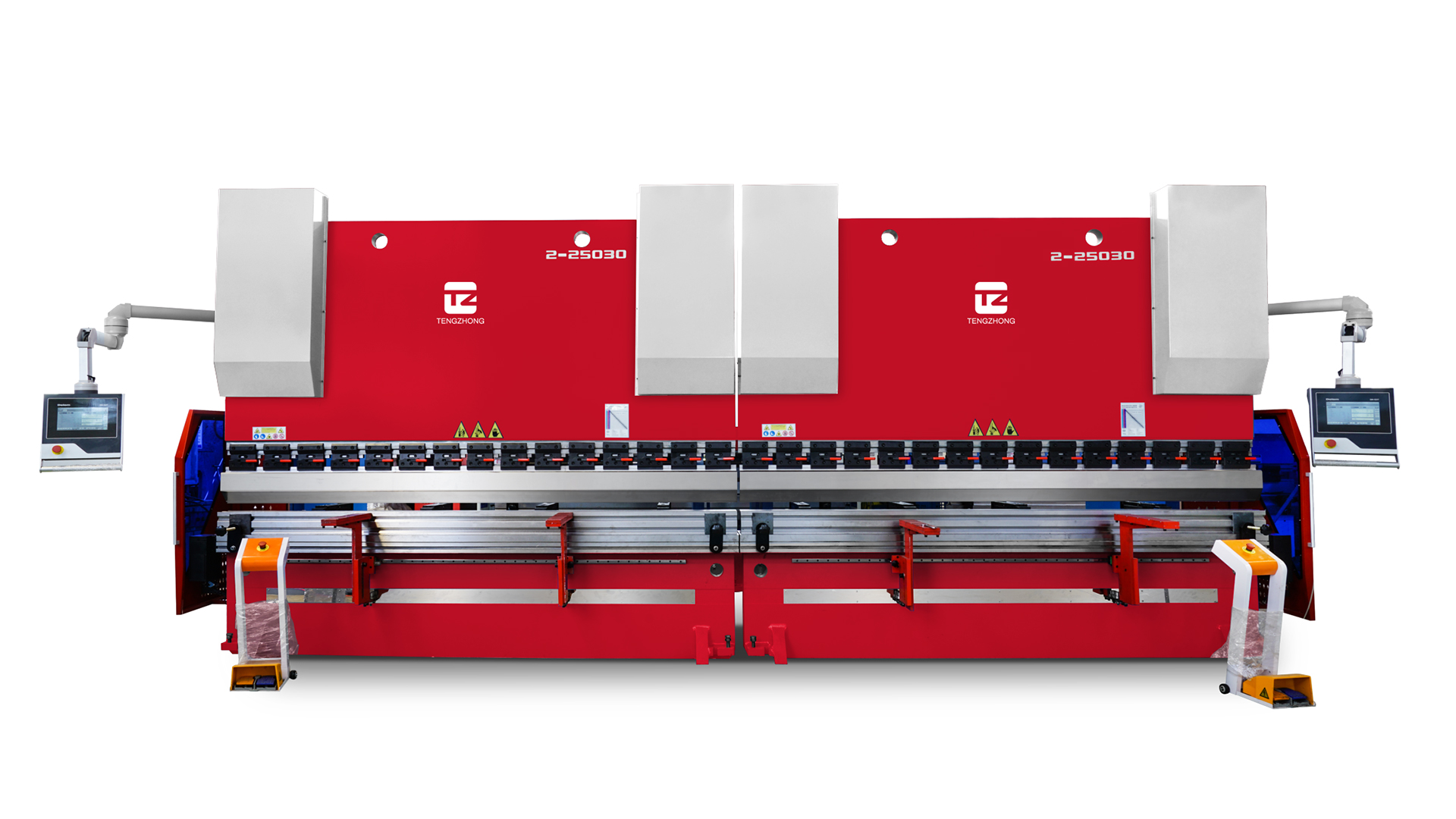
When parts exceed the bending length capacity of a single machine—think 20-foot structural beams or oversized architectural panels—two press brakes are mechanically aligned and electronically linked as a tandem system. Both rams operate as one, and a single CNC interface controls the entire setup. This approach avoids the massive investment of a dedicated super-large press brake and grants flexibility because the machines can be decoupled for separate jobs when needed. The tandem CNC press brake for large parts is a strategic choice for plants that occasionally handle outsized fabrications but still need day-to-day productivity.
Custom Tandem cnc press brake Suppliers, OEM/ODM Company - Nantong Tengzhong MacNantong Tengzhong Machinery Manufacturing Co., Ltd. is China custom Tandem cnc press brake suppliers and OEM/ODM company, details: A Tand...View Product →Key Specifications to Consider
A press brake’s catalog page is filled with numbers, but three specifications define 90% of buying decisions.
Bending force (tonnage): The force required depends on material type, thickness, and die opening. A rough formula many estimators use is: (1.42 × material tensile strength × thickness² × bend length) / die opening. For mild steel, shop-floor rules of thumb often approximate 15–20 tons per foot for 10-gauge material over a standard V-die. Under-sizing leads to permanently bowed frames; over-sizing wastes energy and money.
Bending length: The length of the tooling and bed determines the widest part you can form in a single setup. A 10-foot bed handles up to 120-inch panels. If you regularly need longer, a tandem configuration may be more cost-effective than a single expensive 20-foot press.
Backgauge axes: Minimum is a single-axis (X) positioner. Multi-axis systems (X, R, Z1, Z2) add programmable finger height, left-right independent stops, and depth control, which dramatically reduce setup time on complex parts with multiple bend sequences. CNC hydraulic and servo-electric models typically support at least 4 axes.
Other parameters like open height (daylight), throat depth, and stroke length also influence tooling accessibility and part geometry clearance, but force and length remain the gatekeepers.
How to Choose the Right Press Brake Machine
A methodical approach prevents overpaying for capability you won’t use or, worse, buying a machine that can’t form your full portfolio.
Assess Your Material & Thickness
Audit the thickest, hardest material you form in production—mild steel, stainless, aluminum—and calculate the required tonnage with a safety margin of roughly 20%. If your work mixes 16-gauge aluminum with 1/4-inch stainless, size for the stainless. Undersized tonnage forces you to use wider die openings to reduce the bending force, which then alters minimum flange lengths and can compromise part design.
Define Production Volume
For fewer than 2,000 parts per month, an NC press brake with manual tooling setups may be adequate. Above 5,000 parts, CNC control and powered tool clamping materially improve throughput. When volumes exceed 15,000 parts monthly or parts run 24 hours, the energy savings and reduced maintenance of a servo-electric machine become economically meaningful.
Choose Between Hydraulic & Electric
Hydraulic press brakes deliver higher sustained forces at a lower initial purchase price and are forgiving in overload situations. Servo-electric models shine in partial-load operation because energy consumption drops to near zero between strokes while maintaining cycle times up to 30% faster on short-stroke applications. Consider the total cost of ownership: hydraulic oil changes, filtration, and possible leakage versus the eventual replacement of ball-screw bearings.
Budget vs. Long-Term ROI
Beyond the base machine price, factor in tooling, foundation requirements (servo-electric machines are often lighter and need less floor reinforcement), operator training, and energy costs. We break down these cost variables with real numbers in our press brake buying guide with a full price breakdown. For shops with electric demand charges, a servo-electric machine often pays back its premium within three years through lower peak power draw.
Maintenance & Safety Tips
No production metric matters if the machine is down or the operator is injured.
Daily checks: wipe and lubricate guide rails, verify backgauge zero position, and inspect tooling for wear. Weekly: check hydraulic oil level and temperature; contaminant buildup in oil accelerates seal degradation. Monthly: examine electrical connections, test safety light curtains and emergency stops, and confirm ram parallelism using a precision level. For a comprehensive timeline covering weekly, monthly, and annual procedures, refer to our maintenance frequency guide for press brakes.
Safety starts with guarding. A light curtain directly in front of the die opening stops downward motion if an operator’s hand enters the zone. Laser-based finger protection can allow safe high-speed closing before slowing to bending speed. Two-hand control stations force the operator to remain a set distance from the point of operation. Never bypass these systems to gain a few seconds of cycle time—the injury risk is not theoretical.
Conclusion
Choosing a press brake machine links your shop’s capability directly to your project backlog. The right machine eliminates rework from angle drift, cuts setup time with programmable axes, and consumes energy in proportion to the work actually performed. Begin with a real inventory of your thickest and longest parts. Then match the synchronization technology—torsion bar NC, electro-hydraulic CNC, or fully electric servo—to your tolerance and volume requirements. With that foundation, the rest of the machine’s specifications fall into place naturally.

-
Phone
+86 131-4173-2687
-
Address
6 Jianghai Road,Libao Town, Haian. Jiangsu Province, China
-
Medla

Copyright o Nantong Tengzhong Machinery Manufacturing Co., Ltd. All Rights Reserved.
