
 English
 русский
 Français
 Español
 Português
 عربى
عربى

-


Model:
-

Model:
-

Model:

Plate Rolling Machine: Working Principle, Types, and Expert Buying Tips
2026-07-17
Content
A 2-meter-wide, 12-mm-thick steel plate enters the rolling area flat and exits as a perfect cylinder in under two minutes. That’s the daily performance of a modern plate rolling machine. These machines bend metal plates into cylinders, cones, and arcs with repeatable precision—vital for pressure vessels, wind towers, shipbuilding, and structural fabrication. Understanding how they operate and which type matches your production requirements eliminates costly trial-and-error.
How a Plate Rolling Machine Works
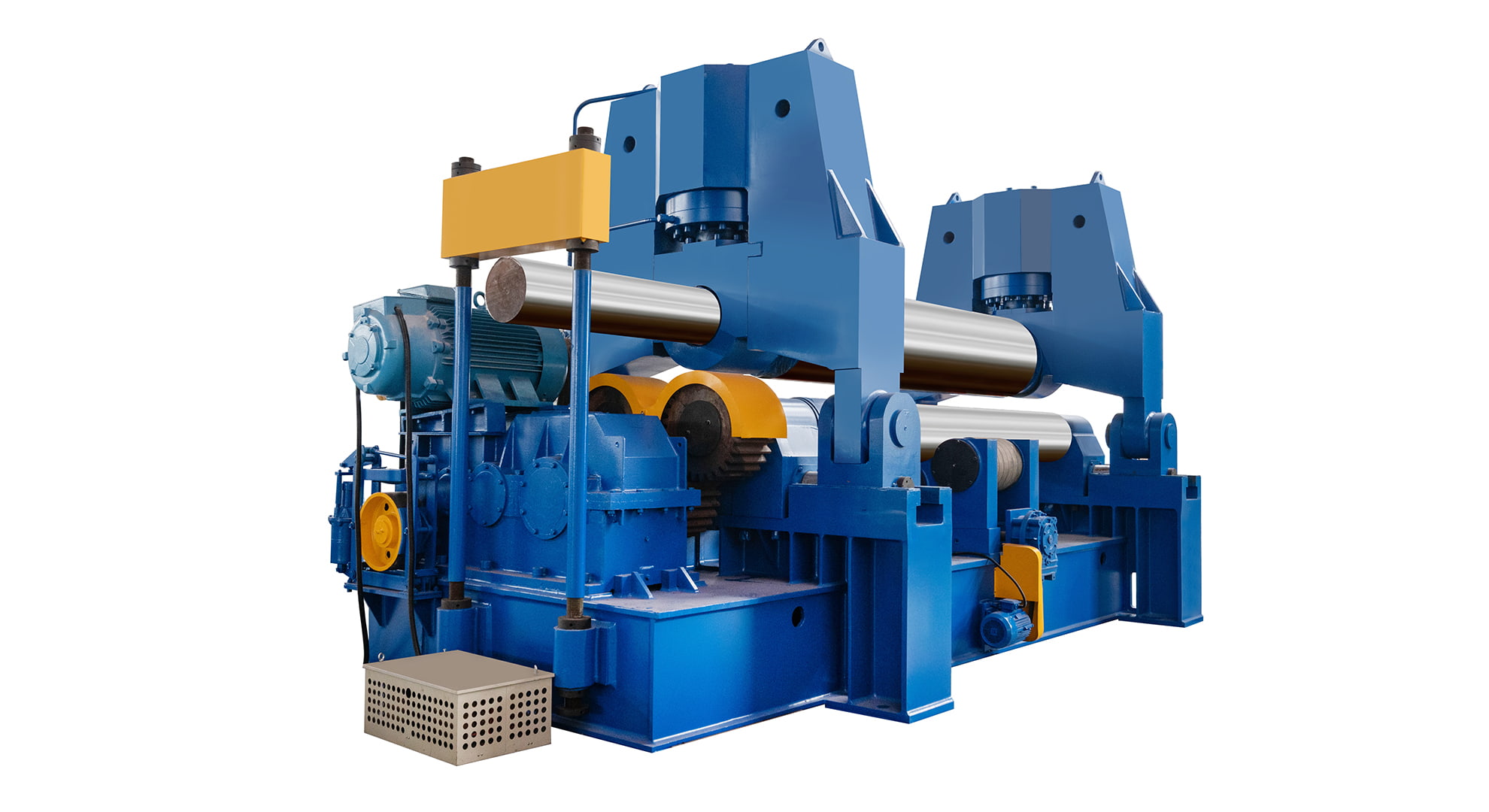
At its core, a plate rolling machine passes flat stock between three or four rolls arranged in a specific geometry. The top roll presses down while the bottom rolls rotate, driving the plate through the nip. As the plate moves, it is progressively forced to conform to the curvature set by the roll positions. The distance between the top and side rolls determines the bending radius. In three-roll initial pinch designs, the top roll lifts, the plate is inserted, and the top roll clamps down—then the lower bending roll moves up to create the first bend. Four-roll machines pinch the plate between the top and bottom rolls from the start, providing two side rolls that bend the plate independently. A 4-roll machine can pre-bend both plate edges without removing the workpiece, significantly reducing cycle time. Modern CNC controls store roll positions for dozens of programs, enabling automatic sequential bending for conical shapes and multi-radius parts.
Types of Plate Rolling Machines
Choosing the right machine starts with understanding the fundamental roll configurations. Each type offers distinct pre-bending ability, accuracy, and ideal use cases.
3-Roll Initial Pinch
- Top roll moves vertically to clamp the plate; a single lower bending roll moves up for pre-bending of the leading edge.
- Requires removal and flipping of the plate to pre-bend the trailing edge, adding time to the cycle.
- Best for medium-thickness plates when occasional pre-bending is needed and budget is a priority.
3-Roll Pyramid
- Fixed geometry with two bottom driven rolls and a top roll that moves down but no lateral movement.
- No edge pre-bending capability: the flat ends of the plate remain unbent, which must be trimmed or pre-formed separately.
- Suitable for thin plates or applications where edge flatness is not critical.
3-Roll Double Pinch (Variable Geometry)
- Both top and bottom rolls can move vertically and horizontally, or the machine uses an independent bending roll on each side.
- Enables pre-bending of both plate edges in a single pass without removing the workpiece.
- Offers greater versatility than initial pinch machines while keeping a three-roll structure.
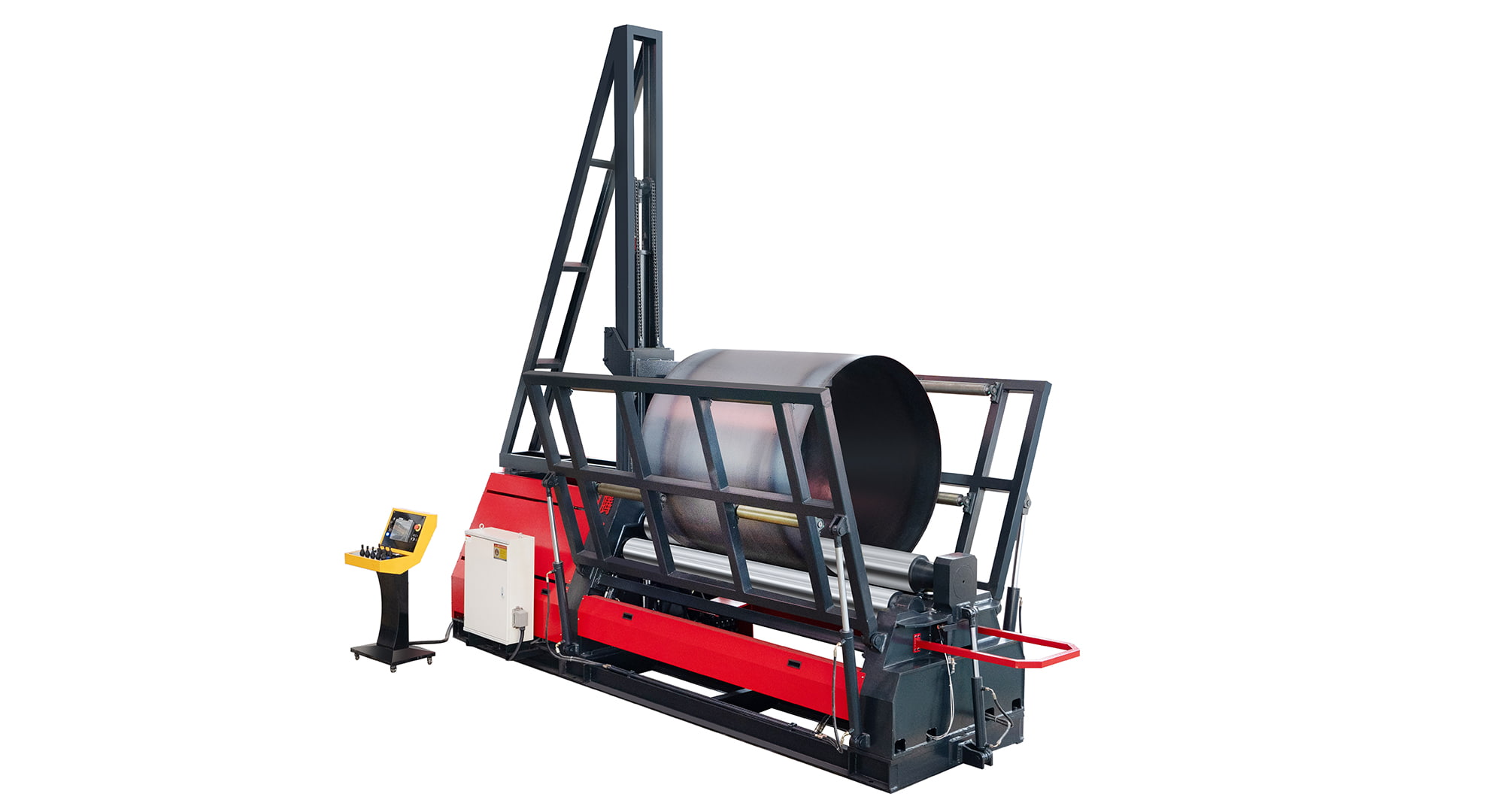
4-Roll Plate Rolling Machines
- Two central rolls pinch and drive the plate; two side rolls move independently to apply bending force.
- Full pre-bending of both edges without reinsertion—leading to faster cycle times and higher accuracy.
- CNC-controlled models, such as the CNC 4-roller plate rolling machine, automate roll positioning for complex geometries including variable-radius cones.
- Hydraulic versions add powerful static shaft rotaion for heavy-duty production.
| Machine Type | Pre-Bending | Typical Accuracy | Best For |
|---|---|---|---|
| 3-Roll Initial Pinch | Single edge per pass | 0.5–1.0 mm | General fabrication, medium-thickness parts |
| 3-Roll Pyramid | None | 1.0–2.0 mm | Thin sheet, non-critical edges |
| 3-Roll Double Pinch | Both edges in one pass | 0.3–0.8 mm | Vessels, cones, structural sections |
| 4-Roll CNC | Both edges without removal | 0.2–0.5 mm | High-precision, high-volume production |
Hydraulic 3-roller models, such as those found in the 3-roller hydraulic plate rolling machine range, offer robust pre-bending with simplified control akin to initial pinch machines. The selection ultimately depends on your material thickness, production volume, and edge quality requirements.
Key Selection Criteria
Investing in the correct plate rolling capacity avoids rework, downtime, and premature wear. Match the machine’s rated thickness and width to your largest frequently processed part—not just the occasional maximum. Machine builders quote capacity based on mild steel with a standard yield strength (typically 260 MPa). Rolling higher-strength materials like AR400 or stainless steel requires de-rating the capacity proportionally.
Pre-bending capability directly impacts edge quality. If your finished cylinders must meet tight roundness tolerances without flat spots, a 4-roll or double-pinch design pays for itself quickly. CNC control further reduces scrap by storing roll positions for repeat jobs, automatically compensating for springback. For detailed parameter calculations and cone rolling techniques, refer to this plate rolling machine.
Additional factors include minimum rollable diameter (typically 1.2–1.5 times the top roll diameter), roll crowning to compensate for deflection under high force, and side roll extension for handling wide plates. Hydraulic systems with proportional valves deliver smoother bending and less plate surface marking than purely mechanical drives.
Applications and Material Capabilities
Pressure vessel manufacturers rely on plate rolling machines to form shells, heads, and cones from boiler-quality steel up to 150 mm thick. In wind energy, tower sections exceeding 3 meters in diameter are rolled from high-strength structural plates. Shipyards use these machines for hull plates and structural stiffeners. Architectural metalwork demands precise arcs and large-radius bends in stainless steel and aluminum.
Material handling is equally critical. Aluminum and stainless steel plates require polished rolls and careful pressure control to prevent surface marring. Exotic alloys like duplex stainless or Inconel call for machines with higher torque at low speeds, often equipped with induction heating or specialized lubrication systems. The ability to switch from a 6 mm-thick stainless sheet to a 50 mm carbon steel plate in the same shift separates advanced production floors from job shops.
Maintenance and Operation Best Practices
Consistent bending quality depends on regular roll alignment checks and lubrication of roll neck bearings and guide ways. Hydraulic systems should undergo pressure verification every 500 operating hours; contaminant particle counts must remain within OEM limits to avoid servo valve wear. Operators must inspect roll surfaces daily for scratches or embedded debris—minor imperfections transfer directly to finished parts. Roll crowning must be recalibrated whenever moving to a significantly different plate width or thickness.
CNC-equipped machines require periodic backup of roll programs and verification of encoder feedback loops. Training operators to program multi-radius and conical jobs reduces scrap caused by manual overrides. Even with advanced automation, a skilled operator who understands material springback behavior and temperature effects still makes the difference between an average and an outstanding rolled product.
Selecting a plate rolling machine is a strategic decision that influences throughput, quality, and the range of work you can accept. By matching the roll configuration, capacity, and automation level to your actual production mix, you control edge quality, cycle time, and operating cost. The right machine turns a flat plate into a revenue-generating cylinder with minimal waste—day after day.

-
Phone
+86 131-4173-2687
-
Address
6 Jianghai Road,Libao Town, Haian. Jiangsu Province, China
-
Medla

Copyright o Nantong Tengzhong Machinery Manufacturing Co., Ltd. All Rights Reserved.
