
 English
 русский
 Français
 Español
 Português
 عربى
عربى

-


Model:
-

Model:
-

Model:

CNC Servo Electric Press Brake vs Hydraulic: A Complete Guide
2026-08-07
Content
- 1 How a CNC Servo Electric Press Brake Works
- 2 CNC Servo Electric vs. Hydraulic: Key Differences
- 3 Accuracy and Repeatability in Real Production
- 4 Energy Efficiency and Operating Cost
- 5 Speed and Productivity Considerations
- 6 Tooling and Working Constraints
- 7 Cost Analysis: Purchase Price vs. Total Cost of Ownership
- 8 Which Machine Fits Your Production Profile
- 9 Quality Control and the Role of the Back Gauge
- 10 Servo Electric Press Brake Products: What to Look For
- 11 Installation, Maintenance, and Operator Considerations
- 12 Heavy Plate and High Tonnage: Where Hydraulic Still Leads
- 13 Long-Term Sustainability and Resale Value
- 14 Final Recommendations for Your Purchase Decision
You are reviewing specs for a new press brake, and the choice comes down to two very different drive systems. One machine uses a servo motor to drive the ram with absolute repeatability; the other relies on hydraulic cylinders and oil pressure to deliver raw bending force. Both will bend sheet metal, but they do it with different economics, different accuracy, and different maintenance demands. For most fab shops, the decision is not about which technology is newer, but which one aligns with the parts you produce, the tolerances you quote, and the energy costs you carry.
A CNC servo electric press brake is a bending machine where the ram is driven by servo motors through a mechanical transmission, such as ball screws or a reduction gear, rather than by hydraulic cylinders. Because each axis is under direct digital control, the machine can position the ram with high precision and repeat it consistently across long production runs. It is best understood not as a replacement for hydraulic machines across the board, but as a specialized solution for shops that prioritize speed, accuracy, energy efficiency, and clean operation.
How a CNC Servo Electric Press Brake Works
Instead of a hydraulic power unit that continuously runs a pump, a servo electric press brake uses one or more servo motors to drive the ram. The motor rotates a ball screw or a timing belt and gear mechanism, converting rotational motion into linear movement of the ram. The control system monitors the motor's position, speed, and torque in real time, which means the ram's depth, speed, and bending force can be managed with high resolution.
Because the servo motor only draws power when it is actually moving, the machine consumes far less electricity during idle periods. The absence of hydraulic oil also eliminates oil cooling systems, filter changes, and the risk of oil leaks. In practice, this makes the servo electric press brake a cleaner and more predictable machine for precision work.
There are two common configurations. The first is a full servo-electric design, where the ram is driven directly by servo motors on both sides. The second is a hybrid design that combines servo-driven motion with a small hydraulic system for specific functions, such as crowning or clamping. The full servo-electric design is the most energy efficient and is preferred for high speed bending of lighter gauge materials.
For a deeper look at why these machines matter in modern production environments, read our guide on what makes the CNC servo electric press brake essential for modern manufacturing.
CNC Servo Electric vs. Hydraulic: Key Differences
The table below summarizes the most important differences between the two drive technologies. Keep in mind that these are general trends—specific machine designs and component quality can shift the numbers in either direction.
| Characteristic | CNC Servo Electric | Hydraulic |
|---|---|---|
| Energy consumption | Low—motor runs only during movement | High—pump runs continuously |
| Ram positioning accuracy | High, with repeatability of ±0.01 mm or better | Good, but affected by oil temperature and valve response |
| Bending speed | Fast, especially on short stroke cycles | Moderate; faster on deep strokes |
| Maximum tonnage | Typically up to around 200–300 tons | Available up to 1,000+ tons |
| Maintenance | Minimal—no hydraulic oil, filters, or seals | Regular oil changes, filter replacement, seal checks |
| Environmental impact | No oil disposal; lower carbon footprint | Oil disposal and potential leak risks |
| Initial purchase cost | Higher | Lower |
| Long-term operating cost | Lower due to energy and maintenance savings | Higher over time |
| Suitability for heavy plate | Limited on very thick material and deep dies | Standard choice for heavy-duty bending |
If you want to explore the broader machine landscape before making a decision, our press brake machine guide covering types, specs, and buying tips is a practical starting point.
Accuracy and Repeatability in Real Production
Repeatability is where the servo electric press brake separates itself from a standard hydraulic machine. The servo motor's encoder gives the control system exact position feedback. Once you set the ram depth for a specific bend, the machine returns to that same depth on every cycle, regardless of how many parts you run. Thermal drift, which can affect hydraulic machines as oil warms up, is virtually eliminated.
This level of consistency matters most in industries like electrical enclosures, aerospace brackets, and precision sheet metal components, where a bend angle variance of even 0.5 degrees can create fit-up problems downstream. With a servo electric machine, you set the first part, verify it against the print, and then trust the next five hundred parts to be identical.
The mechanical transmission also contributes to rigidity. Ball screws and reduction gears have less elastic give than a hydraulic cylinder, especially at the bottom of the stroke. For air bending and bottoming operations, this mechanical stiffness translates directly into more stable bend angles.
Energy Efficiency and Operating Cost
The financial case for a servo electric press brake becomes clear when you look at electricity consumption. A standard hydraulic press brake runs a motor and pump that maintain pressure, even when the ram is not moving. The motor typically runs continuously while the machine is powered on, drawing a significant amount of energy per shift.
A servo electric machine, by contrast, only draws significant current when the servo motors are actively moving the ram. Between bends, during part loading, and during positioning, the power consumption drops to a small fraction of a hydraulic machine's idle draw. Over a two-shift operation, this difference translates into thousands of dollars in annual electricity savings for shops that run high cycle counts.
Maintenance costs follow a similar pattern. Hydraulic machines require periodic oil changes, filter replacements, and inspections of seals, valves, and hoses. A servo electric machine eliminates all of those consumables. The main wearing components are the ball screws and gearboxes, which in a well-built machine will run for years under normal loads.
When calculating ownership cost, the lower operating cost can offset the higher initial purchase price if your part mix involves fairly consistent, high-volume work. For a shop that bends primarily thinner sheets with high throughput, the payback period is often shorter than you might expect.
Speed and Productivity Considerations
Cycle time is not just about ram speed—it is about the time it takes to complete an entire bending sequence, including approach, bending, and return. The servo electric drive excels here because it can accelerate and decelerate rapidly, and it does not suffer from the valve response delays that hydraulic systems have.
The back gauge also typically benefits from servo-driven axes, which can position quickly and precisely. On a modern CNC servo electric press brake, the control can coordinate ram motion with the back gauge, reducing total cycle time per part.
For shops that bend thin to medium gauge material, the speed advantage can be substantial. A conventional hydraulic machine may complete 8 to 12 bends per minute on a small part, while a servo electric machine can reach 15 to 20 bends per minute in the same scenario. That difference directly impacts throughput and labor cost per part.
Tooling and Working Constraints
One of the buying considerations often overlooked is tooling compatibility. The ram stroke on a servo electric press brake is generally shorter than on an equivalent hydraulic machine. If you regularly bend deep boxes or use tall dies, you need to verify that the stroke length is sufficient for your job.
Another constraint is maximum tonnage. Servo electric machines are most common in the 60-ton to 160-ton range, though larger machines exist. For workshops that occasionally bend thick plate—say, 12 mm or thicker over a long bend length—a hydraulic machine remains the safer choice. Hydraulic cylinders can produce a continuous force throughout the stroke, which is an advantage when you need high force near the bottom of a deep die.
Tooling itself is not machine-specific; standard press brake punches and dies work on both types. However, the choice of tooling can affect how much force is required. For shops that want to maximize the capability of a servo electric machine, using air bending rather than bottoming is common, because it requires less tonnage and places less stress on the transmission components.
Cost Analysis: Purchase Price vs. Total Cost of Ownership
The purchase price of a CNC servo electric press brake is higher than a hydraulic machine with the same nominal tonnage. The servo motors, ball screws, and advanced control system all add cost. The gap is most significant at the low end, and it narrows as the machine size increases.
On the operating side, you need to weigh:
- Electricity consumption per shift
- Hydraulic oil and filter replacement
- Maintenance labor and downtime
- Scrap and rework rates, which are lower on servo electric machines
- Cycle time and labor cost per part
When these factors are combined, a servo electric machine often delivers a lower total cost per bend, particularly for shops that run three shifts or have high electricity rates. For a one-shift shop with occasional use, the simpler hydraulic machine may be the more economical choice.
Which Machine Fits Your Production Profile
There is no universal answer to the servo-electric-versus-hydraulic question, but there are clear indicators for each direction.
Choose a CNC servo electric press brake if your work involves:
- Thin to medium gauge sheet metal, typically 0.5 mm to 6 mm
- High production runs with consistent part geometry
- Strict bend angle tolerances that you need to hold over long runs
- Energy cost sensitivity or corporate sustainability targets
- Clean shop requirements, such as in electronics or medical device manufacturing
Stick with a hydraulic press brake if your work involves:
- Thick plates, typically above 8 mm to 10 mm
- Deep boxes that require a long ram stroke
- High tonnage with long bend lengths
- Occasional or varied work where machine utilization is low
A practical approach is to define the envelope of your most common rectangles—material thickness, bend length, and required force—and then compare candidate machines against that envelope. A servo electric machine that covers 80 percent of your jobs with lower operating cost may still be the right buy, even if you occasionally need to outsource or use a larger machine for the heavy plate.
Quality Control and the Role of the Back Gauge
The precision of a CNC servo electric press brake depends not only on the drive system but also on supporting components, especially the back gauge. A servo-driven back gauge can position to within fractions of a millimeter, and modern controls allow the operator to program multiple back gauge positions for a sequence of bends. This reduces setup time and eliminates the errors introduced by manual repositioning.
Quality control also benefits from the machine's ability to record and store programs. Once a part program is optimized, it can be recalled at any time, and the machine will reproduce the same bends with minimal variation. This is valuable for repeat orders and for standardizing processes across different shifts.
Understanding the function of the back gauge is an important part of setting up any precision press brake. Our article on the function of the back gauge on a press brake explains this mechanism in detail and helps you get the most from your machine.
Servo Electric Press Brake Products: What to Look For
When comparing units from different suppliers, look at the quality of the mechanical transmission components, the brand and resolution of the CNC control, and the rigidity of the frame. A cheap servo machine with a flexible frame will not deliver the accuracy that the servo drive is theoretically capable of. The frame's deflection under load directly affects bend angle consistency, especially on longer bends.
Consider the machine's stroke and throat depth in relation to the parts you produce. A machine that is too small in work area will be a constant bottleneck, and a machine that is too large will waste floor space and money. Also, check the available tooling clearance and the maximum die height, as these affect your flexibility for different bend geometries.
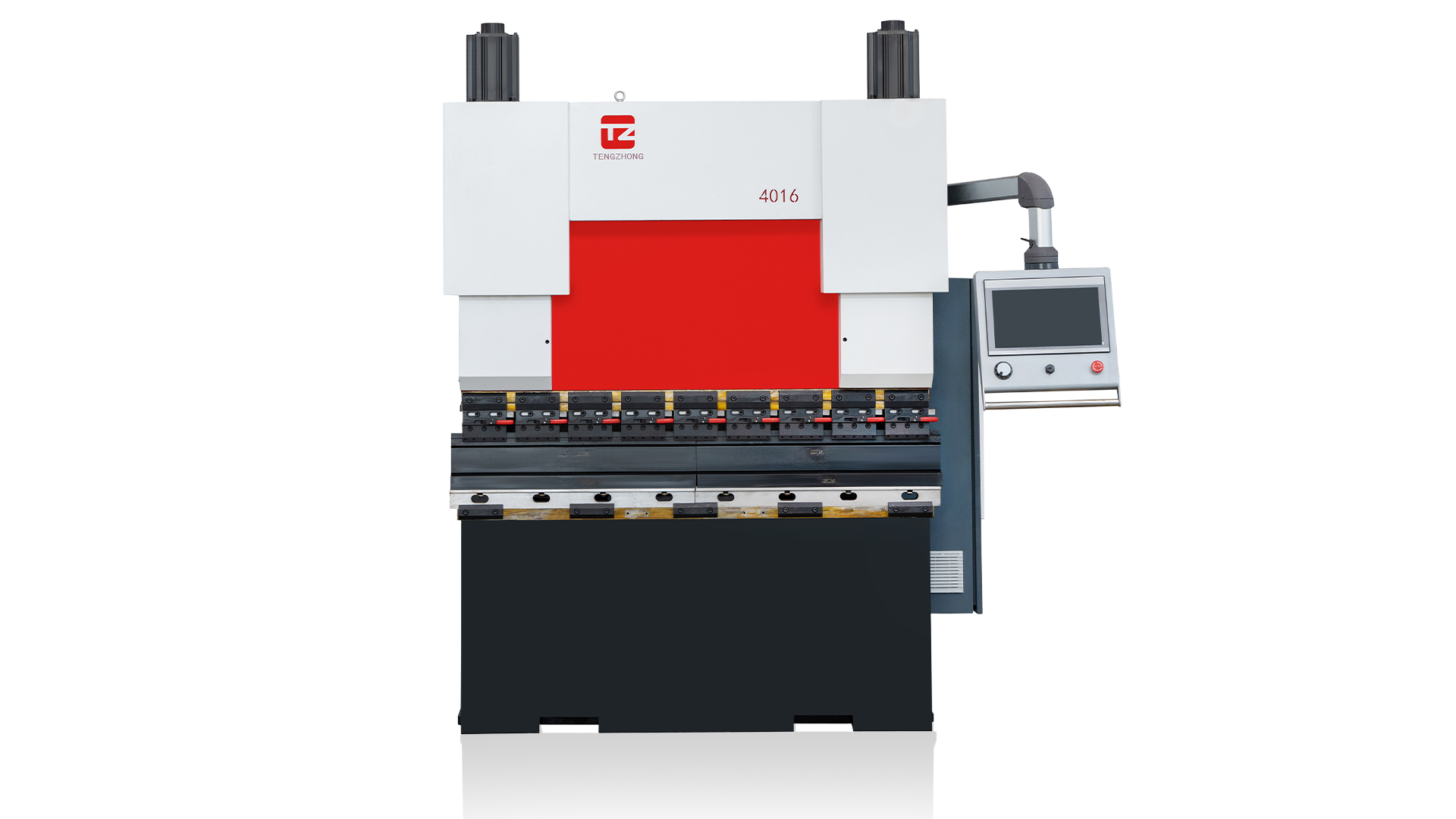
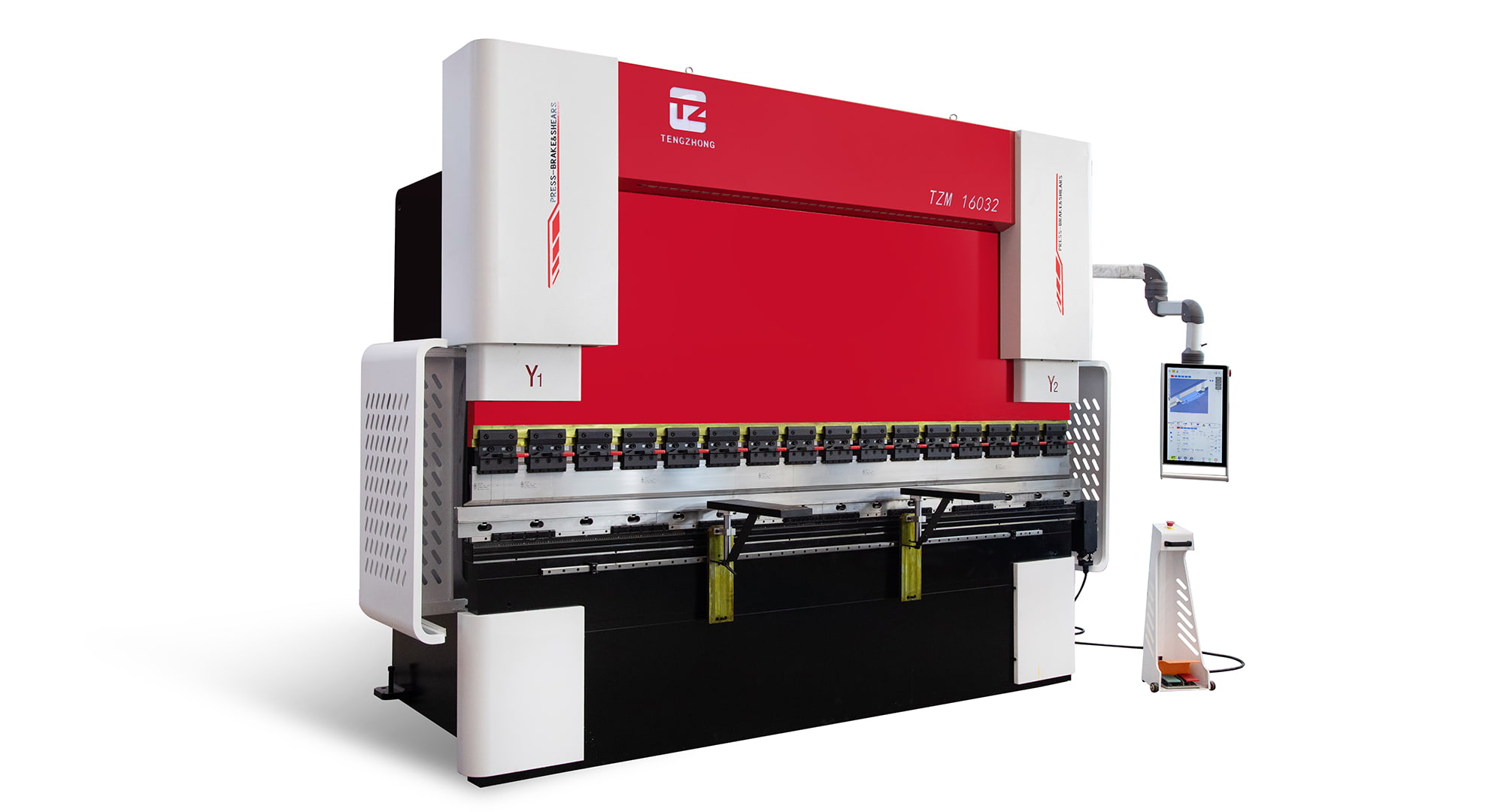
If you are looking for a turnkey precision bending solution, Tengzhong's CNC servo electric press brake is a solid example of this technology class. It combines servo drive accuracy with an intuitive control interface, making it suitable for both job shops and production-oriented facilities. The machine is available from Tengzhong's CNC servo electric press brake product page, where you can review specifications and request a quote.
 Custom CNC Servo Electric Press Brake Suppliers, OEM/ODM Company - Nantong TengzNantong Tengzhong Machinery Manufacturing Co., Ltd. is China custom CNC Servo Electric Press Brake suppliers and OEM/ODM company, details...View Product →
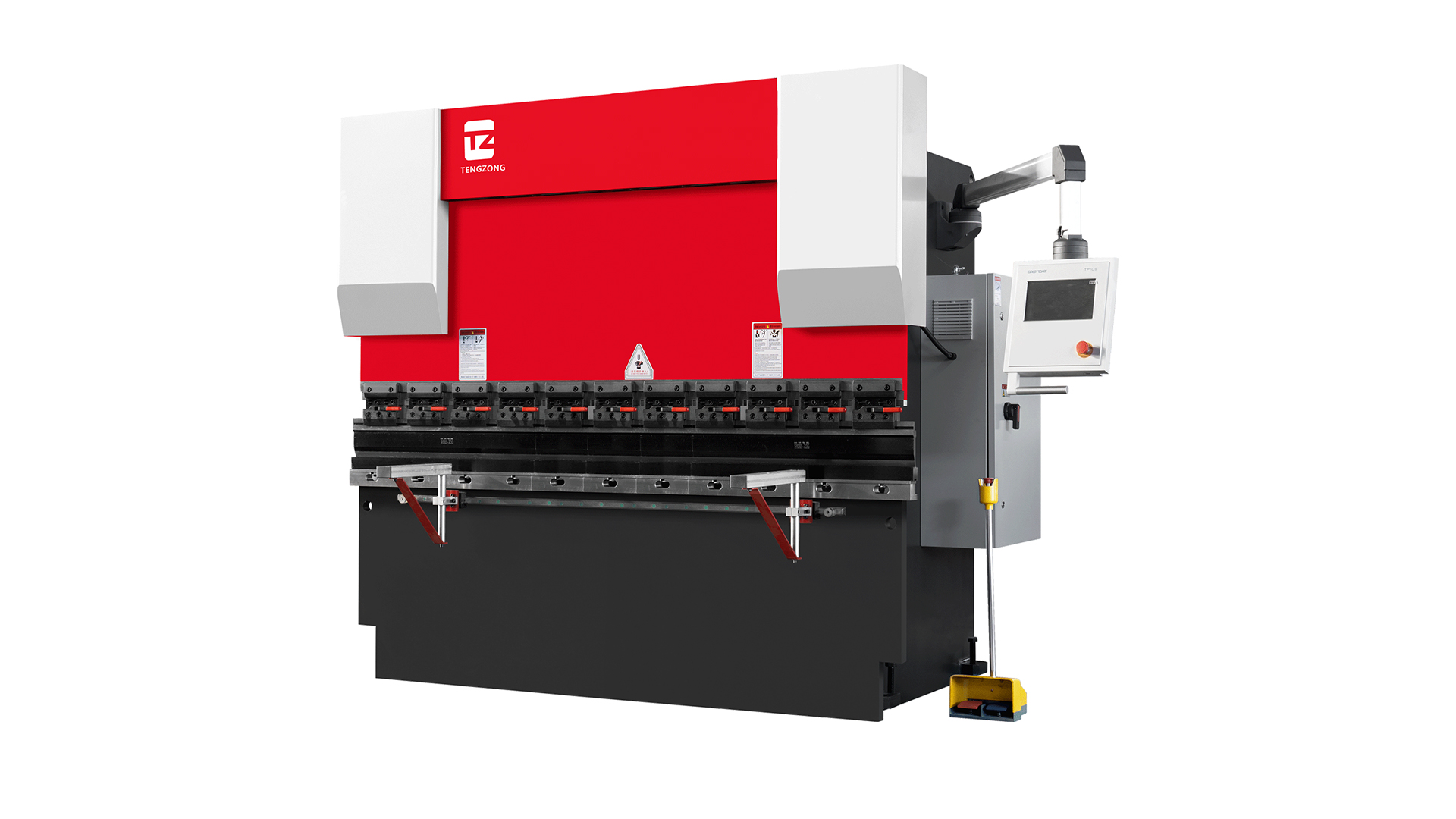
Another option in the same product family is the ordinary CNC electric hydraulic servo press brake machine, which bridges the gap between servo precision and hydraulic force capacity. For workshops that want some of the energy advantages of a servo system but need higher tonnage without the cost of a full electric servo machine, this hybrid style deserves attention.
Before committing to a product, consider how it will integrate with your existing manufacturing cell. If you are planning to automate loading and unloading, the speed and repeatability of a servo electric machine will be easier to integrate than the slower ram cycle of a hydraulic machine.
Installation, Maintenance, and Operator Considerations
Servo electric press brakes are generally easier to install than hydraulic ones because there are no hydraulic tanks, coolers, or oil lines to connect. The machine arrives as a more self-contained unit, and setup is mainly about leveling and electrical connection. This can reduce installation time and get the machine into production faster.
Maintenance is simpler but not nonexistent. The ball screws and gearboxes should be inspected periodically, and the manufacturer's lubrication schedule should be followed. Because there is no hydraulic oil to change, the day-to-day maintenance burden is significantly lower. This is a meaningful advantage for shops that do not have a dedicated maintenance team.
Operator training is also less intimidating on a servo electric machine. The control system is typically more intuitive, with graphical programming and diagnostic messages. Operators can focus on part quality instead of tweaking pressure and speed settings to compensate for fluctuating oil temperature.
If your shop has less experienced operators, the predictable behavior of a servo electric press brake reduces the risk of setup errors and scrapped parts. That is a practical benefit that is not always captured in a spec sheet.
Heavy Plate and High Tonnage: Where Hydraulic Still Leads
For bending thick plates above 10 mm, or for jobs that require high force over a long working length, a hydraulic press brake remains the dominant solution. A hydraulic cylinder can exert maximum force throughout the entire stroke, which is an advantage when working with high-strength steel or thick stainless steel at the bottom of a deep die. Servo electric machines often run into torque limitations at these depths, and they are not the right choice for every heavy fabrication shop.
That is why many manufacturers offer both types of machines. A fabricator that handles a mix of light and heavy work may choose a servo electric machine for medium gauge precision components and a hydraulic machine for the occasional thick plate job. This is not a compromise; it is simply a more efficient way to use capital.
If heavy plate is a significant part of your output, a hydraulic machine is the reliable default, and the tradeoff in energy cost and speed is acceptable given the force advantages.
Long-Term Sustainability and Resale Value
Sustainability is becoming a serious procurement criterion for large manufacturing companies, and the servo electric press brake's lower energy consumption is a verifiable advantage. In facilities that report carbon emissions or have energy reduction targets, the difference between a servo electric machine and an equivalent hydraulic machine can be substantial over a 10-year lifespan.
Resale value is another consideration. As the installed base of servo electric machines grows, the used market for this technology is developing. In a few years, a well-maintained servo electric machine will likely command a stronger resale price than a comparable hydraulic unit, simply because buyers perceive the technology as more modern and cheaper to operate.
This matters if you plan to upgrade your fleet periodically rather than run machines for 20 years. The total cost of ownership calculation should include expected depreciation and resale, not just annual operating cost.
Final Recommendations for Your Purchase Decision
Start by listing your five most common jobs by volume and by revenue. For each job, note material type, thickness, bend length, required angle tolerance, and current cycle time. This will give you a realistic picture of what the machine is actually required to do.
If those jobs involve sheet thicknesses up to about 6 mm, have tight angle tolerances, and run frequently, a CNC servo electric press brake is very likely the right investment. The speed and repeatability will directly improve your throughput and reduce quality issues.
If your work routinely involves thick plates, high tonnage, or deep box forming, then a hydraulic press brake is still the practical choice, and you should optimize for tonnage capacity and stroke length rather than energy efficiency.
In either case, request a demonstration or a reference from a shop that runs a similar application. A machine that works well in one environment may be a poor fit in another, and the best way to evaluate this is to talk to someone who operates it daily. The decision is ultimately about how the machine performs in your specific production context, not about which technology is theoretically superior.

-
Phone
+86 131-4173-2687
-
Address
6 Jianghai Road,Libao Town, Haian. Jiangsu Province, China
-
Medla

Copyright o Nantong Tengzhong Machinery Manufacturing Co., Ltd. All Rights Reserved.
