
 English
 русский
 Français
 Español
 Português
 عربى
عربى

-


Model:
-

Model:
-

Model:

What is the function of the back gauge on a CNC hydraulic guillotine shearing machine?
2025-12-05
Content
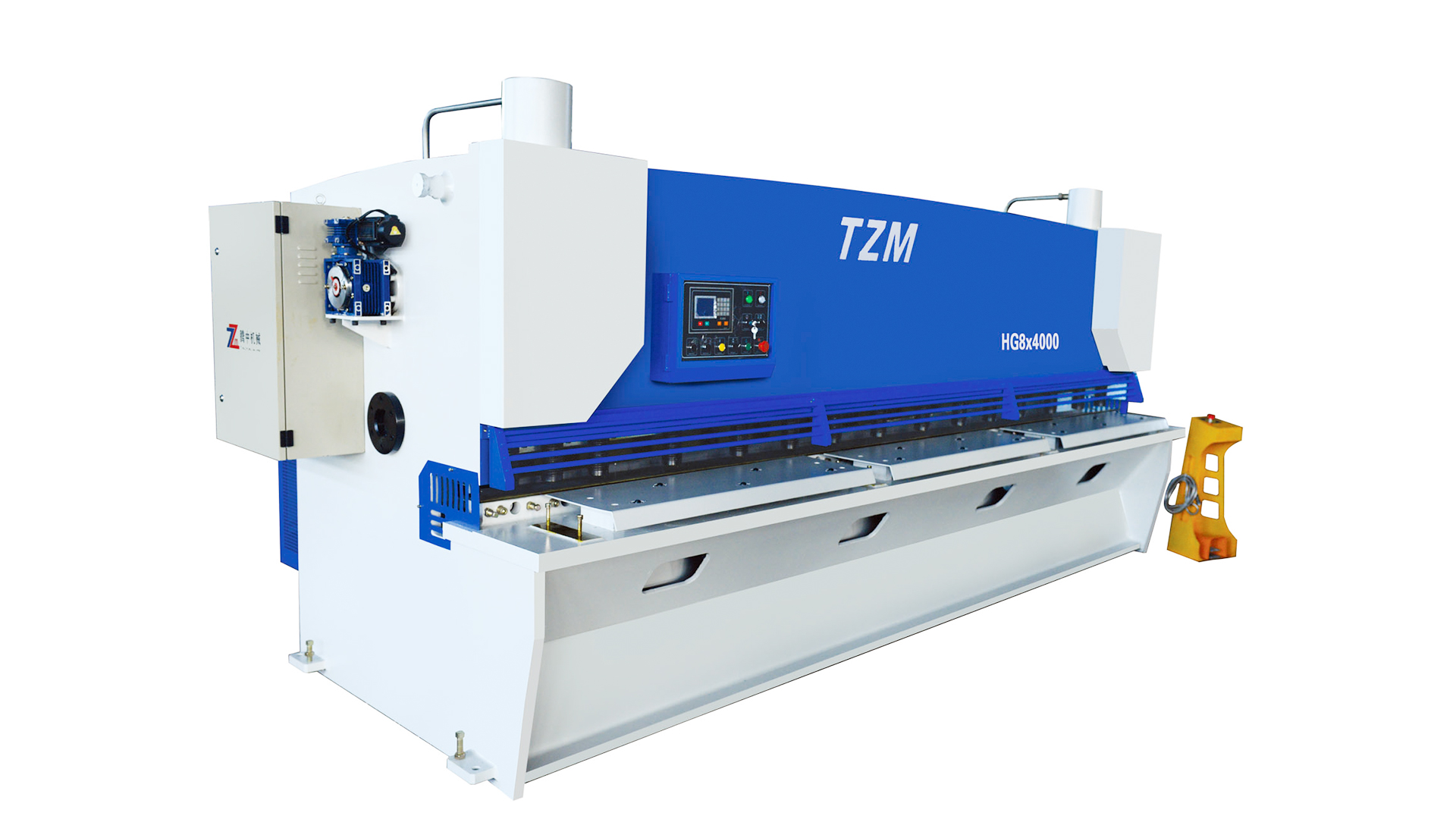
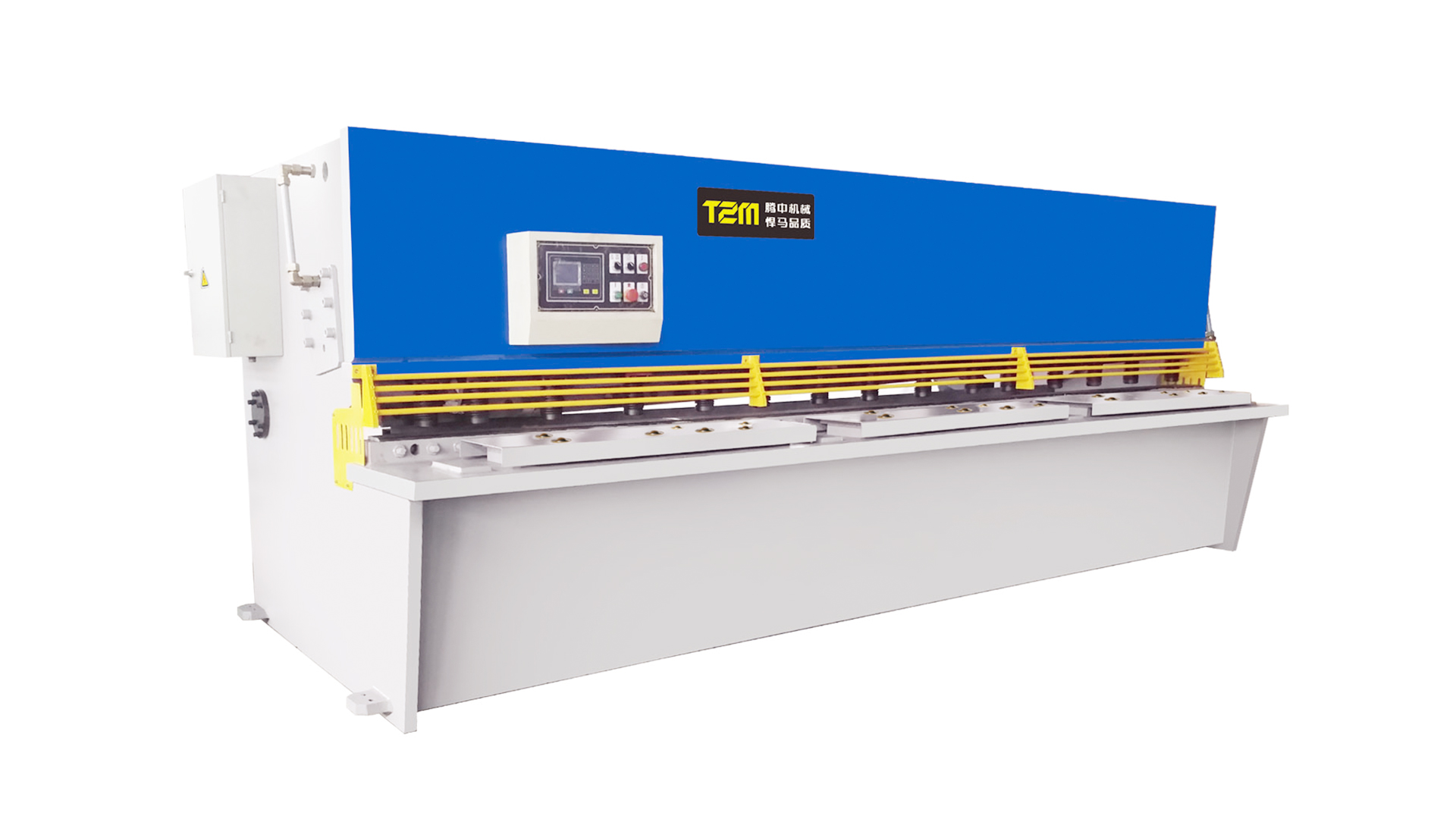
In the world of metal fabrication, precision is not merely an advantage; it is the foundational requirement upon which everything else is built. When observing a CNC hydraulic guillotine shearing machine in operation, the eye is naturally drawn to the powerful, decisive action of the blade—the dramatic moment of separation. However, the true architect of accuracy in this process operates with quiet, robotic consistency, often overlooked by the untrained observer: the back gauge.
Fundamental Definition and Core Function
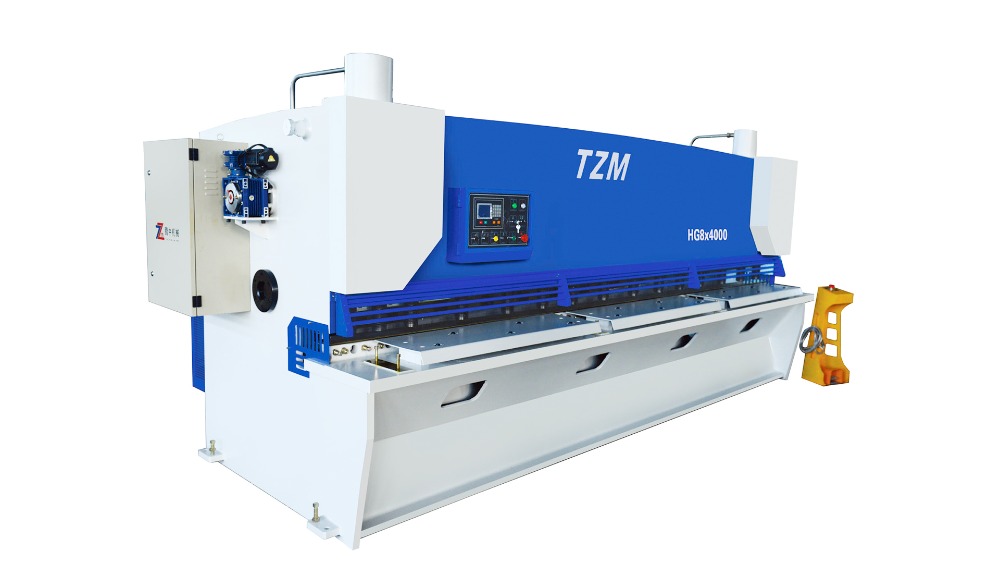
At its most basic, the back gauge is a mechanically rigid, movable fence positioned at the rear of the shearing machine’s table. Its primary and essential function is to precisely locate and support the metal sheet or plate before the shear blade descends, thereby determining the final dimension of the cut piece. It acts as the definitive stop against which the operator or automated system pushes the workpiece. While the blade executes the cut, the back gauge dictates where that cut will happen along the material’s length or width.
Without a back gauge, an operator would be forced to rely on manual measuring, scribing lines, and “eyeballing” the position of the sheet under a massive, descending blade—a method fraught with human error, inconsistent results, and significant safety risks. The back gauge eliminates this guesswork, providing a solid, repeatable reference point.
From Manual to CNC: The Evolution of Precision
To fully appreciate the function of a CNC-controlled back gauge, it’s helpful to understand its simpler predecessor. On a basic hydraulic shear, the back gauge is often a manual device, adjusted by turning a handwheel connected to a leadscrew. The operator reads a graduated scale, sets a rough position, and makes a cut. While an improvement over freehand work, this method is slow and susceptible to parallax errors and operator fatigue.
The integration of Computer Numerical Control (CNC) transforms the back gauge from a passive tool into an intelligent, automated positioning system. This is where its function expands exponentially:
- Servo-Motor Drive: A CNC back gauge is driven by a servo motor coupled with a precision ball screw or rack-and-pinion system. This replaces the manual handwheel, providing motive power and exact control.
- Positional Feedback: High-resolution linear encoders or other feedback devices constantly monitor the exact physical position of the back gauge beam. This creates a closed-loop system where the CNC controller knows the gauge’s location at all times, correcting for any minute discrepancies.
- Programmable Control: The operator or programmer inputs desired cut dimensions into the CNC control panel (often a touchscreen). The controller then calculates the required back gauge position, accounting for blade position and material thickness, and commands the servo motor to move the gauge to that exact coordinate, typically with an accuracy of ±0.05mm or better.
Detailed Functional Breakdown and Operational Modes
The CNC back gauge performs several interconnected functions that streamline production:
1. Dimension Control & Batch Consistency: This is its cardinal role. By positioning the sheet at a precise distance from the blade, it ensures that every piece in a batch is identical. Whether cutting 10 or 500 parts, the first and the last will have the same dimensions, guaranteeing component interchangeability in later assembly stages.
2. Support for Large Sheets: When shearing a large, heavy sheet, the portion of the material lying on the table ahead of the blade can sag or deflect. The back gauge beam, often equipped with support fingers or rollers, provides crucial support at the point of measurement, preventing this sag. This ensures the material remains flat and the measurement point is true, leading to a square, accurate cut across the entire width.
3. Enabling Complex Cutting Sequences: A simple back gauge can make one cut. A CNC back gauge enables sophisticated workflows:
- Step Back Gauge Mode: This is the most common automated mode. After each cut, the CNC automatically repositions the gauge for the next required piece width from the same sheet, moving sequentially through a programmed list. This optimizes material usage and eliminates manual measuring between cuts.
- Multi-Pass Programming: For creating complex parts with multiple perpendicular cuts (e.g., notches or steps), the CNC can control both the back gauge (for front-to-back dimension) and side-stops (for left-to-right positioning), guiding the operator through a sequence of flips and repositions.
- Angle Cutting Support: While the shear’s rake angle affects the cut itself, the back gauge ensures the material is positioned correctly for the start of an angled cut, maintaining consistency.
4. Material Handling Synchronization: On advanced systems, the CNC back gauge functions as the central coordinator for automated material handling. It can interface with:
- Front Sheet Supports: These arms lift and present a sheet from a stack to the operator.
- Side Alignment Systems: Powered arms that “bump” the sheet against a side reference, ensuring perfect 90-degree alignment before the back gauge makes contact.
- Part Catchers/Conveyors: After the cut, a conveyor may activate to remove the finished piece, synchronized with the back gauge’s retraction and next movement.
Critical Considerations for Optimal Function
Understanding the back gauge’s function also involves recognizing its limitations and requirements:
- Parallelism and Squareness: The entire back gauge beam must be meticulously aligned parallel to the shear blade. If it is even slightly skewed, the resulting cut piece will be tapered, not rectangular. Regular maintenance checks are essential.
- Stiffness and Deflection Resistance: The gauge beam and its drive system must be incredibly rigid. When a heavy plate is pushed against it at high speed (in auto mode), any bending or flex will directly translate into a dimensional error. Robust construction is non-negotiable.
- Cleanliness and Debris Management: The area around the back gauge rails and ball screw must be kept clean. Accumulated metal chips, dust, or dirt can impede movement, cause wear on seals and bearings, and lead to inaccurate positioning or complete failure.
- Operator Discipline: The function relies on correct workflow. The sheet must be firmly held against the back gauge fingers before clamping. Relying on the gauge beam itself to “pull” the sheet into position during clamping can cause inaccuracies and wear.
Conclusion: The Center of the Digital Workflow
The back gauge on a CNC hydraulic guillotine shearing machine is far more than a simple stop. It is the pivotal interface between the digital instructions of the CNC program and the physical reality of the metal sheet. It transforms abstract numbers from a drawing into tangible, repeatable dimensions with relentless accuracy. While the shear blade provides the force, the CNC back gauge provides the intelligence and precision that define modern fabrication.
Its function elevates the shear from a brute-force tool to a precision manufacturing cell, reducing setup time, minimizing material waste, and eliminating the variability inherent in manual processes. In essence, it is the disciplined, automated hand that guides every cut, ensuring that the immense power of the shearing action is applied with exacting, repeatable, and profitable precision. Investing in understanding, maintaining, and properly utilizing the CNC back gauge is an investment in the very quality and efficiency of the metal fabrication process itself.

-
Phone
+86 131-4173-2687
-
Address
6 Jianghai Road,Libao Town, Haian. Jiangsu Province, China
-
Medla

Copyright o Nantong Tengzhong Machinery Manufacturing Co., Ltd. All Rights Reserved.
