
 English
 русский
 Français
 Español
 Português
 عربى
عربى

-


Model:
-

Model:
-

Model:

NC Press Brake Explained: How It Works, How to Choose, and How It Differs from CNC
2026-08-14
Content
Every fabrication shop eventually faces the same decision: keep forcing simple bends through a manual brake, or invest in something that holds settings automatically. An NC press brake is usually the practical answer because it provides repeatable bending without the programming complexity or high price of a full CNC machine. For small and medium batch work, this single step removes most of the inconsistency from manual bending and pays for itself quickly.
What Is an NC Press Brake?
NC stands for numerical control. On this type of press brake, the operator enters the ram stroke and back gauge position on a small controller, and the machine moves to those same values on every stroke. In practical terms, this means the first bent part and the tenth bent part come out identical, provided the material and tooling stay the same. The controller does not need a complex program like a full CNC system, but it still removes the daily guesswork from setting and resetting the machine.
The most common mechanical layout is the torsion-axis synchronous design. A torsion shaft connects the left and right sides of the ram, forcing both ends to travel together. That keeps the bend line straight and avoids the angular mismatch you often get with older manual methods. Because the structure is simple, maintenance remains straightforward and uptime is high. For most workshops, a torsion-axis synchronous press brake is the standard step up from manual bending, because it gives dependable accuracy without the cost of extra automation.
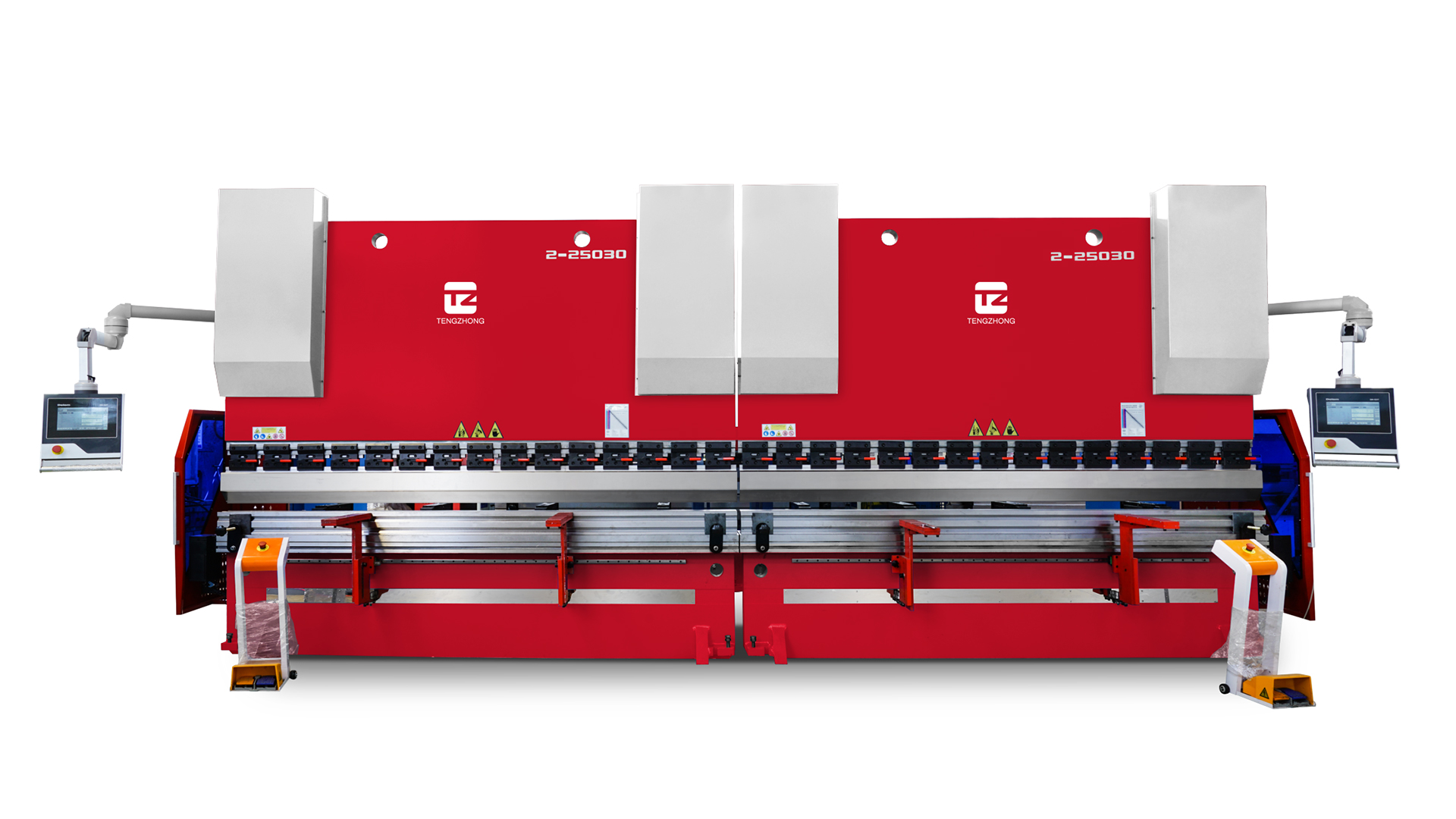
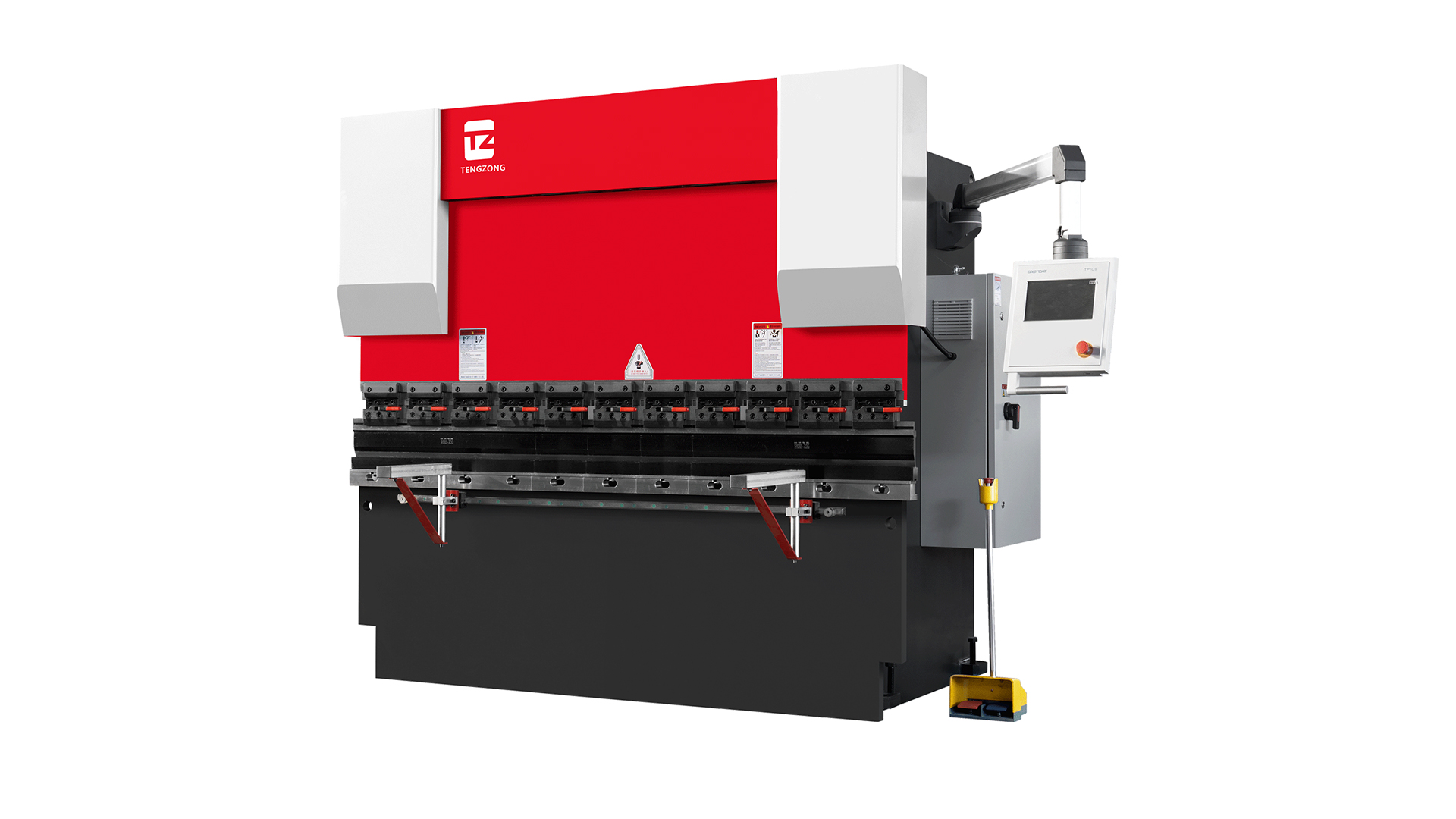
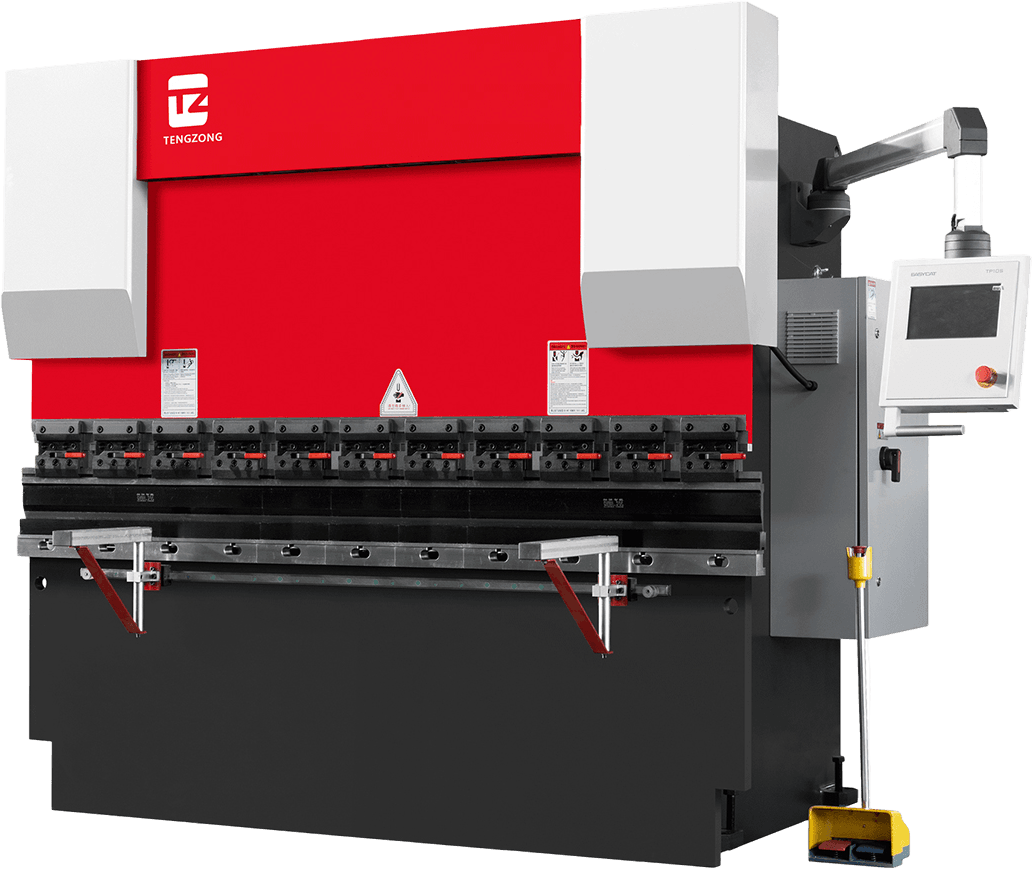 Custom NC Press Brake Suppliers, OEM/ODM Company - Nantong Tengzhong Machinery MNantong Tengzhong Machinery Manufacturing Co., Ltd. is China custom NC Press Brake suppliers and OEM/ODM company, details: STANDARD FEATU...View Product →
NC vs CNC Press Brake: What Really Changes
Many buyers treat NC and CNC as the same thing because both have digital screens. In practice, they operate at different levels of automation and feedback. An NC press brake is controlled by entering basic values such as stroke depth and back gauge position, while a CNC press brake can store complete bend programs, control multiple axes, manage tooling data, and often compensate automatically for deflection and material variation. The table below summarizes the main differences.
| Feature | NC press brake | CNC press brake |
|---|---|---|
| Control | Manual entry of basic bending parameters | Programmed multi-axis control with stored job files |
| Back gauge | Simple positioning, usually two axes | Multi-axis positioning for complex parts |
| Repeatability | Good for standard sheet metal tolerances | Higher repeatability with closed-loop feedback |
| Crowning compensation | Manual or optional in many models | Automatic on most modern machines |
| Investment | Lower initial cost | Higher initial cost |
| Best fit | Small and medium batches | High-mix, tight-tolerance production |
Control and Programming
On a typical NC press brake, you program a small number of axes: the ram Y-axis and the back gauge X-axis. Some controllers add a Z-axis for gauge finger position or an R-axis for vertical gauge movement. That is enough for panels, brackets, enclosures and similar parts. A CNC press brake goes further by storing complete bend sequences, tool selection and automatic compensation. For a shop that repeats the same parts regularly, the simpler NC controller is often faster to learn and less likely to be changed incorrectly by an operator.
Accuracy and Speed
With good tooling and consistent material, an NC press brake holds repeatable bend angles that satisfy most ordinary sheet metal jobs. A CNC machine becomes the better choice when a single part has many different bends in one setup, or when hydraulic deflection must be corrected automatically during long bends. In cycle speed, both designs complete a stroke quickly. The real time difference appears in setup between jobs. If you switch jobs several times a day, the CNC machine wins. If you run longer batches, an NC press brake keeps pace at a much lower cost.
Investment and Payback
An NC press brake costs substantially less upfront, has fewer complex electronic parts, and is easier to service in a local workshop. That is why many fabricators start with NC and add a CNC machine only when production volume and part complexity justify the extra capital. The lower price also makes it easier to justify a second machine when demand grows.
Where an NC Press Brake Delivers the Most Value
From our manufacturing experience, the NC concept is strongest in four situations:
- Small and medium batches with standard angles such as 90-degree bends.
- Routine production of cabinets, panels, brackets and enclosures.
- Workshops that need one dependable machine for daily bending work.
- Companies training new operators who need a fast learning curve.
In these environments, an NC press brake is not a compromise; it is the right production tool. It gives the workshop a controlled process without requiring a specialist programmer. If you are still deciding whether this matches your workload, our guide to choosing an NC press brake walks through the selection steps in more detail.
Key Specifications to Evaluate Before Buying
Buying on price alone is risky because press brake capacity is not a single number. The following table lists the specifications that most directly affect what you can bend and how consistently the machine performs.
| Specification | What to check | Why it matters |
|---|---|---|
| Nominal tonnage | Calculate required force from material grade, thickness and die opening | An undersized machine bends poorly; an oversized one raises cost unnecessarily |
| Bending length | Compare it to your longest workpiece | Long parts need consistent pressure along the full bending edge |
| Throat depth | Distance from the machine throat to the back gauge area | Limits the width of flanged parts |
| Stroke length | Maximum travel of the ram | Determines the largest vertical dimension you can bend |
| Back gauge | Number of axes and positioning repeatability | Affects setup speed and part-to-part consistency |
| Controller | Memory steps, axis control and ease of editing | Simplifies repeated jobs and reduces operator training time |
Remember that tonnage is only half the calculation. The actual bending force depends on material tensile strength, sheet thickness and die opening. A narrow die can require nearly double the force of a wider die for the same material. Ask the supplier for a capacity chart, and check the machine’s rated stroke and back gauge features against your real parts before signing an order.
Accuracy Depends on Daily Habits
An NC press brake is only as accurate as the setup around it. Check that the ram is parallel to the bed, confirm the back gauge zero point, use a sharp punch and die, and test bend a piece from the same material batch before starting production. Record the springback compensation value in the controller. This routine keeps repeatability at the level the machine is designed to deliver.
Routine maintenance is equally important. Check hydraulic oil level and temperature, keep the torsion shaft lubricated, and clean the back gauge ball screws regularly. Replace hydraulic filters according to the schedule, and make sure the machine stays level. A frame that has shifted will slowly destroy alignment, and the control settings will no longer produce the same bend angle.
If your main goal is to cut hydraulic maintenance while keeping production output, a servo-electric press brake is worth considering. It replaces hydraulic cylinders with ball screws driven by servo motors, which reduces oil-related maintenance and improves energy efficiency. Many fabricators keep an NC hydraulic machine for everyday work and add a servo machine later for cleaner, faster precision jobs.
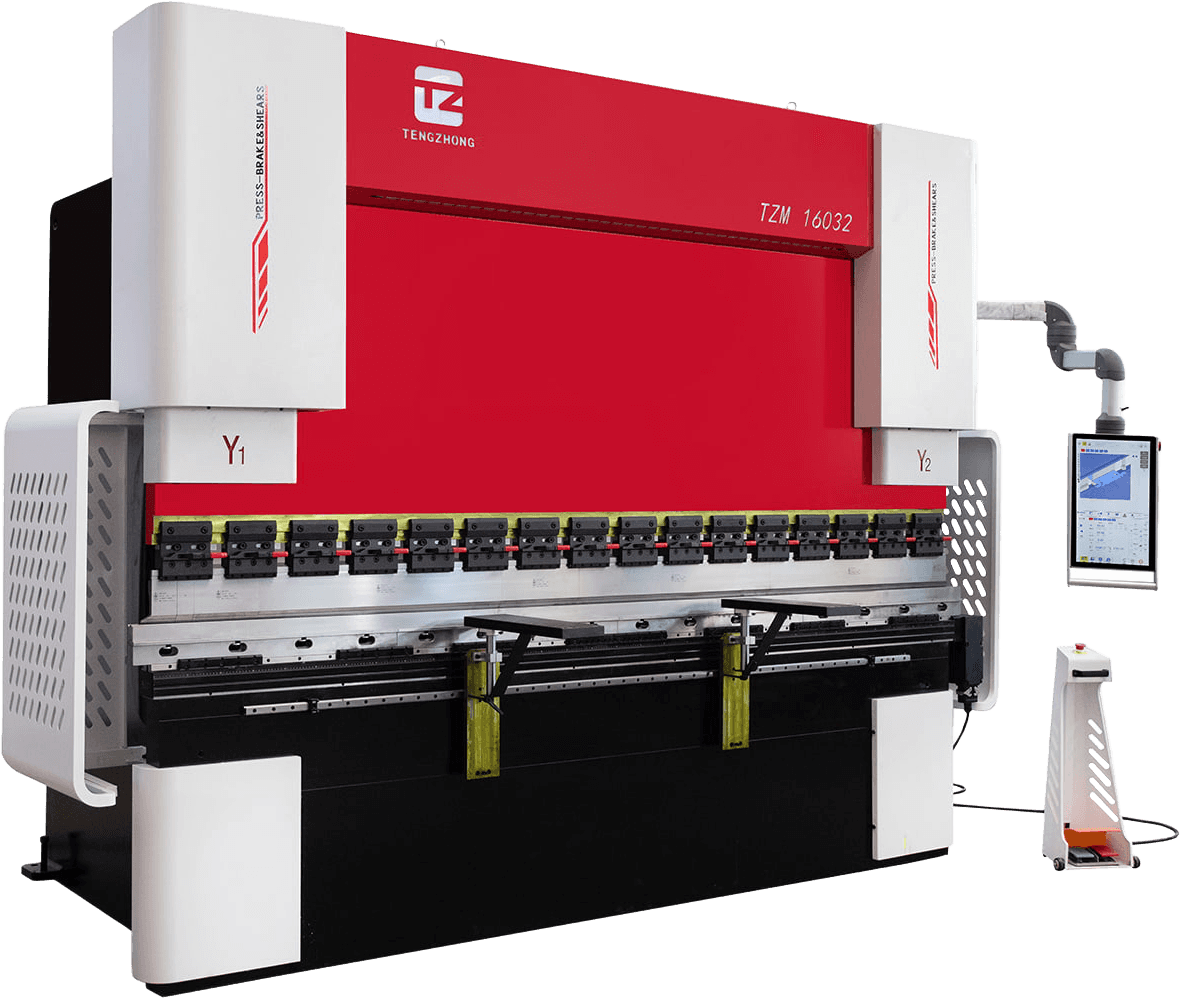
 Custom CNC Servo Electric Press Brake Suppliers, OEM/ODM Company - Nantong TengzNantong Tengzhong Machinery Manufacturing Co., Ltd. is China custom CNC Servo Electric Press Brake suppliers and OEM/ODM company, details...View Product →
When It Makes Sense to Move Up
An NC press brake remains practical for many years, but production changes often point to the next step. If you measure parts with tight tolerances across long sheets, an electric-hydraulic servo press brake adds closed-loop control and automatic crowning, giving CNC-level behavior while retaining the familiar force of a hydraulic machine. If your operators need to store hundreds of part programs and recall them instantly, a full CNC controller becomes worth the higher investment.
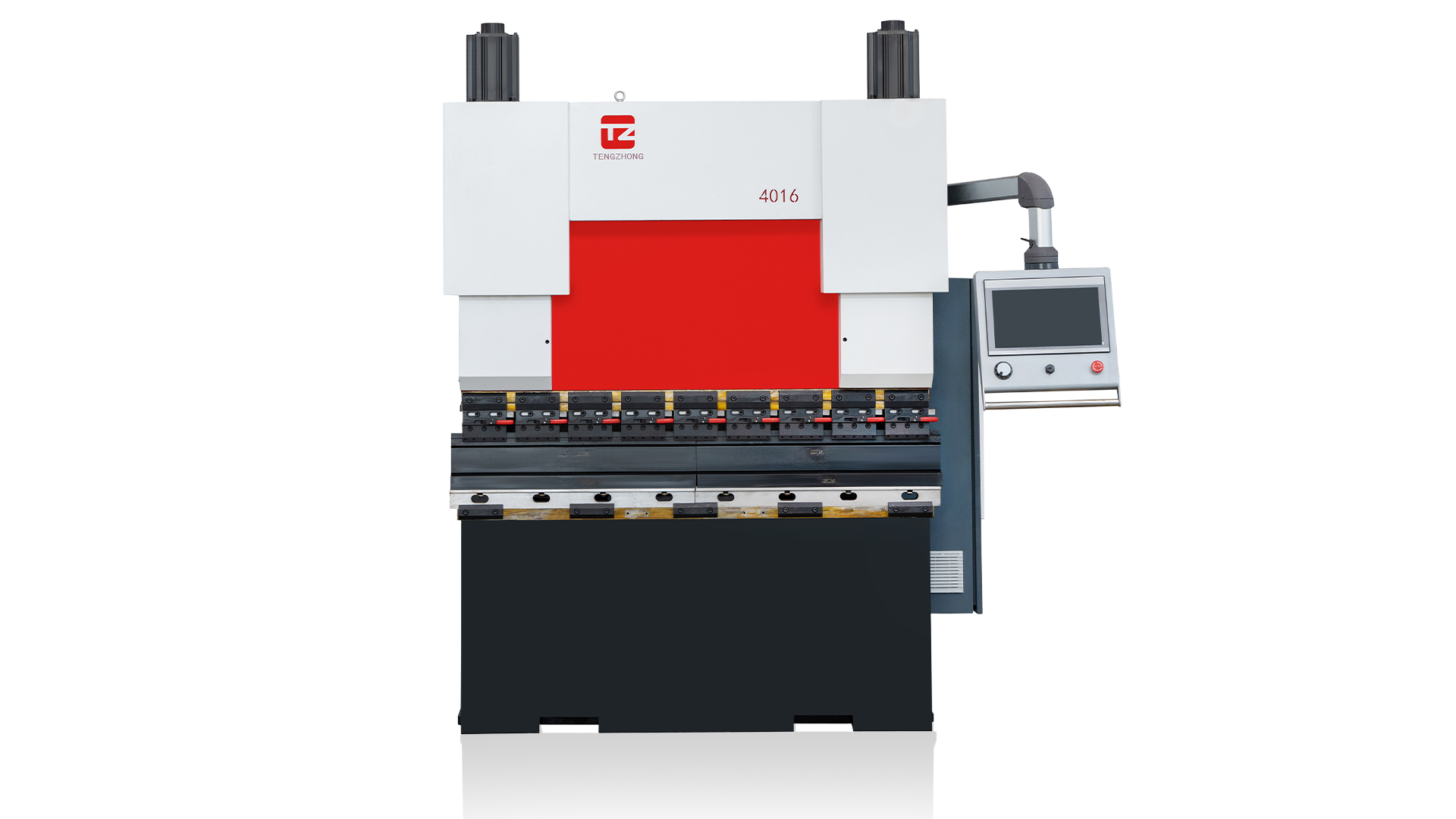
 Custom Premium CNC Servo Press Brake Suppliers, OEM/ODM Company - Nantong TengzhNantong Tengzhong Machinery Manufacturing Co., Ltd. is China custom Premium CNC Servo Press Brake suppliers and OEM/ODM company, details:...View Product →
The decision should follow your part mix, not the supplier’s brochure. An NC press brake handles the majority of sheet metal bending tasks at a lower cost. When complexity, tolerance and changeover speed become daily constraints, that is the right moment to move up the control level.
The Bottom Line
Start with the machine type that matches your real workload. For most fabrication shops, an NC press brake is the sensible middle point: controllable, repeatable and affordable. Choose the correct tonnage, bending length and back gauge configuration, keep the machine well maintained, and it will outperform a manual machine from the first day and hold its value for many years. When production grows and tolerances tighten, the path to a more automated machine will be clear and easier to justify.

-
Phone
+86 131-4173-2687
-
Address
6 Jianghai Road,Libao Town, Haian. Jiangsu Province, China
-
Medla

Copyright o Nantong Tengzhong Machinery Manufacturing Co., Ltd. All Rights Reserved.
