
 English
 русский
 Français
 Español
 Português
 عربى
عربى

-


Model:
-

Model:
-

Model:

Plate Rolling Calculator: How to Calculate Developed Length and Shell Layout
2026-09-11
Content
- 1 What a plate rolling calculator actually does
- 2 The formula at the heart of every plate rolling calculator
- 3 Add allowances after the basic length, not before
- 4 From developed length to a shell layout
- 5 What a plate rolling calculator cannot predict
- 6 Match the machine to the calculated plate
- 7 A reliable five-step estimating routine
An estimator at a plate fabrication workshop receives a request for 24 shell courses, each 2.4 m wide, rolled from 18 mm plate to an outside diameter of 1,500 mm. If he calculates the developed length from the outside diameter rather than the mean diameter, every course comes out about 57 mm too long. Across 24 courses, that is more than 1.3 m of steel that must be cut, transported, rolled, and then trimmed away. A plate rolling calculator built on the correct formula stops that waste before the material order is placed.
What a plate rolling calculator actually does
A plate rolling calculator is a pre-engineering tool that converts the finished dimensions of a rolled cylinder or cone into the flat dimensions a workshop actually needs. The outputs that matter on the shop floor are:
- Developed length: the straight plate length needed to form one full circumference.
- Mean diameter: the diameter at the neutral axis, where the plate neither stretches nor compresses.
- Plate quantity and dimensions: how many standard plates are required when a longitudinal seam is acceptable.
- Material weight: length × width × thickness × density, used for quoting, transport, and crane planning.
If the calculator returns only one number, it should be the developed length. Every other output flows from it. Once the developed length is exact, the cutting plan, the course layout, and the weight estimate follow without guesswork.
The formula at the heart of every plate rolling calculator
The standard relationship for a rolled cylinder is:
L = π × Dm
where L is the developed length and Dm is the mean diameter. The mean diameter equals the outside diameter minus the plate thickness, or equally the inside diameter plus the plate thickness:
Dm = Do - t
For the opening example, a 1,500 mm outside diameter cylinder formed from 18 mm plate has Dm = 1,500 - 18 = 1,482 mm, so L = 3.14159 × 1,482 = 4,656 mm. Using the outside diameter directly gives 4,712 mm, a surplus of 56 mm on every course. That gap is not a detail; it compounds across a production run.
| Plate thickness (mm) | Mean diameter (mm) | Developed length (mm) | Difference vs. outside diameter (mm) |
|---|---|---|---|
| 6 | 1,494 | 4,693.5 | 18.8 |
| 12 | 1,488 | 4,674.7 | 37.7 |
| 18 | 1,482 | 4,655.8 | 56.5 |
| 25 | 1,475 | 4,633.8 | 78.5 |
Notice that the difference column is exactly π × t. A sound calculator applies this automatically. Manual estimates that overlook the mean diameter are the single most common source of plate rolling errors, especially on thick plate where the effect is largest.
Add allowances after the basic length, not before
The theoretical developed length is a starting point. Three additions are normal on a real production floor:
- Pre-bending allowance: a 3-roller machine cannot curve the leading and trailing edges because the top roll does not reach them. Those flat zones are normally trimmed after rolling. A 4-roller machine pre-bends both edges and reduces this surplus.
- Cutting and weld gaps: shearing, plasma cutting, or machining each edge removes material. Adding 3 to 5 mm per edge is a common starting point, with the final figure confirmed by the actual cutting method.
- Springback: higher-strength grades such as Q345 or stainless steel spring back more after unloading. The calculated length remains valid for the neutral axis, but the machine must over-bend to reach the target diameter.
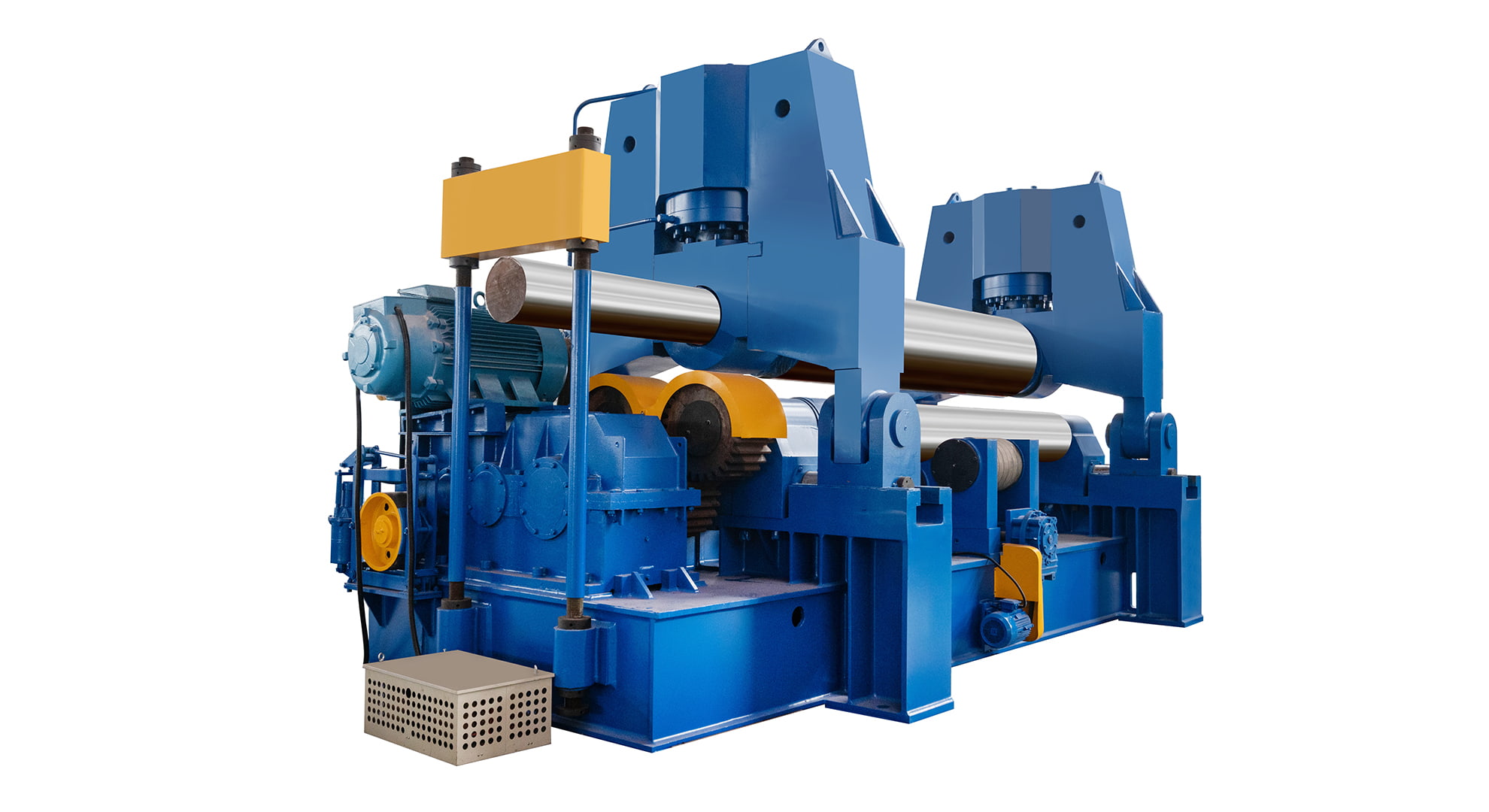
 Three-Roll Bending Machine with Arc Lifting Lower RollsThis machine pre-bends both plate ends in one pass and minimizes the remaining straight edge, making it suitable for high-precision rolling of round, arc, or conical workpieces in demanding production.View Product →
These allowances are job-specific. A calculator that ignores them is not wrong; it simply provides the geometry, and the estimator's experience closes the gap between theory and production.
From developed length to a shell layout
Once the developed length is known, layout is a matter of matching the plate to standard stock sizes. Common stock plates measure 2,000 × 6,000 mm and 2,500 × 12,000 mm. The developed length wraps around the circumference, while the plate width becomes the cylinder length. Three rules cover most shell layouts:
- If the developed length fits within the plate length, one plate produces one course. A 4,656 mm developed length fits comfortably in a 6,000 mm plate.
- If the cylinder is longer than the plate width, several courses are positioned side by side along the axis.
- Stagger the vertical seams of adjacent courses by at least one third of the course width to maintain shell rigidity.
Weight follows directly: L × W × t × density. For carbon steel at 7,850 kg/m³, a 4,656 × 2,400 × 18 mm course weighs 4.656 × 2.4 × 0.018 × 7,850 = 1,579 kg. That number drives transport cost, crane selection, and the quotation as much as the material order itself.
Plate orientation also matters. Rolling with the plate's grain direction, so that the plate length becomes the circumference, gives a cleaner surface for most forming grades. If test coupons are required by the specification, add them to the layout before cutting.
What a plate rolling calculator cannot predict
A calculator is a geometry tool, not a rolling simulation. Roundness and final dimensions still depend on machine behaviour:
- Roll configuration: 3-roller machines are simple and economical for general cylindrical work. 4-roller machines add a lower pinch roll, which improves pre-bending and roundness for thick or high-strength plate.
- Machine capacity: the roll length must exceed the plate width, and the rated pre-bending thickness must cover the actual material grade. A calculator that outputs a 25 mm thick, 2.4 m wide course will not roll on a machine rated at 16 mm.
- Alignment and roll gap: non-parallel rolls produce a conical shape, and an incorrect roll gap leaves the two ends unable to meet. Adjustment remains an operator skill.
The calculation is the first step; the operator still checks the diameter with a template and adjusts the roll gap. See our comparison of 3-roller and 4-roller plate rolling machines, and browse our plate rolling machine range for the capacities that matter.
Match the machine to the calculated plate
The calculator narrows down the plate geometry; the machine decision comes next. Three practical checks apply:
- Plate width versus roll length: roll length must exceed the maximum plate width, or the edges will remain unrolled.
- Thickness versus rated capacity: the rated pre-bending thickness is usually lower than the rated rolling thickness. Use the pre-bending figure for thick plate.
- Minimum diameter: the finished cylinder diameter must be larger than the machine's minimum, which depends on the top roll diameter.
For general three-roll work in structural and tank fabrication, a 3-roller hydraulic machine combines simple operation with solid output.
Hydraulic Three-Roll Bending Machine with Electronic LevelingOffers automatic leveling and digital display for consistent pre-bending, reducing straight edge to under 2.5 times plate thickness. Ideal for structural and tank fabrication requiring simple yet reliable operation.View Product →
When the job involves thick plate, tight roundness tolerances, or repeat batches, a CNC 4-roller machine delivers consistent pre-bending and closer control of the finished diameter.
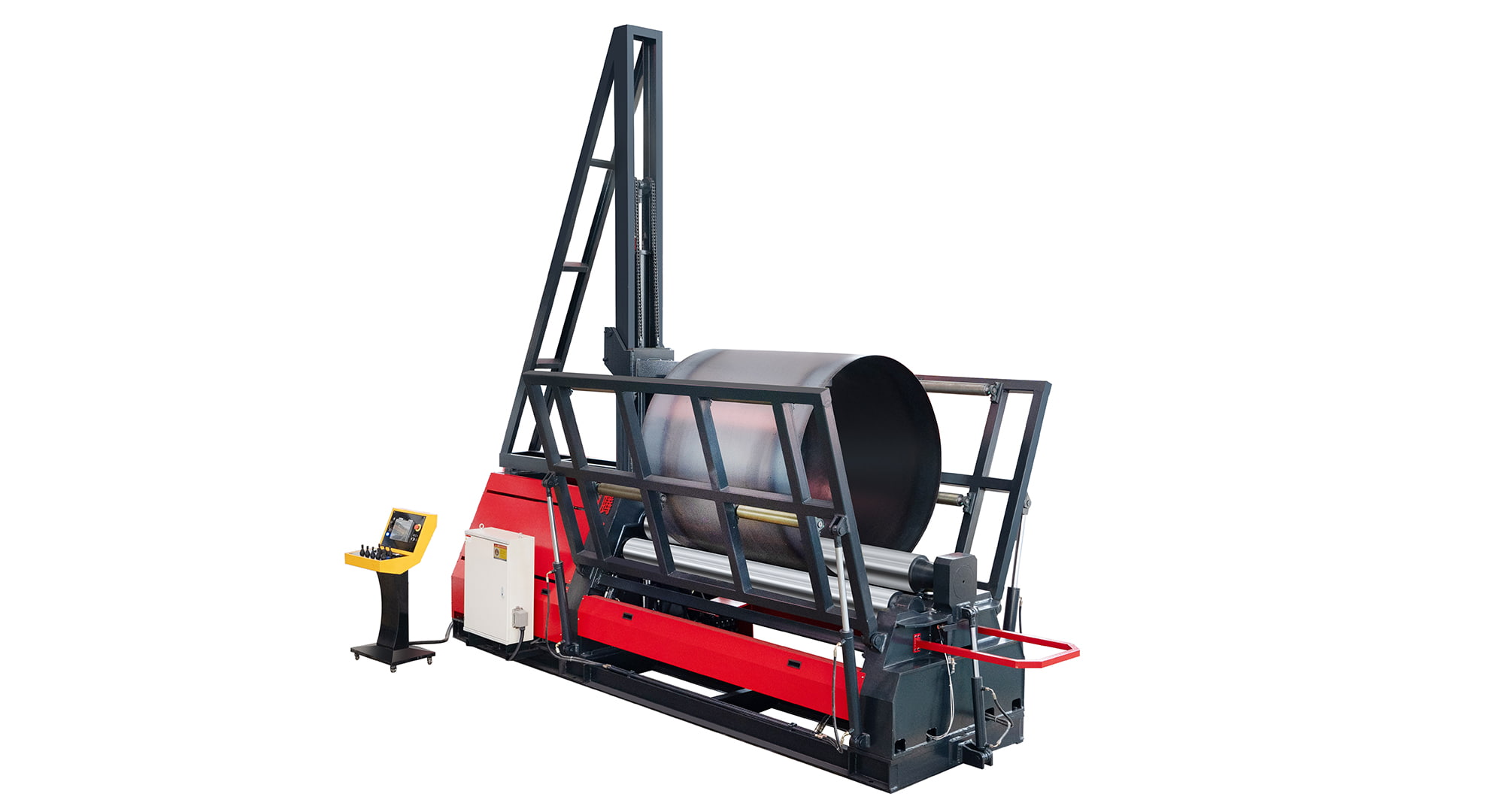
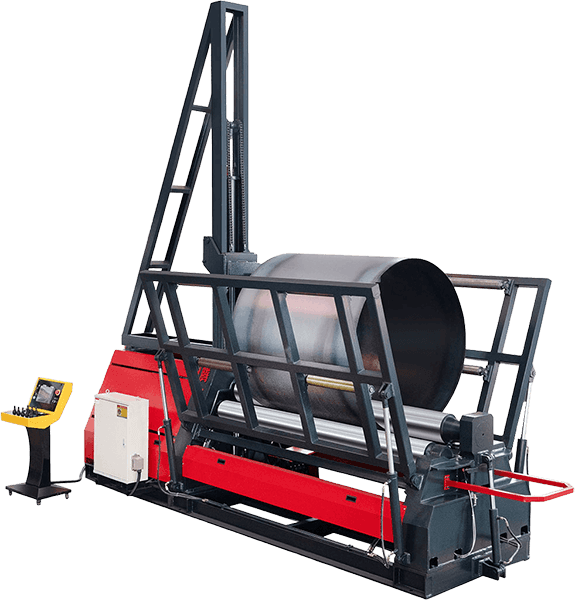 CNC Four-Roll Bending Machine for High-Precision RollingProvides consistent pre-bending and tighter diameter control for thick plate and repeat batches. Features a touchscreen PLC system with manual, semi-automatic, and fully automatic modes for efficient production.View Product →
A reliable five-step estimating routine
Putting the calculation into practice, a dependable sequence for rolled shells looks like this:
- Record the cylinder outside diameter, plate thickness, plate width, and material grade.
- Compute the developed length using Dm = Do - t and multiply by π, then calculate the weight per course.
- Add pre-bending, cutting, and weld-gap allowances. Keep a conservative margin until a test piece confirms the actual values.
- Lay the courses out on standard plate sizes, stagger the vertical seams, and confirm that the plate length is available from the stockist.
- Compare the plate width and thickness with the machine's roll length, pre-bending capacity, and minimum diameter. Adjust the process or the machine before cutting steel.
This sequence works for a one-off repair shell and a production order of fifty courses alike. The calculator removes the guesswork from the geometry; workshop experience handles the tolerances that no formula can fully capture.
No calculator will roll the plate for you. But the correct one tells the shear operator where to cut, the rolling operator which diameter to chase, and the purchasing team how much steel to buy. That is why the plate rolling calculation, done properly on the mean diameter with realistic allowances, remains one of the highest-leverage skills in metal fabrication.

-
Phone
+86 131-4173-2687
-
Address
6 Jianghai Road,Libao Town, Haian. Jiangsu Province, China
-
Medla

Copyright o Nantong Tengzhong Machinery Manufacturing Co., Ltd. All Rights Reserved.
