
 English
 русский
 Français
 Español
 Português
 عربى
عربى

-


Model:
-

Model:
-

Model:

Selecting & Operating Plate Rolling Machines for Metal Fabrication
2026-07-10
Content
To achieve precise and consistent bends in metal fabrication, selecting the appropriate plate rolling machine hinges on evaluating material characteristics, desired production volume, and the complexity of the forming task. A thoughtful choice combined with correct operating procedures ensures safety, extends machine lifespan, and delivers high‑quality results.
Material and Capacity Factors That Drive Selection
The starting point for any plate rolling machine decision is the material itself. Three parameters define the forming challenge: maximum plate thickness, material yield strength, and the smallest bending diameter. A machine rated for 10 mm mild steel may only handle 6 mm stainless steel because of the higher tensile strength. Ignoring this leads to under‑capacity, excessive springback, or mechanical overload.
Working width is equally important. The machine’s roll length must exceed the widest plate to be formed. For shipbuilding or large storage tank construction, widths beyond 3000 mm are common, while general fabrication shops often work within 2000 mm. Matching the machine to both the typical and the extreme dimensions in your production mix avoids bottlenecks.
| Machine Class | Typical Thickness (Mild Steel) | Working Width | Application |
|---|---|---|---|
| Light‑duty | 1–6 mm | 1000–2000 mm | HVAC ducts, decorative panels |
| Medium‑duty | 6–20 mm | 1500–3000 mm | Pressure vessels, structural sections |
| Heavy‑duty | 20–100+ mm | 2500–4500 mm | Ship frames, wind tower bases |
A practical rule: always choose a machine with at least 20% extra capacity above the thickest, strongest material you routinely process. This headroom compensates for variations in plate properties and reduces wear on critical components.
Machine Configurations and Their Practical Benefits
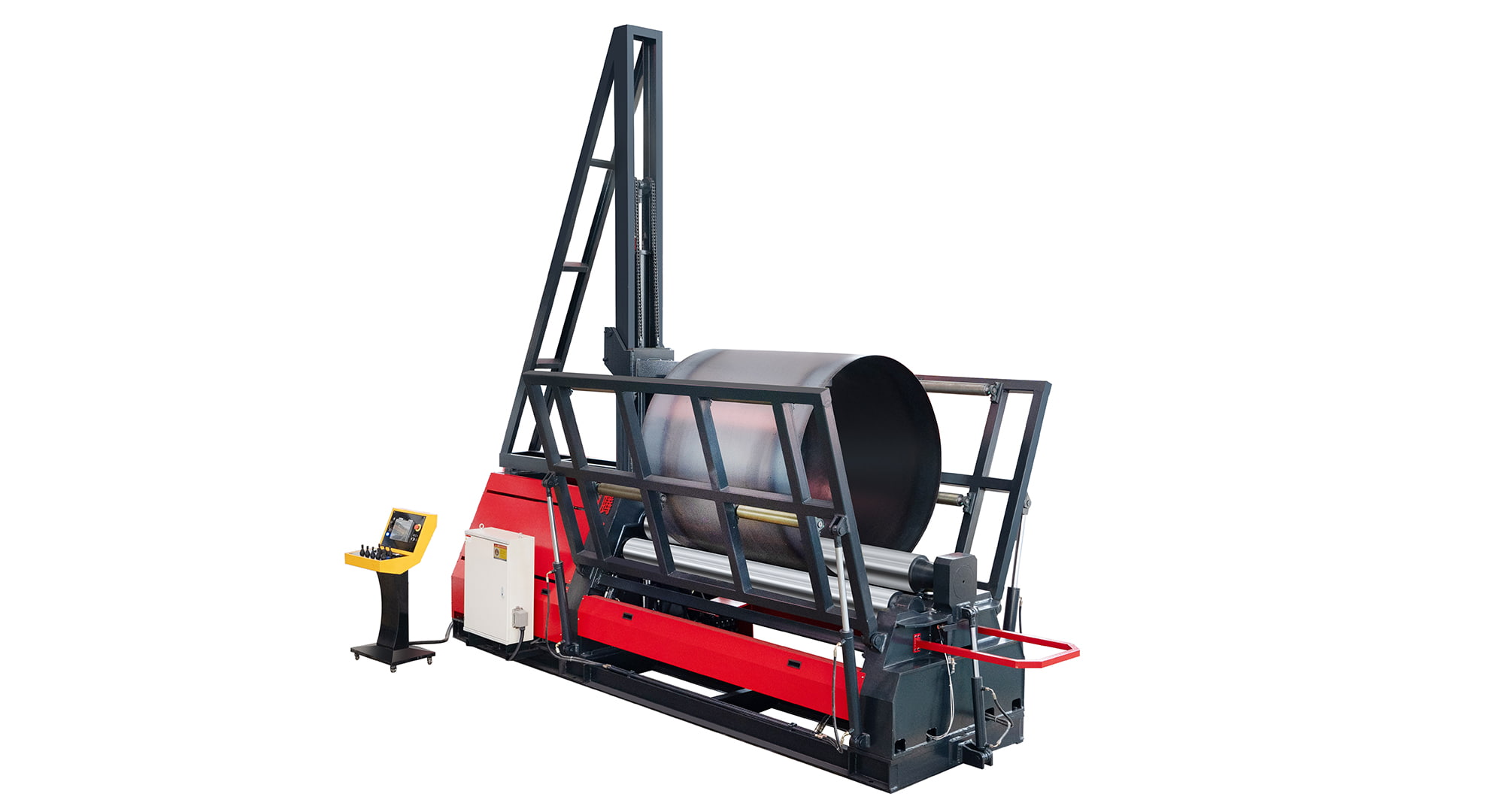
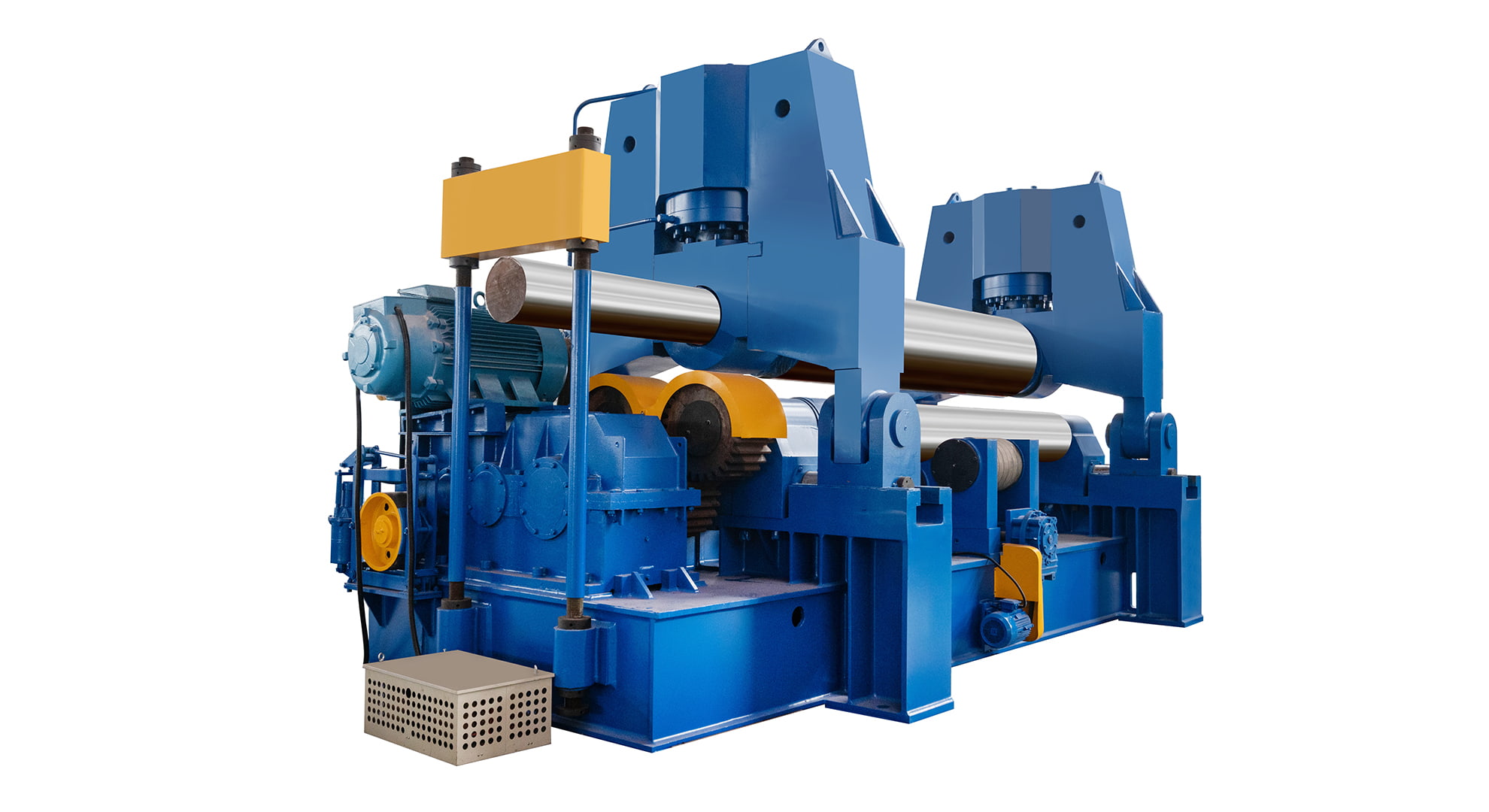
The mechanical arrangement of the rolls directly influences bending capability and ease of use. Three‑roll machines are the most common and come in two primary layouts: pyramid and variable translation. Four‑roll designs offer additional advantages for certain workflows.
Pyramid Three‑Roll Configuration
Here the top roll is fixed, and the two lower rolls move upward to grip the plate. Bending occurs between the three contact points. The main limitation is a flat section left at each end, which usually requires pre‑bending or secondary operations. Still, this simple, robust design is cost‑effective for structural and architectural work where edge‑to‑edge rolling is not critical.
Variable Translation and Four‑Roll Systems
Variable translation machines move the rolls linearly, enabling them to pinch the plate and bend the leading edge directly. Four‑roll models feature a bottom roll that pinches the material while the side rolls perform bending. This configuration eliminates the need to remove, turn, and re‑insert the plate, which significantly speeds up production. In one‑pass complete cylinder rolling, a four‑roll machine can reduce cycle time by up to 40% compared to a conventional pyramid machine. For high‑mix, low‑volume job shops, this versatility reduces material handling and operator fatigue.
Operational Practices That Improve Accuracy
Even the most capable plate rolling machine will deliver inconsistent results without proper setup and technique. Attention to a few operational details makes a measurable difference in final part quality.
Pre‑Bending and Edge Preparation
The flat spots at the lead and tail ends can be eliminated by pre‑bending the plate edges before the main rolling pass. On a three‑roll pyramid machine this is done with a press brake or a dedicated pre‑bending fixture. Four‑roll machines can perform pre‑bending in the machine itself. Operators should verify that the bent edge matches the target radius using a template, especially when the finished diameter tolerance is less than ±2 mm.
Achieving a Uniform Radius
Gradual, multi‑pass rolling consistently outperforms aggressive single‑pass attempts. Each successive pass should reduce the forming radius by a controlled increment. Feed rate should be stable, typically between 3 and 5 meters per minute for most hydraulic machines. Monitoring the roll deflection under load is critical; crowning systems (either adjustable wedges or shimmed rolls) compensate for the natural bending of the rolls and keep the formed cylinder straight along its width.
- Check roll parallelism with a feeler gauge at both ends before starting a new batch.
- Use a digital radius template or a chord gauge to verify the curvature after the first pass.
- For conical rolling, offset the small‑diameter end by adjusting one side roll position while maintaining equal feed.
Maintenance Routines That Keep Performance Consistent
A plate rolling machine is a long‑term capital investment. A structured maintenance program not only prevents breakdowns but also safeguards bending accuracy. Neglected roll surfaces develop pitting and scoring that transfer to the workpiece, while worn bearings create runout and inconsistent gaps.
| Maintenance Task | Frequency | Impact if Skipped |
|---|---|---|
| Roll surface cleaning and inspection | Daily | Surface marks on finished parts, corrosion initiation |
| Hydraulic oil and filter replacement | Every 2000 operating hours | Sluggish cylinder response, pressure loss |
| Bearing and guideway lubrication | Weekly | Uneven roll movement, premature wear |
| Roll parallelism and alignment check | Monthly | Tapered cylinders, diameter deviation |
A documented log of alignment measurements helps detect drift before it becomes a quality issue. Operators should also be trained to recognize early signs of seal leakage or unusual noise, as prompt intervention typically prevents more expensive damage to the hydraulic manifold and cylinders.
Operator Skill and Common Pitfalls to Avoid
Well‑maintained equipment can still produce scrap if the operator overlooks fundamental forming principles. One frequent mistake is applying excessive pressure in a single pass, which causes localised thinning and cracking. Another is feeding plate with uneven mill scale or surface rust, which accelerates roll wear and generates surface defects on the workpiece.
Proper training should cover:
- Reading material test certificates to determine actual yield and tensile strength.
- Calculating the developed length for cylinder and cone blank sizes.
- Adjusting the machine’s bending sequence based on springback measurements from a test piece.
Springback compensation is particularly critical when working with high‑strength steels; a test bend may spring open by 10–15% of the intended radius. An experienced operator records the required over‑bend for each material grade and thickness, building a reference library that dramatically reduces setup time on repeat jobs.

-
Phone
+86 131-4173-2687
-
Address
6 Jianghai Road,Libao Town, Haian. Jiangsu Province, China
-
Medla

Copyright o Nantong Tengzhong Machinery Manufacturing Co., Ltd. All Rights Reserved.
