
 English
 русский
 Français
 Español
 Português
 عربى
عربى

-


Model:
-

Model:
-

Model:

4 Roller Rolling Machine: How It Works and What It Can Do
2026-03-06
Content
- 1 What a 4 Roller Rolling Machine Actually Does
- 2 How the Four Roller System Works
- 3 Types of 4 Roller Rolling Machines
- 4 Key Advantages Over 2 and 3 Roller Machines
- 5 What Materials Can a 4 Roller Rolling Machine Handle
- 6 How to Choose the Right 4 Roller Rolling Machine
- 7 Cone Rolling with a 4 Roller Machine
- 8 Operating Safely and Maintaining the Machine
- 9 Conclusion
What a 4 Roller Rolling Machine Actually Does
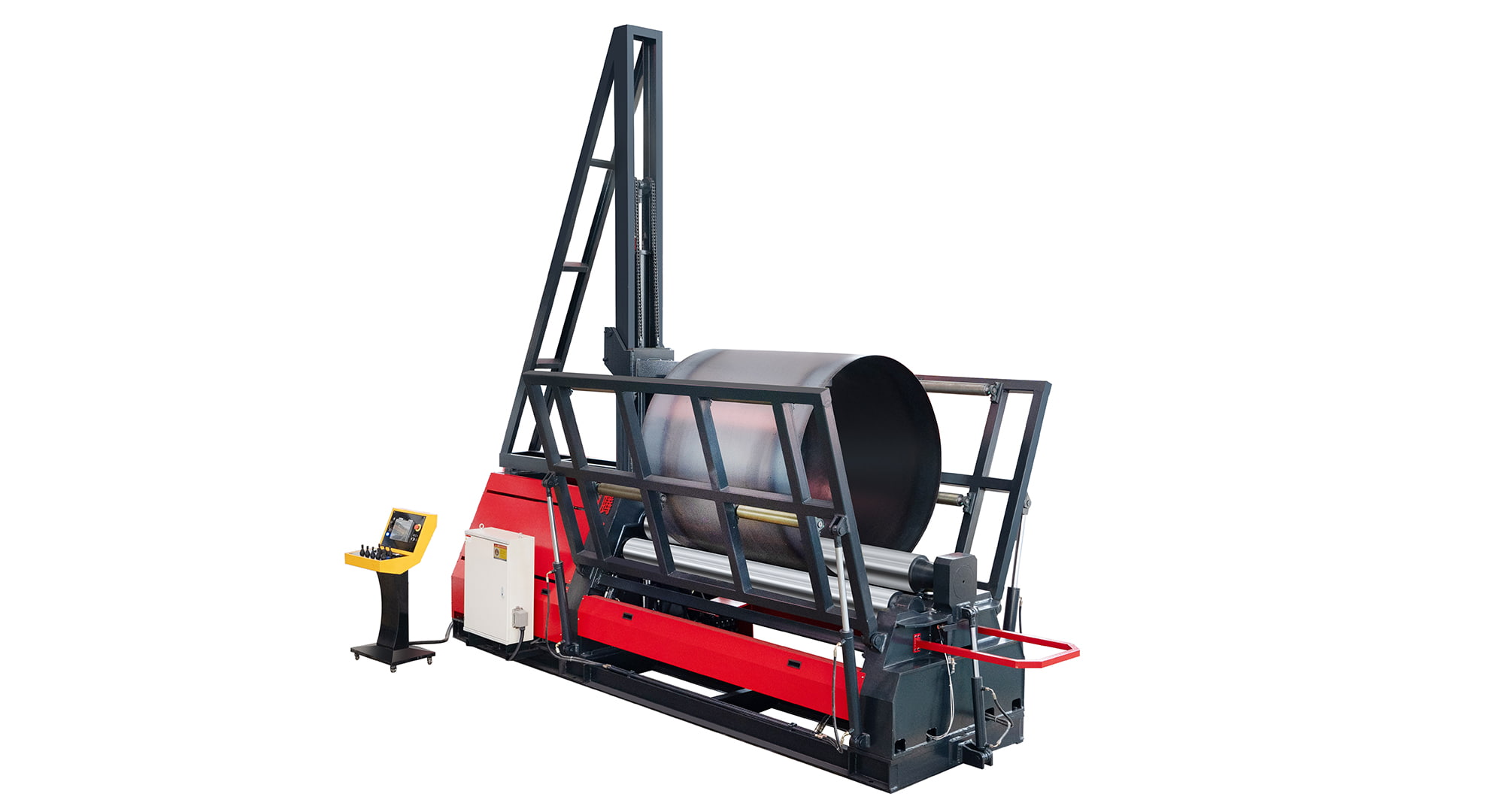
A 4 roller rolling machine bends metal plates into cylinders, cones, or curved shapes using four rollers arranged in a specific pattern. The defining advantage over 2 and 3 roller alternatives is that the leading and trailing edges of the plate can be pre-bent without repositioning the workpiece, which eliminates flat spots at both ends and dramatically reduces material waste and setup time.
This machine is the standard choice in industries that demand precision rolled sections with minimal flat ends, including pressure vessel fabrication, shipbuilding, wind tower manufacturing, and heavy structural work. If consistent, high-quality rolling with reduced operator intervention is the goal, the 4 roller configuration delivers it more reliably than any other rolling method.
How the Four Roller System Works
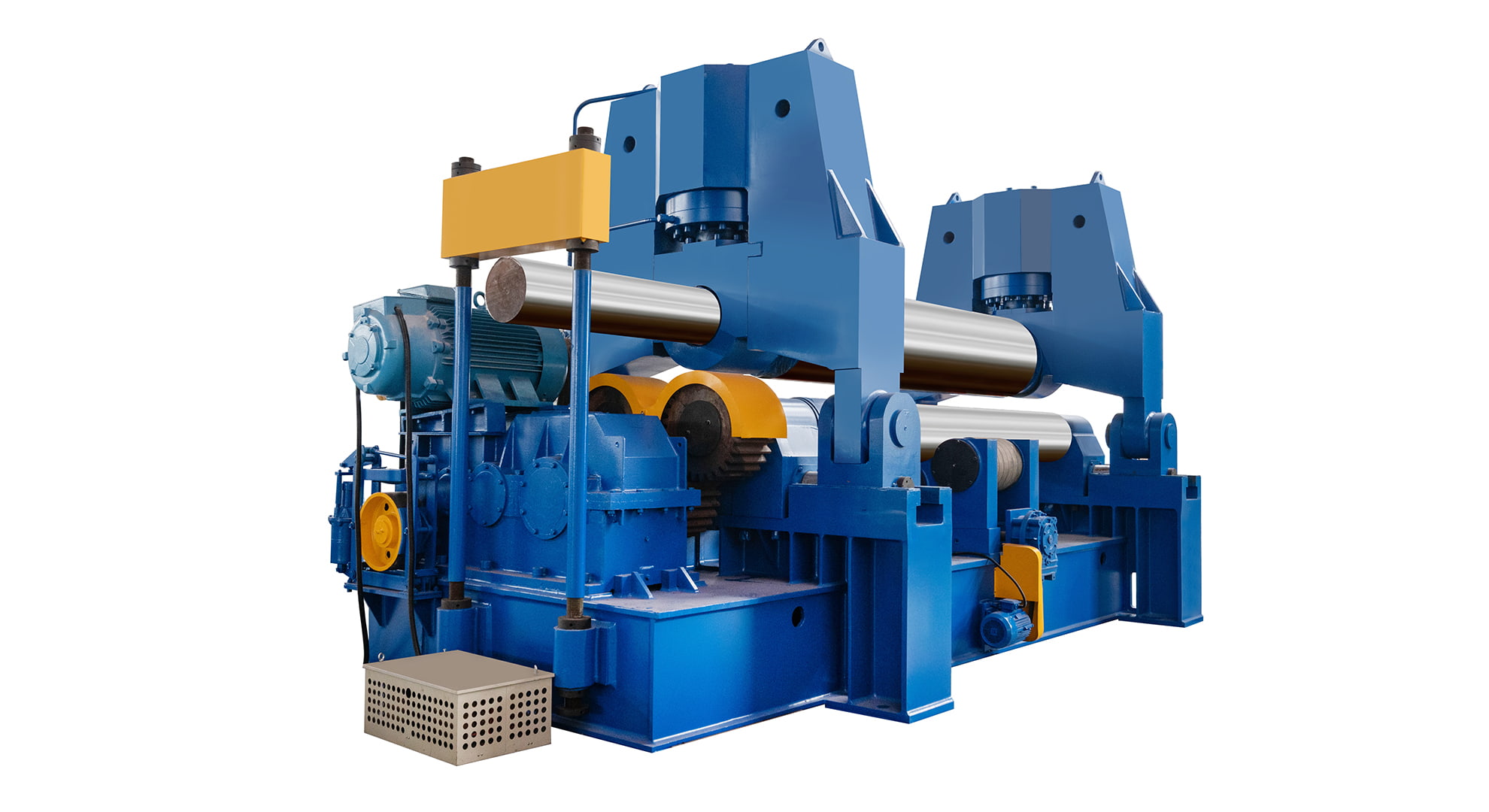
The machine consists of one top roller, one bottom roller, and two side rollers positioned symmetrically. Each roller plays a distinct role in the bending sequence.
The Role of Each Roller
- Top roller: Acts as the main bending point. It is fixed in vertical position and drives the plate through the machine.
- Bottom roller: Moves vertically to clamp the plate firmly against the top roller, providing the grip needed for feeding and preventing slippage.
- Side rollers (left and right): Move independently in a tilting or lateral arc to apply bending force. Their position determines the bending radius.
When a plate is loaded, the bottom roller clamps it in place. One side roller tilts upward to pre-bend the leading edge. The plate is then fed through as the side rollers apply continuous bending pressure. Before the trailing end exits, the opposite side roller pre-bends it. The result is a fully rolled section with no unbent flat zones at either end, a problem that affects virtually every 3 roller machine.
Pre-Bending Capability in Practice
On a 3 roller machine, the flat end zone typically ranges from 10 to 15 percent of plate thickness multiplied by a geometry factor, often leaving 50 mm to 150 mm of unbent material at each end. On a 4 roller machine, this is reduced to near zero. For a fabricator rolling 20 mm thick structural steel into a 1000 mm diameter cylinder, eliminating those flat ends can save significant grinding, cutting, and rework labor on every single part.
Types of 4 Roller Rolling Machines
Not all 4 roller machines are built the same way. The configuration of the side rollers determines how the machine handles different plate sizes, materials, and bending radii.
| Configuration | Side Roller Movement | Best For | Typical Capacity Range |
|---|---|---|---|
| Tilting side rollers | Arc or angular tilt | General fabrication, varied radii | 6 mm to 50 mm plate thickness |
| Laterally sliding side rollers | Linear horizontal movement | Large diameter, heavy plate work | 20 mm to 100 mm plate thickness |
| Variable geometry | CNC-controlled multi-axis | Cone rolling, complex profiles | Varies by model |
Tilting configurations are the most common in general metalworking shops because they balance flexibility with mechanical simplicity. Laterally sliding configurations are preferred in heavy industry where plate thickness regularly exceeds 40 mm and the bending forces involved require a more rigid linear mechanism.
Key Advantages Over 2 and 3 Roller Machines
Choosing a 4 roller machine over simpler alternatives is not just about eliminating flat ends. The full picture of benefits explains why the additional mechanical complexity is worth it in production environments.
- No plate repositioning required: On a 3 roller machine, the operator must remove the plate, flip it, and reinsert it to pre-bend the trailing edge. A 4 roller machine handles both ends in a single continuous pass, cutting cycle time by 30 to 50 percent on typical cylinder jobs.
- Better clamping and feeding: The independently driven bottom roller creates a positive clamping grip on the plate, reducing the risk of slippage on thicker or harder materials like high-strength structural steel or stainless steel.
- Higher dimensional accuracy: Because the plate does not need to be repositioned, alignment errors introduced by manual handling are eliminated. This is critical when rolling to tight diameter tolerances.
- Reduced operator skill dependency: The automated pre-bending sequence means less relies on operator judgment, making it easier to train new operators and maintain consistent quality across shifts.
- Easier CNC integration: The additional axis of control offered by independently adjustable side rollers makes 4 roller machines well-suited to CNC automation for repeatable production runs.
What Materials Can a 4 Roller Rolling Machine Handle
These machines are designed primarily for metal plate rolling. The range of compatible materials is broad, but the machine must be sized correctly for the material yield strength and plate thickness.
Common Materials Rolled on 4 Roller Machines
- Mild and structural carbon steel (the most common application)
- Stainless steel, which work-hardens and requires higher rolling force than mild steel of equivalent thickness
- Aluminum alloys, where softer grades roll easily but care must be taken with roller surface finish to avoid marking
- Copper and brass for specialized applications in the aerospace and chemical industries
- High-strength low-alloy steels used in pressure vessel and offshore structure fabrication
A general rule: machines rated for mild steel can typically handle stainless steel at roughly 60 percent of the rated mild steel capacity, because stainless has a yield strength approximately 1.5 to 1.7 times higher. Always confirm actual material yield strength against machine specifications before committing to a rolling program.
How to Choose the Right 4 Roller Rolling Machine
Selecting the correct machine requires matching the machine specifications to the actual workpiece demands. Undersizing leads to mechanical overload and premature wear. Oversizing increases capital cost unnecessarily.
Critical Specifications to Evaluate
- Maximum plate thickness and width: These are the primary capacity ratings. A machine listed as capable of rolling 25 mm x 2000 mm in mild steel defines the upper boundary for plate dimensions.
- Minimum bending diameter: This is the smallest cylinder the machine can form. It is typically around 1.5 to 2 times the top roller diameter. Attempting to roll below the minimum diameter risks permanent deflection of the rollers.
- Roller diameter and material: Larger diameter rollers resist deflection under load and produce more uniform bending across the plate width. Rollers are typically made from forged and hardened steel with surface hardness in the range of 52 to 60 HRC.
- Drive system: Hydraulic drive systems provide smooth, adjustable force and are standard on most production-grade machines. Mechanical drive systems may be found on older or smaller machines and offer less force modulation.
- CNC or manual control: Manual control is sufficient for low-volume or one-off work. CNC control is cost-effective when rolling to consistent diameters across production runs of 20 or more identical parts per shift.
Springback Consideration
All metal plate springs back after bending. For mild steel, springback is relatively predictable, typically requiring the side rollers to over-bend by 5 to 15 percent beyond the target radius. High-strength steels can spring back 20 to 40 percent, requiring more passes or significant overbend compensation. CNC-controlled machines can store springback correction values by material grade and thickness, eliminating trial-and-error on repeat jobs.
Cone Rolling with a 4 Roller Machine
Rolling conical sections is one area where the 4 roller machine demonstrates a significant capability advantage. On a standard 3 roller machine, cone rolling requires constant manual adjustment and significant operator expertise. On a 4 roller machine, the side rollers can be set at differing heights along the plate width, creating a graduated bending gradient that produces a tapered cone profile.
Cone angles typically achievable on a properly configured 4 roller machine range from 5 degrees to around 45 degrees from the cylinder axis, depending on the machine design and plate dimensions. For wind tower transitions, which routinely require cone sections with apex half-angles between 15 and 30 degrees, this is a critical production capability.
Operating Safely and Maintaining the Machine
Rolling machines involve significant stored mechanical energy and rotating components. Safety and maintenance disciplines are not optional extras but directly affect both operator safety and machine service life.
Routine Maintenance Priorities
- Check hydraulic oil level and condition at the start of each shift. Contaminated oil accelerates pump and cylinder wear.
- Inspect roller surfaces for pitting, scoring, or debris that could mark plate surfaces during rolling.
- Lubricate all grease points according to the maintenance schedule, typically every 50 to 100 operating hours depending on load conditions.
- Check roller parallelism periodically. Misaligned rollers produce tapered or bowed cylinders even when following correct procedures.
- Monitor hydraulic cylinder seals for leakage, which indicates seal wear and can lead to loss of clamping force mid-operation.
Operational Safety Practices
- Never reach over or near the pinch point between rollers while the machine is powered.
- Use material supports or cranes to handle heavy plate, especially when feeding plates over 500 kg into the machine.
- Verify that the rolled cylinder is stable before releasing clamping pressure, as partially rolled sections can spring unpredictably.
- Keep the work area clear of personnel not directly involved in the rolling operation during active cycles.
Conclusion
A 4 roller rolling machine is the most capable and production-efficient choice for plate bending in professional metalworking environments. Its ability to pre-bend both ends of a plate in a single pass, combined with precise clamping, consistent radius control, and compatibility with CNC automation, makes it the clear choice for fabricators who roll cylinders, cones, and curved sections regularly. For operations rolling more than a few cylinders per week, the productivity gains and quality improvements over 3 roller alternatives will recover the higher capital cost within a short production period. Choosing the right machine depends on accurately matching capacity specifications to the heaviest and widest plate the shop needs to process, with material yield strength factored into the calculation.

-
Phone
+86 131-4173-2687
-
Address
6 Jianghai Road,Libao Town, Haian. Jiangsu Province, China
-
Medla

Copyright o Nantong Tengzhong Machinery Manufacturing Co., Ltd. All Rights Reserved.
