
 English
 русский
 Français
 Español
 Português
 عربى
عربى

-


Model:
-

Model:
-

Model:

3 Roller Rolling Machine: Types, Key Specs & How to Choose the Right One
2026-06-23
Content
Most shops buying their first plate rolling machine ask the wrong question: "How many rollers do I need?" The better question is: "What kind of pre-bending accuracy do I actually need — and am I willing to flip the plate to get it?" That single answer determines whether a 3 roller rolling machine with arc-downward pre-bending is the right call, or whether you're overpaying for a 4-roller system you don't actually need.
The 3 Main Types — and Why the Arc-Downward Design Leads
Three-roller machines come in three configurations, and they are not equally capable:
- Symmetrical (mechanical): The upper roller presses down at the midpoint between two fixed lower rollers. Simple and affordable, but it requires external equipment to pre-bend plate ends — a productivity bottleneck on any busy shop floor.
- Asymmetrical (mechanical): The upper roller is offset, giving you some pre-bending without extra tooling. Better than symmetrical, but operator skill heavily influences the result.
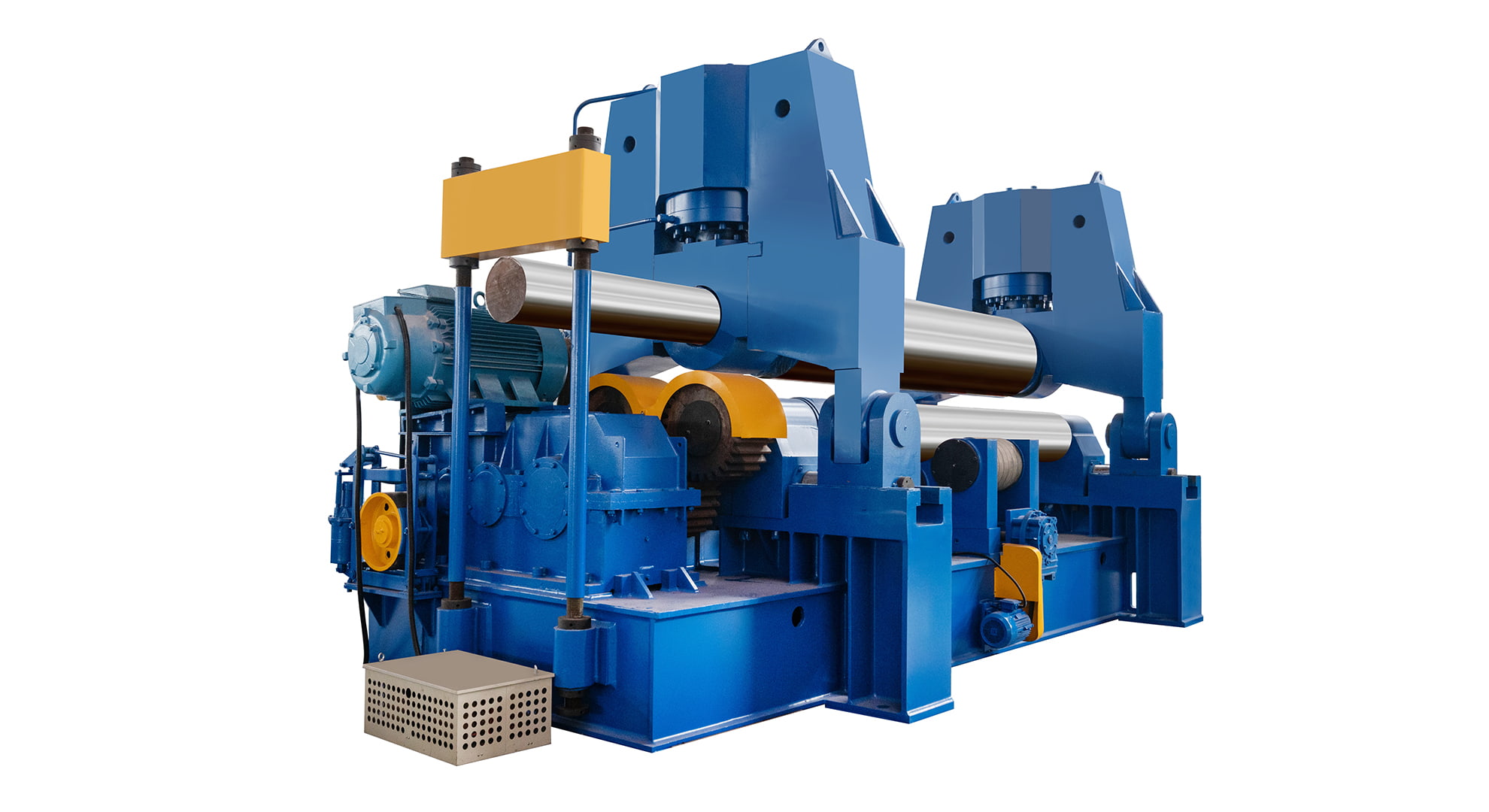
- Arc-downward adjusting (hydraulic): The two lower rollers lift along a precise arc trajectory, clamping and pre-bending both plate ends in a single feed pass. No plate flipping. No auxiliary tooling. The remaining straight edge is typically no more than the plate thickness itself — a standard that mechanical machines simply cannot match.
The arc-downward design is derived from European technology and represents the current engineering benchmark for 3-roller machines. It is what separates entry-level rolling from production-grade rolling.
5 Specs That Actually Matter When You're Buying
Salespeople lead with maximum plate thickness. That's the least useful number on the spec sheet. Here are the five that actually determine whether a machine fits your work:
- Synchronization accuracy of the lower rollers. On a well-built arc-downward machine, both lower rollers rise in sync to within ±0.2 mm. Anything looser than that introduces taper error into your cylinders — a problem that compounds over long rolling lengths.
- Minimum bending diameter. This is constrained by the top roller's own diameter. A reliable benchmark: the smallest achievable inside diameter is approximately 3× the top roller diameter. If your product requires tight-radius shells, verify this number against your thickest material before you buy.
- Roll hardness and crown. Soft rolls deflect under load and leave a flat spot on the plate edge — exactly the defect that arc-downward geometry is supposed to prevent. Look for rolls that are CNC induction-hardened to HRC 54–58, polished after hardening, and machined with a crown profile to compensate for deflection under bending load. Forged steel blanks, not cast, are the baseline for serious work.
- Drive configuration. All three rolls should be active drive rolls. A passive top roll lets the plate slip during pre-bending — a particular problem with stainless steel, aluminum alloy, and any surface-treated material where friction is low. Full tri-drive with hydraulic motors eliminates slippage and allows consistent torque across the width.
- Control system capability. A 15-inch CNC screen with an automatic rolling program allows one-button operation: the machine sequences pre-bending, rolling, and arc-calibration automatically. Programs can be numbered, stored, and recalled — critical when you run varied product batches and want repeatability without re-setup time.
3-Roller vs. 4-Roller: An Honest Comparison
A common misconception about 3-roll vs. 4-roll plate rolling machines is that four rollers automatically means better quality. It means different quality, optimized for different needs.
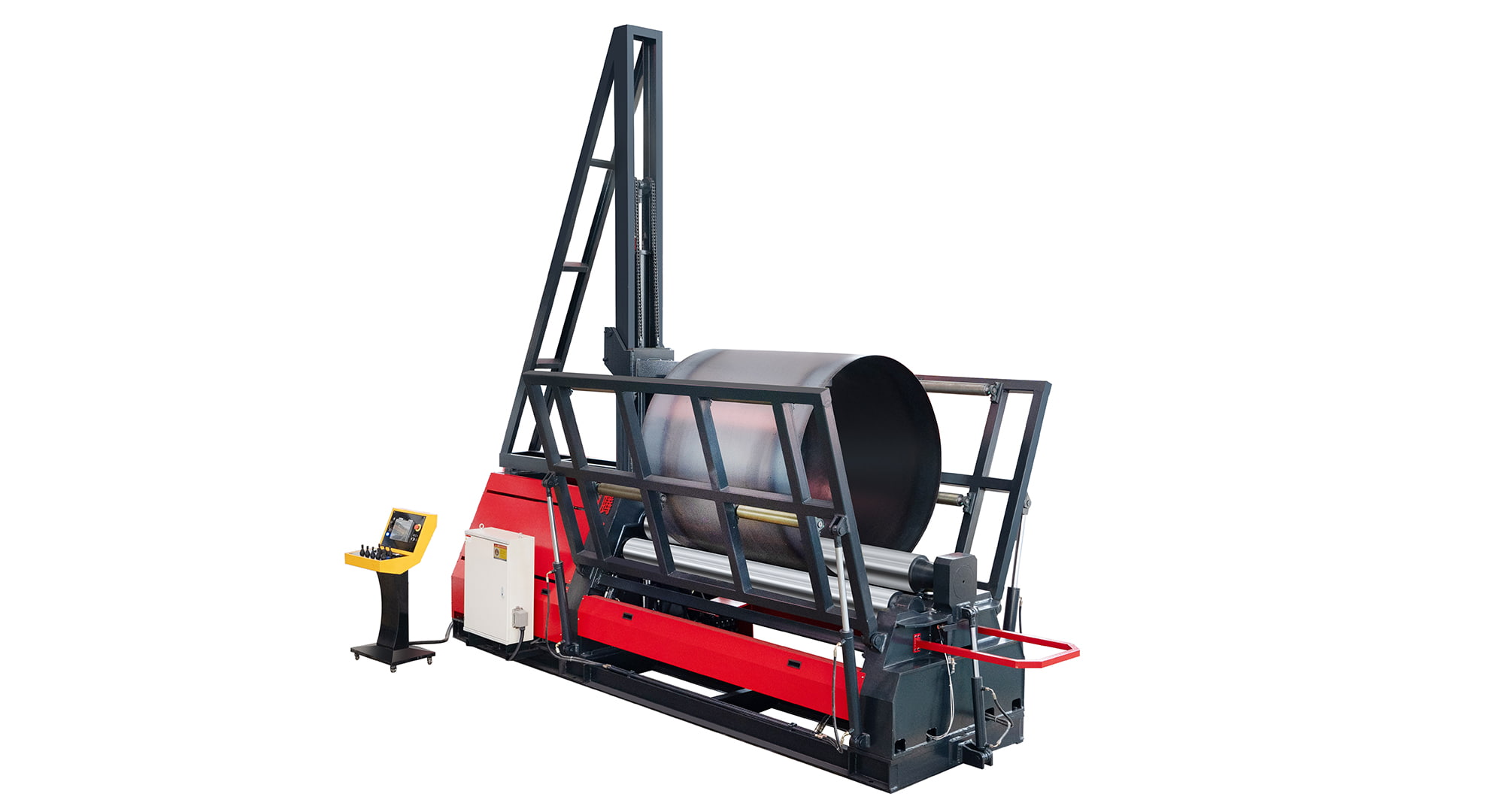
| Factor | 3 Roller (Arc-Downward) | 4 Roller (CNC Hydraulic) |
|---|---|---|
| Pre-bending | Both ends in one feed pass | Both ends in one feed pass + side rollers |
| Plate repositioning | Not required | Not required |
| Minimum straight edge | ≈ Plate thickness | Near zero |
| Material versatility | Steel, stainless, aluminum, thick plate | Same, plus better cone control |
| Investment cost | Lower | Higher |
| Best for | Cylinders, arcs, cones, general fabrication | High-volume, tight-tolerance, pressure vessels |
For most general fabrication shops — producing storage tanks, structural cylinders, pipe sections, and architectural metalwork — a quality arc-downward 3 roller rolling machine delivers everything the work demands. The step up to a CNC 4-roller plate rolling machine makes economic sense when you are running high daily volumes, working with very thick plate, or holding tolerances that approach pressure-vessel certification standards.
What the Rolling Process Actually Looks Like
Understanding the sequence helps you evaluate any machine's spec sheet more critically. On an arc-downward 3-roller:
- The plate feeds between the top roll and the two lower rolls.
- Both lower rolls rise synchronously along the arc, clamping the plate and initiating the pre-bend at the leading edge.
- All three rolls rotate together, advancing the plate by friction and applying continuous bending force.
- At the trailing edge, the arc movement is repeated to pre-bend the second end — in the same pass, without repositioning.
- Additional passes tighten the radius until the target diameter is reached, confirmed by the CNC program or manual gauging.
The machine is also capable of rolling arc segments, conical workpieces, and performing light plate leveling — functions that would otherwise require separate equipment on a less capable machine.
Making the Right Decision
If your work involves stainless steel or aluminum — materials that slip on passive rolls — full tri-drive is non-negotiable. If you run small batches of varied diameters, CNC program storage pays for itself within weeks. And if you are still comparing the hydraulic 3 roller rolling machine against mechanical alternatives, the arc-downward hydraulic design consistently outperforms on pre-bending quality, repeatability, and material throughput — without the footprint and cost of moving to four rollers.
The complete range of plate rolling machines including 3-roller and 4-roller configurations covers most fabrication requirements. Match the machine to the tightest tolerance your production demands — not to the heaviest plate you might someday roll.

-
Phone
+86 131-4173-2687
-
Address
6 Jianghai Road,Libao Town, Haian. Jiangsu Province, China
-
Medla

Copyright o Nantong Tengzhong Machinery Manufacturing Co., Ltd. All Rights Reserved.
