
 English
 русский
 Français
 Español
 Português
 عربى
عربى

-


Model:
-

Model:
-

Model:

What is a Shearing Machine? Types, Uses & How It Works
2026-02-05
Content
A shearing machine is a mechanical cutting device that uses two sharp blades moving past each other to cut sheet metal, plates, and other materials in a straight line. Unlike sawing or drilling, shearing produces clean, square cuts without generating heat or chips, making it essential equipment in metal fabrication shops, manufacturing facilities, and construction sites worldwide.
The machine operates on a simple principle: one blade remains stationary while the other moves vertically or horizontally to slice through the material. This process is similar to how scissors cut paper, but with significantly more force—industrial shearing machines can generate between 20 to 600 tons of cutting pressure, depending on their size and capacity.
How Shearing Machines Work
The shearing process involves four distinct stages that occur within seconds. The material is first positioned against the back gauge, which ensures accurate cut dimensions. When activated, the upper blade descends rapidly, applying concentrated force along the cutting line while the lower blade remains fixed.
As the blades engage, they create a shear zone where plastic deformation occurs before the material fractures. The blade gap—typically set between 5% and 10% of the material thickness—determines cut quality. Too wide a gap creates rough edges; too narrow causes excessive wear on the blades.
Power Transmission Methods
Modern shearing machines use three primary drive systems:
- Mechanical drive: Uses a flywheel and clutch system, offering speeds up to 60 strokes per minute for high-volume production
- Hydraulic drive: Provides variable speed control and consistent force across the entire cutting stroke, ideal for thicker materials
- Pneumatic drive: Common in smaller machines for lighter gauge materials, offering quick response times
Types of Shearing Machines
Guillotine Shears
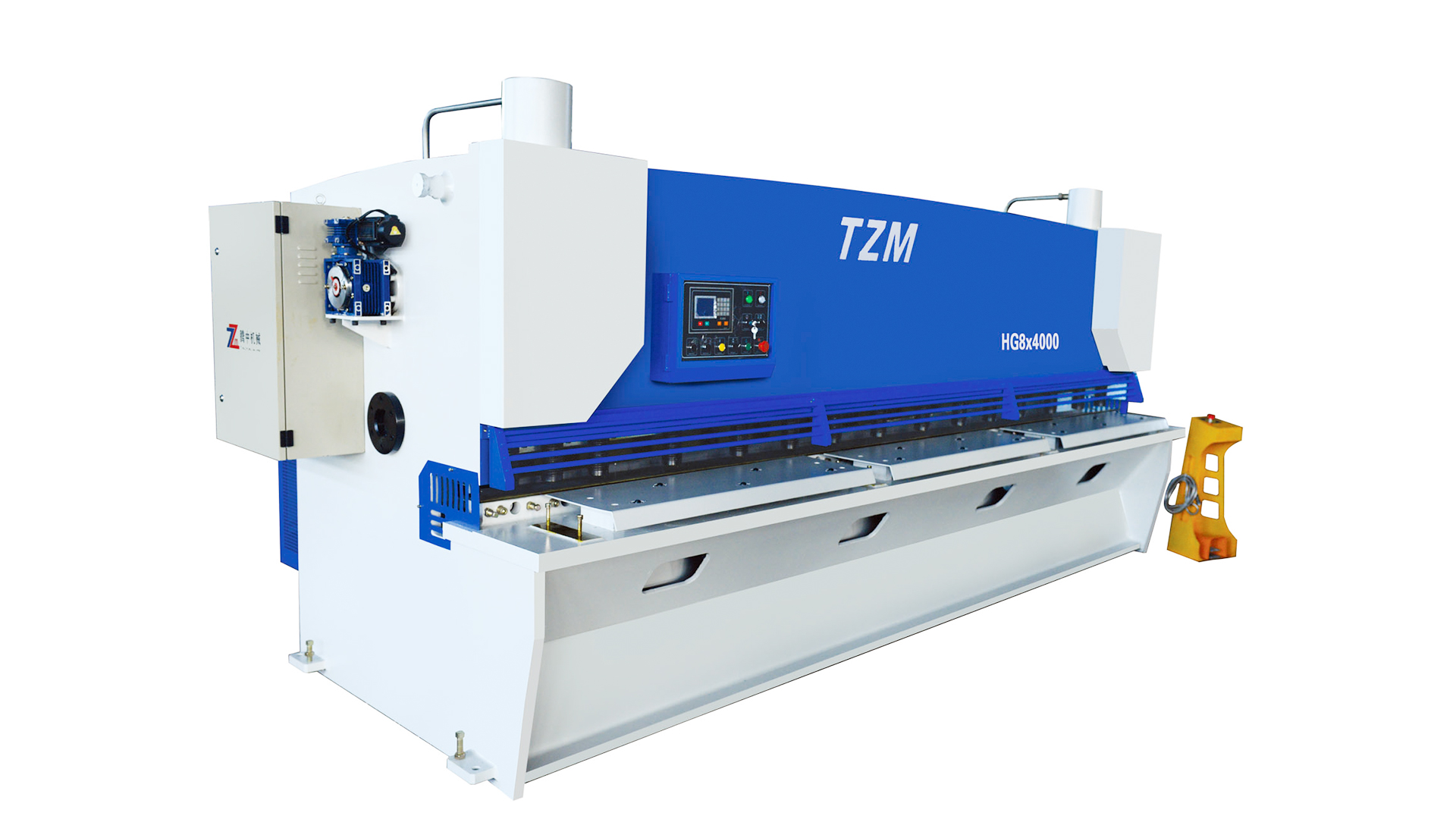
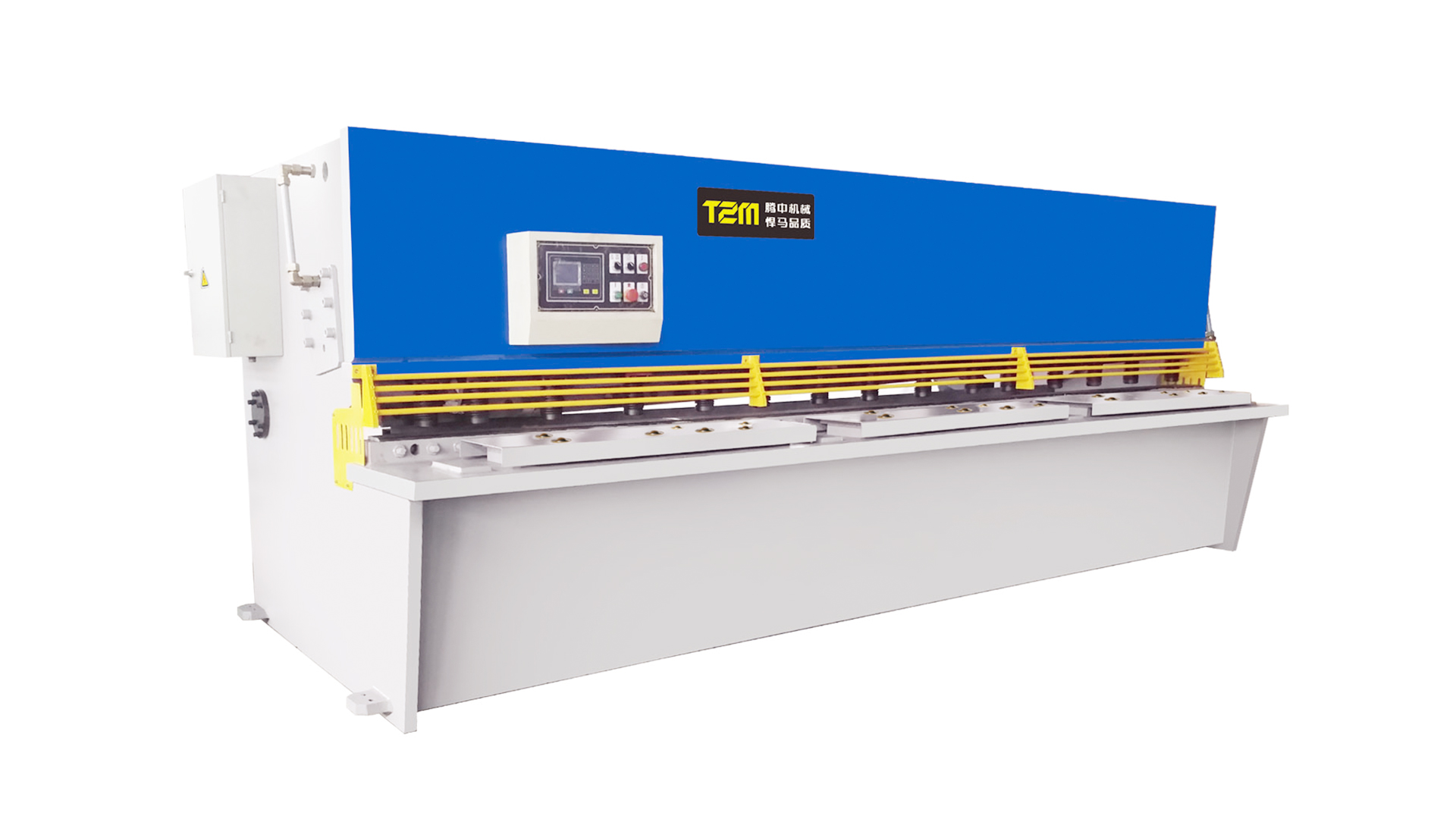
Guillotine shears represent the most common type, featuring a vertical cutting blade that moves straight down. These machines handle materials from thin foils up to 1-inch thick steel plates. The cutting capacity ranges from 4 feet to over 40 feet in width, with larger models found in steel service centers and shipbuilding facilities.
Alligator Shears
Named for their jaw-like appearance, alligator shears use a hinged cutting action where both blades move. These machines excel at cutting scrap metal, structural steel, and irregularly shaped materials. Scrap yards commonly use alligator shears to process up to 200 tons of metal daily, cutting through rebar, pipes, and angle iron with ease.
Bench Shears
Bench shears are compact, manually-operated tools suitable for light-duty work. Mounted on workbenches, they typically cut materials up to 16-gauge mild steel. Small fabrication shops and HVAC contractors favor these for their portability and zero operating costs.
Rotary Shears
Rotary shears use circular blades instead of straight edges, allowing for curved and irregular cuts. The continuous cutting action makes them 40% faster than guillotine shears for certain applications, particularly in automotive and aerospace industries where complex shapes are required.
| Shear Type | Max Thickness | Cutting Width | Typical Application |
|---|---|---|---|
| Guillotine | 1 inch | 4-40 feet | Sheet metal fabrication |
| Alligator | 3 inches | Variable | Scrap processing |
| Bench | 16 gauge | 12-36 inches | Light metalwork |
| Rotary | 0.5 inch | 6-12 feet | Curved cuts |
Industrial Applications and Materials
Shearing machines process a wide range of materials across numerous industries. In automotive manufacturing, they cut body panels and structural components from aluminum and high-strength steel. The appliance industry relies on shears to produce over 15 million refrigerator and washer panels annually in North America alone.
Material Compatibility
Different materials require specific blade angles and clearances for optimal results:
- Mild steel: The most commonly sheared material, requiring standard blade clearance of 6-8% of thickness
- Stainless steel: Demands sharper blades and 10-12% clearance due to work hardening properties
- Aluminum: Uses wider clearances (12-15%) and lower cutting angles to prevent material adhesion
- Copper and brass: Require frequent blade changes due to their abrasive nature
Construction companies use portable shearing equipment to cut roofing panels, siding, and metal decking on-site. HVAC contractors process ductwork from 24-gauge galvanized steel, making thousands of precise cuts per project without generating sparks or heat-affected zones.
Advantages Over Alternative Cutting Methods
Shearing offers distinct benefits compared to plasma cutting, laser cutting, or sawing. The process produces zero heat-affected zones, preserving material properties along the cut edge. This makes shearing ideal for applications where thermal distortion would compromise part accuracy or where subsequent welding is required.
Operating costs remain significantly lower than thermal cutting methods. A hydraulic shear consumes approximately 15 kilowatts during operation, while a comparable laser cutter requires 30-50 kilowatts. Over a year of operation, this translates to $8,000-$12,000 in energy savings for facilities running two shifts daily.
Speed advantages become apparent in high-volume production. Modern CNC shears complete cuts in 2-3 seconds, including material positioning. Laser cutting the same part might take 8-12 seconds, reducing throughput by 60-70%. For manufacturers producing thousands of identical parts, this efficiency directly impacts profitability.
Key Components and Features
Back Gauge System
The back gauge positions material accurately before cutting. Modern CNC back gauges achieve repeatability within ±0.004 inches, essential for maintaining tight tolerances across production runs. Multi-axis back gauges allow for angled cuts and complex part geometries without manual repositioning.
Blade Construction
Shear blades typically consist of tool steel with hardness ratings between 58-62 HRC. High-production environments use blades with hardened inserts or carbide edges that last 5-10 times longer than standard tool steel. Four-sided indexable blades reduce downtime by allowing operators to rotate to fresh cutting edges without removing the blade.
Safety Systems
Contemporary shearing machines incorporate multiple safety features mandated by OSHA and international standards. Light curtains detect operator intrusion and stop blade motion within milliseconds. Two-hand controls prevent accidental activation, while blade guards shield operators from flying debris and pinch points.
Selecting the Right Shearing Machine
Choosing appropriate shearing equipment depends on several factors. Material thickness determines required tonnage—a general rule estimates 1 ton of force per inch of mild steel width at quarter-inch thickness. A shop regularly cutting 10-foot-wide quarter-inch steel needs a minimum 120-ton shear.
Production volume influences whether mechanical or hydraulic drive makes economic sense. Mechanical shears cost 20-30% less initially but operate at fixed speeds. Hydraulic models provide variable speed control and easier maintenance, justifying higher prices in facilities running multiple shifts.
Accuracy requirements determine whether CNC controls are necessary. Manual back gauges suffice for rough cutting and scrap processing, achieving tolerances around ±0.030 inches. Parts requiring tighter specifications need CNC positioning, which adds $15,000-$50,000 to machine cost but eliminates measurement errors and reduces setup time by 75%.
- Calculate maximum material thickness and width needed
- Determine production volume and required cycle time
- Assess tolerance requirements for your applications
- Consider available floor space and power supply
- Evaluate long-term maintenance and blade replacement costs
Maintenance and Operational Considerations
Proper maintenance extends shear life and maintains cut quality. Hydraulic fluid should be changed every 2,000 operating hours or annually, whichever comes first. Contaminated fluid causes erratic ram movement and damages seals, leading to costly repairs averaging $3,000-$8,000.
Blade sharpening intervals depend on material type and production volume. Cutting mild steel, blades typically require sharpening after 40,000-60,000 cuts. Stainless steel reduces this to 20,000-30,000 cuts due to increased wear. Professional sharpening costs $200-$400 per blade set but restores performance to near-new condition.
Daily inspections should verify proper blade gap, back gauge accuracy, and safety system function. Weekly lubrication of gibs, wear plates, and pivot points prevents premature wear. Facilities implementing preventive maintenance schedules report 60% fewer unplanned shutdowns compared to those performing only reactive repairs.

-
Phone
+86 131-4173-2687
-
Address
6 Jianghai Road,Libao Town, Haian. Jiangsu Province, China
-
Medla

Copyright o Nantong Tengzhong Machinery Manufacturing Co., Ltd. All Rights Reserved.
