
 English
 русский
 Français
 Español
 Português
 عربى
عربى

-


Model:
-

Model:
-

Model:

How 4 Roller Rolling Machines Deliver Precision in Metal Forming
2026-04-10
Content
- 1 What Makes a 4 Roller Rolling Machine Different
- 2 The Rolling Process: From Pre-Bending to Final Form
- 3 How Roller Design and Material Affect Forming Accuracy
- 4 CNC Control Systems and Their Role in Precision
- 5 Material Compatibility and Thickness Range
- 6 Industrial Applications Where Precision Rolling Matters Most
What Makes a 4 Roller Rolling Machine Different
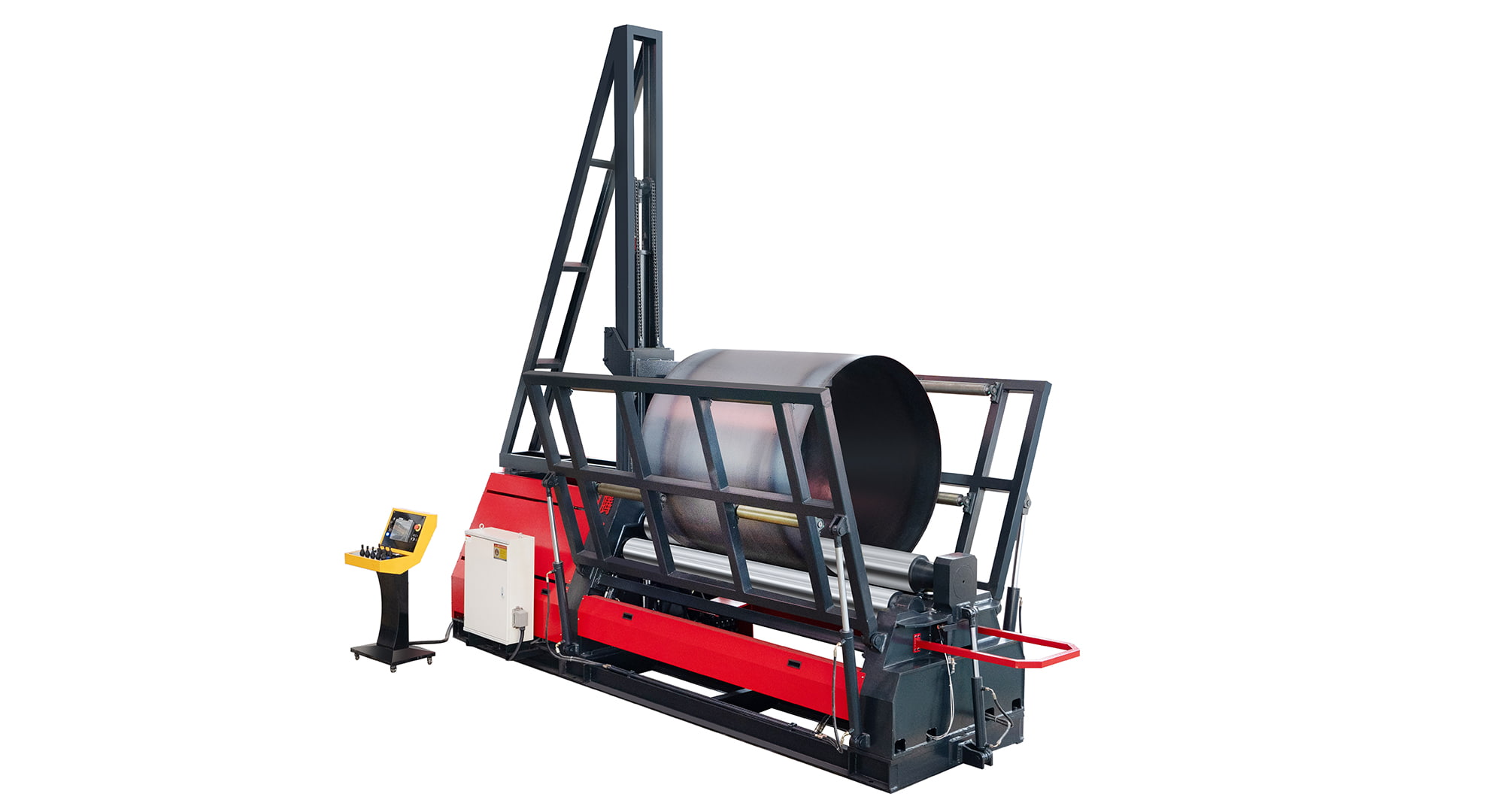
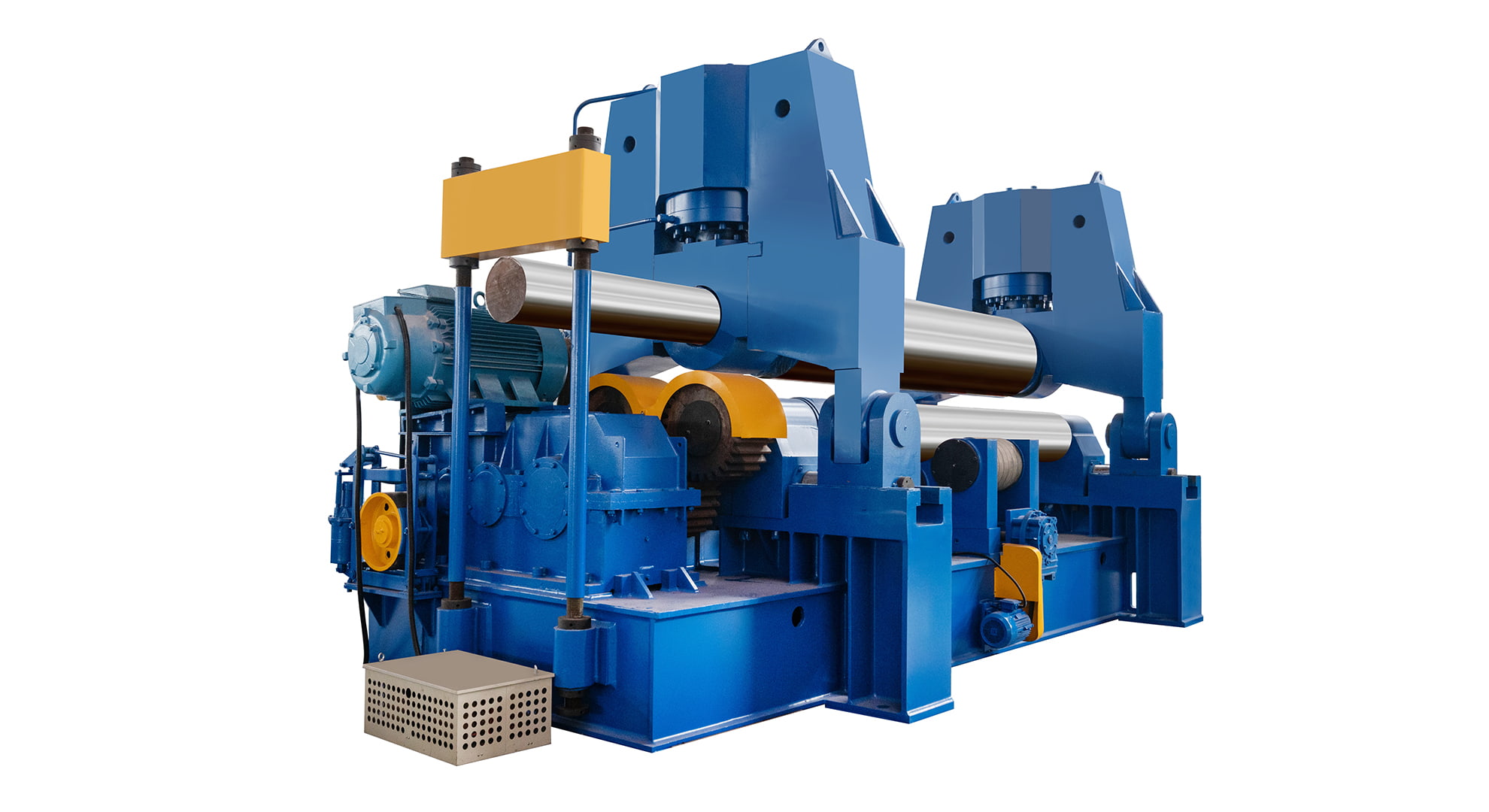
In metal forming, the difference between a three-roller and a four-roller plate rolling machine is not just structural—it fundamentally changes what you can achieve in terms of precision, efficiency, and material control. The 4 roller rolling machine adds a second side roller to the configuration, which enables the machine to clamp, pre-bend, and roll a metal plate in a single continuous pass without repositioning or flipping the workpiece.
This design advantage directly addresses the most persistent limitation of three-roller machines: the unavoidable flat edge left at both ends of a plate after rolling. With a four-roller setup, the upper and lower rollers clamp the plate securely while the side rollers apply lateral bending force to both ends simultaneously—eliminating the need for separate pre-bending fixtures or manual plate turning. The result is shorter straight edges, better roundness, and a significantly simplified workflow.
The machine consists of four main rollers: one upper roller that serves as the primary drive, one lower roller for clamping, and two independently adjustable side rollers that control bending radius and curvature. The upper roller is connected to a hydraulic motor and planetary gearbox, generating the torque needed to pull the plate through. The lower and side rollers are driven through friction and move vertically or horizontally under hydraulic cylinder control, allowing fine-tuned pressure adjustment without mechanical slippage.
The Rolling Process: From Pre-Bending to Final Form
Understanding exactly how a 4 roller rolling machine processes metal helps clarify why it delivers superior precision compared to simpler bending equipment. The process follows a defined sequence that minimizes manual intervention at each stage.
Step 1 – Plate Clamping
The metal plate is inserted between the upper and lower rollers. The lower roller moves upward under hydraulic pressure, clamping the plate tightly. This initial pinch establishes a fixed reference line and prevents the plate from slipping or shifting during subsequent bending operations. The clamping pressure can be precisely adjusted to match the plate's thickness and material grade.
Step 2 – End Pre-Bending
One side roller moves inward and upward against the edge of the clamped plate, applying bending force to eliminate the flat end section. This is repeated on the opposite end. Because the plate remains clamped throughout, both ends can be pre-bent accurately without flipping—a key efficiency advantage over three-roller machines, which require repositioning for each end.
Step 3 – Continuous Rolling
After pre-bending, the side rollers are repositioned to the target radius. The drive roller then rotates, feeding the plate through in a continuous arc. The three-point bending principle—with support at the upper roller and bending force applied via both side rollers—produces uniform curvature across the full plate length. Multiple passes can be made to gradually reduce the radius if required by material springback characteristics.
Step 4 – Calibration and Unloading
Once the target shape is achieved, the machine performs a calibration pass to correct any minor ovality or dimensional deviation. The front bearing body of the upper roller is then tipped open via a hydraulic cylinder, and the finished workpiece is extracted using the pusher device or hydraulic supports. The entire cycle—from loading to unloading—is completed in a single setup with no need for secondary fixturing.
How Roller Design and Material Affect Forming Accuracy
The precision of a 4 roller rolling machine is inseparable from the quality of its rollers. Rollers that are undersized, improperly hardened, or machined with insufficient tolerances will deflect under bending loads, transferring that deflection directly into the finished workpiece as uneven curvature or a visible flat spot at the plate edge.
High-performance machines use forged alloy steel rolls—typically 42CrMo—that are processed through a sequence including heat treatment, quenching and tempering, ultrasonic flaw detection, and precision CNC finishing. The working surface is induction hardened to HRC 54–58, then ground and polished to minimize friction and surface marking on the plate. Hardness is verified at multiple points along the roll length to confirm uniformity.
Roll diameter is a critical parameter. Larger-diameter rolls distribute bending loads over a greater surface area, reducing deflection during pre-bending and enabling a smaller achievable minimum bend radius. On premium machines, the minimum bend diameter approaches the diameter of the upper roller itself—a practical lower limit determined by the geometry of the three-point bending system. Machines with undersized or insufficiently rigid rolls cannot maintain this minimum without causing surface deformation or roller wear.
Roll crown—a slight convex taper machined into the roll profile—is another precision factor. Without crown compensation, the natural deflection of long rolls under load produces a plate that is thicker in cross-section at the center than at the edges. Crown geometry corrects for this by applying slightly more pressure at the center of the roll, producing a consistently formed workpiece across its full width. The appropriate crown value depends on the roll length, diameter, and typical working loads.
CNC Control Systems and Their Role in Precision
Modern 4 roller rolling machines integrate CNC or PLC control systems that replace manual roller adjustment with programmable, repeatable positioning. This shift has a measurable impact on both forming accuracy and production efficiency.
A typical CNC control interface—often a 7-inch touchscreen with multi-axis display—allows the operator to input parameters such as plate thickness, material grade, target bend radius, and roll diameter. The system calculates the required roller positions and feed rate automatically, then executes the rolling sequence with real-time feedback from position sensors. Advanced systems maintain roller alignment to a tolerance of ±0.10 mm, ensuring that the clamping pressure and bending force remain consistent from one pass to the next.
| Control Mode | Positioning Method | Typical Application |
|---|---|---|
| Manual | Operator-adjusted hydraulic valves | Low-volume, variable-radius jobs |
| Semi-Automatic (NC) | Pre-set parameters, operator-triggered | Medium-volume, repeat-radius production |
| Full Automatic (CNC) | Closed-loop sensor feedback, auto-compensation | High-volume, tight-tolerance components |
Full CNC machines also support conical bending programs, where the side rollers are set at a deliberate tilt relative to the upper roller axis. By adjusting the relative displacement of each end of the side roller independently, the machine produces a truncated cone rather than a cylinder—without requiring separate tooling or a fixture change. This capability is especially valuable in pressure vessel fabrication, where conical transition sections are common.
Material Compatibility and Thickness Range
A 4 roller rolling machine can process a broad range of metallic materials, including carbon steel, stainless steel, aluminum alloys, copper, and titanium. The key variable is yield strength: higher-strength materials require greater bending force and typically exhibit more springback, which must be compensated by overbending the plate slightly beyond the target radius.
Commercially available machines cover plate thicknesses from approximately 2 mm to 44 mm and plate widths from 1,200 mm to 4,000 mm, with larger custom configurations available for heavy industrial applications. The rolling speed of the upper drive roller is typically adjustable in the range of 0–3.3 m/min, allowing the operator to slow the feed rate when working with thicker or harder materials that require additional force to deform plastically.
Material behavior during bending depends on two key mechanical properties: yield strength (the stress at which plastic deformation begins) and elongation (how much the material can stretch before fracturing). Metals with high elongation values—such as low-carbon steel and aluminum—are forgiving and easy to roll. High-strength steels and hardened alloys require careful control of bending radius, roller pressure, and rolling speed to avoid cracking at the outer surface or wrinkling on the inner surface of the formed section.
Industrial Applications Where Precision Rolling Matters Most
The precision characteristics of 4 roller rolling machines make them the preferred forming solution in industries where dimensional tolerance, surface quality, and structural integrity are non-negotiable. Several sectors rely on this equipment as a core production step.
Pressure Vessels and Boilers: Shell sections must meet strict roundness tolerances and weld-joint alignment requirements. A poorly formed shell introduces stress concentrations at welds, which are critical failure points under cyclic pressure loading. Four-roller machines produce shell sections with consistent roundness, minimizing rework before welding.
Shipbuilding: Hull sections, deck plating, and pipe spools require precise curvature over long plate lengths. The ability to roll large-format plates—up to 4,000 mm wide—without repositioning is a direct efficiency advantage in shipyard fabrication environments.
Oil, Gas, and Chemical Processing: Storage tanks, reactors, and heat exchanger shells are fabricated from rolled plate. Corrosion-resistant alloys such as stainless steel and duplex grades are common in this sector, and their higher strength demands the precision clamping and force control that four-roller machines provide.
Steel Structure and Construction: Curved structural elements—arches, rings, curved beams—are produced by rolling flat plate or profile sections. Consistent forming accuracy reduces the amount of correction required during assembly, which is critical on large civil or industrial structures where dimensional errors accumulate across many components.
Aerospace and Defense: Fuselage frames, pressure bulkheads, and structural rings demand both high forming accuracy and excellent surface finish. The polished rolls and controlled clamping pressure of quality four-roller machines minimize surface marking and work hardening, preserving the material properties needed for these demanding applications.

-
Phone
+86 131-4173-2687
-
Address
6 Jianghai Road,Libao Town, Haian. Jiangsu Province, China
-
Medla

Copyright o Nantong Tengzhong Machinery Manufacturing Co., Ltd. All Rights Reserved.
