
 English
 русский
 Français
 Español
 Português
 عربى
عربى

-


Model:
-

Model:
-

Model:

Boosting Efficiency: The Role of 4-Roller Rolling Machines in Modern Manufacturing
2026-04-03
Content
- 1 What Is a 4-Roller Rolling Machine?
- 2 How 4-Roller Machines Boost Manufacturing Efficiency
- 3 4-Roller vs. 3-Roller: A Direct Comparison
- 4 Key Industries That Rely on 4-Roller Rolling Machines
- 5 Selecting the Right 4-Roller Rolling Machine
- 6 Maintenance Practices That Protect Efficiency Gains
- 7 The Future of 4-Roller Rolling in Smart Manufacturing
In today's competitive manufacturing environment, productivity gains are not optional—they are survival requirements. 4-roller rolling machines have emerged as one of the most impactful upgrades a metal fabrication facility can make, delivering measurable improvements in cycle time, dimensional accuracy, and operator safety. This article explores how these machines work, why they outperform traditional 3-roller designs, and which industries benefit most from their adoption.
What Is a 4-Roller Rolling Machine?
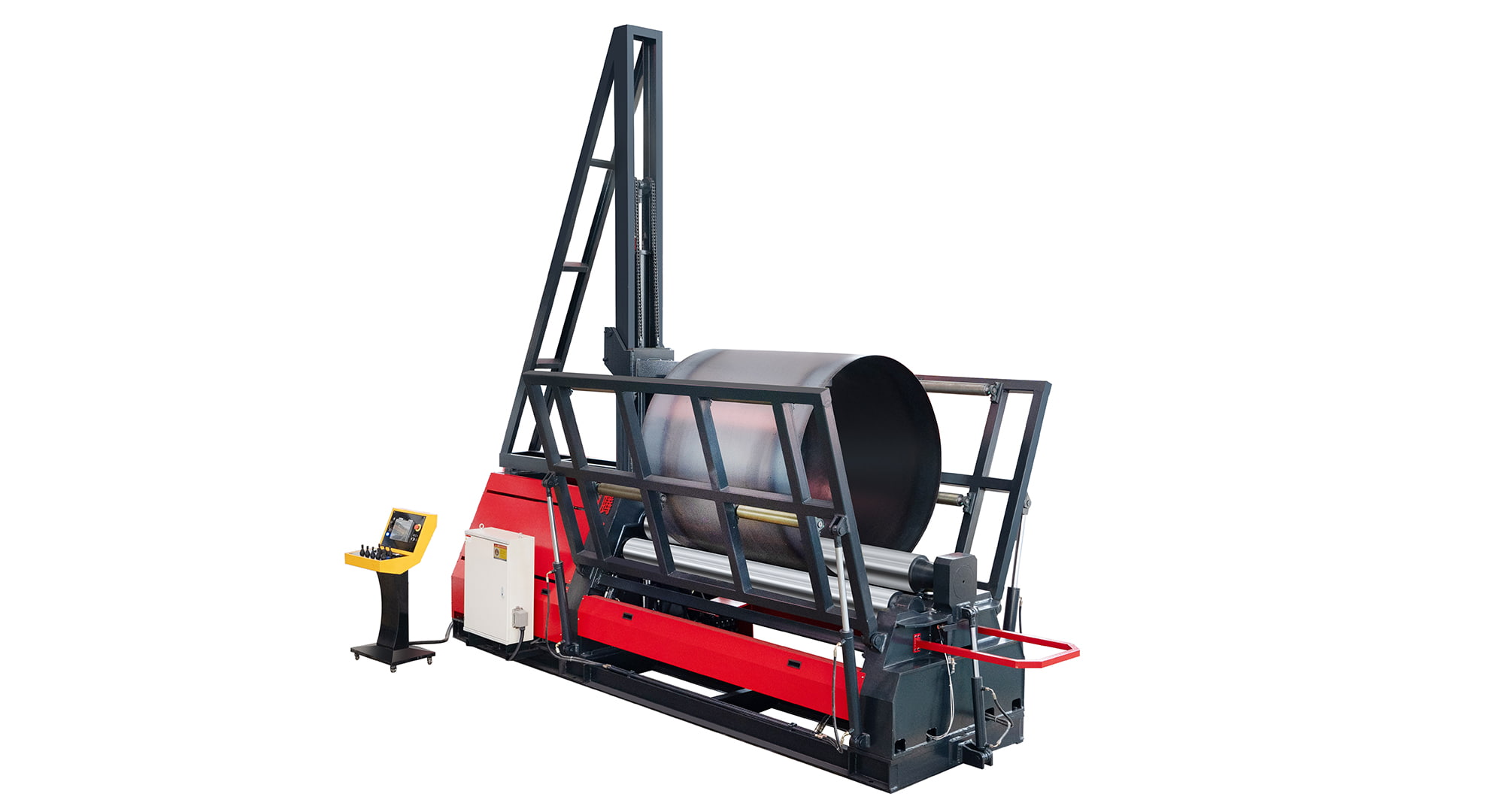
A 4-roller rolling machine—also called a 4-roll plate bending machine or 4-roll plate roll—is a metal-forming machine used to curve flat sheet metal or plate into cylindrical, conical, or complex curved profiles. As the name implies, it uses four rolls in a specific geometric arrangement: one top (main bending) roll, one bottom (drive) roll, and two side (pre-bending) rolls.
This configuration allows the machine to grip the workpiece firmly between the top and bottom rolls while the two side rolls independently move up or down to create the desired bend radius. The key advantage over a 3-roller machine is the ability to pre-bend both leading and trailing edges of the plate in a single clamped setup, eliminating the need to flip or reposition the material mid-process.
Modern 4-roller machines are typically equipped with hydraulic or servo-hydraulic drives and CNC (Computer Numerical Control) systems that allow operators to program bending sequences, store job parameters, and monitor real-time feedback during the rolling operation.
How 4-Roller Machines Boost Manufacturing Efficiency
Single-Pass Pre-Bending
One of the most significant efficiency gains comes from the ability to pre-bend both ends of the plate without removing it from the machine. With a traditional 3-roller machine, operators must manually reposition the plate to address flat edges left at each end. This repositioning step adds labor time, increases the risk of misalignment, and demands greater operator skill. A 4-roller machine eliminates this step entirely—the side rolls handle edge pre-bending while the plate remains clamped, enabling some bending cycles to be completed in a single pass.
Up to 50% Reduction in Cycle Time
Industry data consistently supports the productivity advantage. Efficiency can increase by as much as 50% on a 4-roll machine compared to a 3-roll counterpart, largely because the workpiece remains secure in the machine throughout the entire operation. This continuous clamping also reduces the number of operators needed per machine—horizontal plate loading, for example, can eliminate the need for crane-assisted positioning on smaller-to-mid-sized jobs.
Reduced Flat Spots and Tighter Tolerances
The constant pinch-and-drive pressure applied by the four rolls minimizes material slippage and flat spots—particularly important when rolling full cylinders or conical shapes. This translates directly into tighter dimensional tolerances, fewer rejected parts, and less rework. For manufacturers serving industries with strict quality standards (such as pressure vessel fabrication or aerospace), this precision advantage is not merely convenient—it is essential.
CNC Automation and Repeatability
Modern 4-roller machines are designed to accept advanced CNC control units. Operators can store repeatable rolling sequences, dial in specific bend radii for different material thicknesses, and retrieve job programs for repeat orders. This programmability is especially valuable in high-mix, medium-volume production environments where setup time between jobs can otherwise erode productivity gains.
4-Roller vs. 3-Roller: A Direct Comparison
| Feature | 3-Roller Machine | 4-Roller Machine |
|---|---|---|
| Pre-bending both edges | Requires repositioning | Single clamped setup |
| Flat-spot control | Moderate | Superior |
| Cone rolling | Complex (angular bearings) | Simplified (cone shoe / snubber) |
| Operator skill required | Higher | Lower (secure clamping) |
| CNC integration | Limited | Excellent (unique clamping aids automation) |
| Loading method | Angled feed (less safe) | Horizontal loading (safer) |
| Upfront cost | Lower | Higher (better long-term ROI) |
Key Industries That Rely on 4-Roller Rolling Machines
Pressure Vessel and Tank Manufacturing
Pressure vessel fabrication demands extremely tight roundness tolerances and consistent wall thickness. The 4-roller machine's superior pinch control and flat-spot minimization make it the preferred choice for rolling cylindrical shells destined for boilers, storage tanks, and chemical reactors—components where dimensional deviation can have serious safety consequences.
Shipbuilding
Shipyards regularly roll thick steel plates into curved hull sections, pipe segments, and structural frames. The 4-roller machine's ability to handle heavy plate gauges in a single pass—combined with horizontal loading that reduces crane dependency—significantly compresses fabrication timelines. Consistent curvature across large plate runs also reduces fit-up corrections during hull assembly.
Automotive and Aerospace
In sectors where quick turnaround and part consistency are non-negotiable, 4-roller machines provide a strategic edge. Their CNC programmability supports rapid changeover between part numbers, and their tight tolerance capability reduces post-bending inspection and rework—cost factors that compound quickly at production volumes.
Steel Structure and Construction
Curved beams, arched structural elements, and decorative architectural metalwork all benefit from the 4-roller machine's versatility. The ability to program variable radius bends and handle 3D profile shapes opens up design possibilities that would be impractical on conventional machines.
Selecting the Right 4-Roller Rolling Machine
Choosing the right machine requires a structured evaluation of your production requirements. The following factors should guide the decision:
- Material type and thickness range: Verify that the machine's rated bending force covers your thickest and hardest material grade. Mild steel, stainless steel, and aluminum have significantly different bending force requirements.
- Maximum plate width: Ensure the rolling width accommodates your widest workpiece with sufficient margin to prevent edge deflection.
- Minimum bending diameter: This is determined by the top roll diameter. Confirm the machine can achieve your tightest required radius without deforming the roll surface.
- CNC control sophistication: For multi-job shops, look for controllers that support recipe storage, real-time radius feedback, and easy operator interfaces.
- Drive system: Hydraulic drives offer high bending force for thick plates; electric servo drives offer quieter, more energy-efficient operation and are increasingly common for thin-to-medium plate applications.
- After-sales support: Prioritize suppliers offering comprehensive warranties, available spare parts, and responsive technical service—downtime on a rolling machine can stall an entire production line.
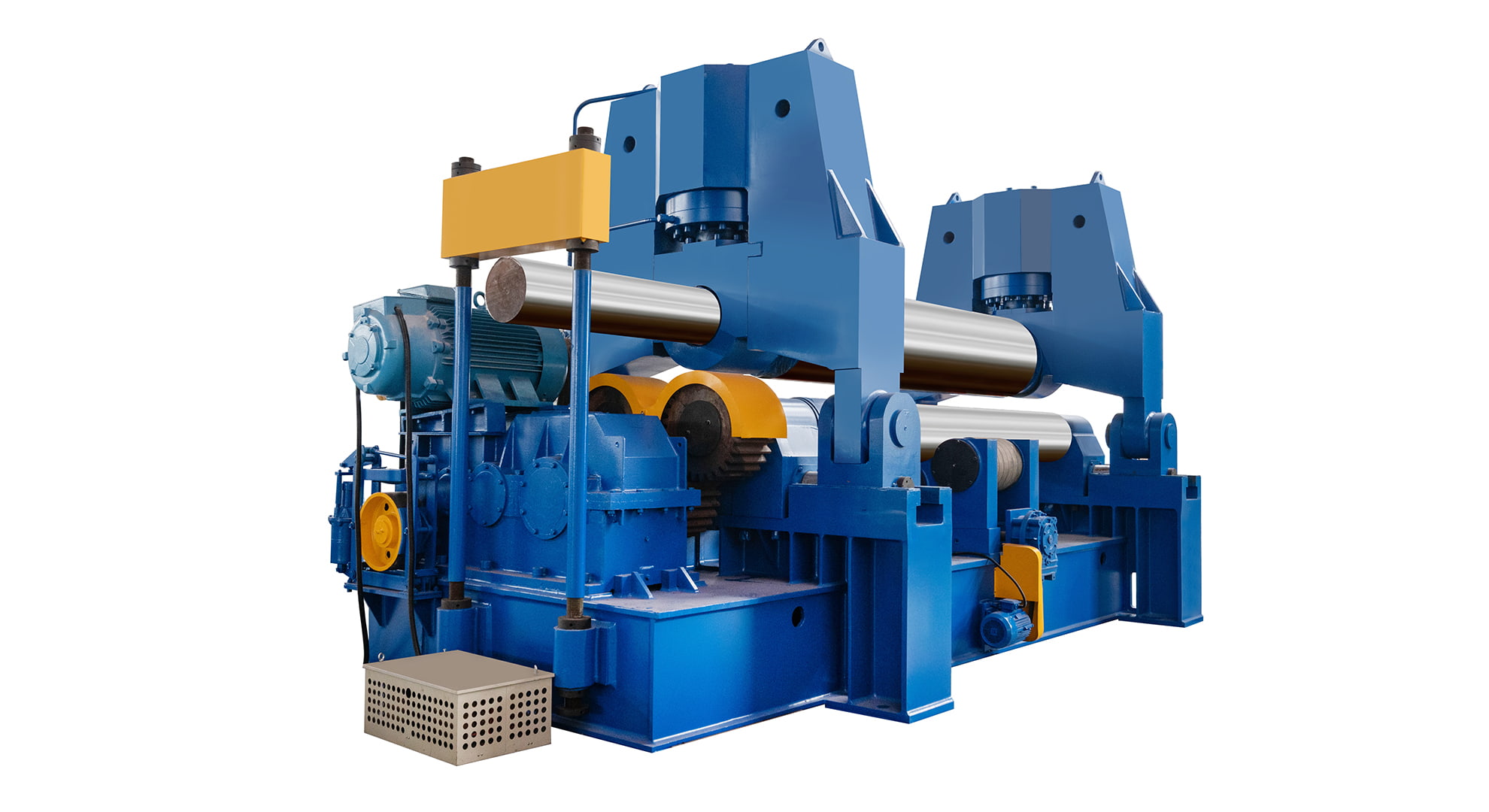
At Tengzhong Machinery, our hydraulic 4-roller plate rolling machines are engineered for reliability across the full spectrum of industrial applications. Each machine is built to exacting tolerances and backed by comprehensive after-sales support.
Maintenance Practices That Protect Efficiency Gains
A 4-roller rolling machine is a long-term capital investment—its efficiency advantages only materialize if the machine is properly maintained. Establishing a disciplined preventive maintenance schedule is essential:
- Inspect roller alignment regularly to ensure bending uniformity and prevent uneven wear patterns that lead to product defects.
- Clean the machine after each production run to remove metal filings, scale, and lubricant residue that can accelerate component wear.
- Monitor hydraulic fluid levels and pressure readings to detect internal leaks or pump degradation before they cause precision loss or downtime.
- Lubricate roll bearings and guide rails on the manufacturer's recommended schedule—neglecting this single step is a leading cause of premature bearing failure.
- Periodically verify CNC calibration against reference workpieces to ensure programmed parameters continue to deliver accurate results in practice.
Machines equipped with IoT-enabled monitoring modules can automate much of this oversight, sending real-time alerts when operating parameters drift outside acceptable ranges. This capability is becoming increasingly standard on premium 4-roller machines and represents a meaningful advantage for facilities running multiple shifts.
The Future of 4-Roller Rolling in Smart Manufacturing
The integration of 4-roller rolling machines into smart manufacturing ecosystems is accelerating. Upcoming developments include real-time radius self-correction systems that automatically adjust side roll positions mid-bend based on sensor feedback, eliminating the trial-and-error passes that even experienced operators rely on. Autonomous bending routines—already available on select high-end models—allow machines to execute complete rolling cycles without continuous operator intervention, supporting lights-out manufacturing during off-shifts.
Energy efficiency is also improving. The new generation of electric-drive 4-roller machines reduces hydraulic oil dependency, lowers operating costs, and shrinks the environmental footprint of the bending process—a growing priority for manufacturers navigating tightening sustainability requirements in global supply chains.
For manufacturers evaluating their plate rolling capabilities, the question is increasingly not whether to adopt 4-roller technology, but how quickly they can integrate it. Explore our full range of plate rolling machines and hydraulic metal forming equipment to find the right configuration for your production environment.

-
Phone
+86 131-4173-2687
-
Address
6 Jianghai Road,Libao Town, Haian. Jiangsu Province, China
-
Medla

Copyright o Nantong Tengzhong Machinery Manufacturing Co., Ltd. All Rights Reserved.
