
 English
 русский
 Français
 Español
 Português
 عربى
عربى

-


Model:
-

Model:
-

Model:

Boosting Efficiency: Tips to Maximize Output with 3 Roller Rolling Machines
2026-04-23
Content
- 1 Understand the Machine's Structural Limits First
- 2 Optimize Roller Gap and Pressure Settings Before Each Run
- 3 Master Pre-Bending to Reduce Flat-End Waste
- 4 Keep the Feed Process Smooth and Consistent
- 5 Implement a Structured Lubrication and Maintenance Schedule
- 6 Train Operators on the Full Control System
- 7 Match the Machine to the Job
- 8 Conclusion
A 3 roller rolling machine is a proven workhorse in metal fabrication—cost-effective, versatile, and capable of handling a wide range of plate thicknesses and materials. But like any machine, its output is only as good as how it is operated and maintained. If you are looking to get more parts per shift without sacrificing quality, these practical tips will help you close the gap between rated capacity and actual production.
Understand the Machine's Structural Limits First
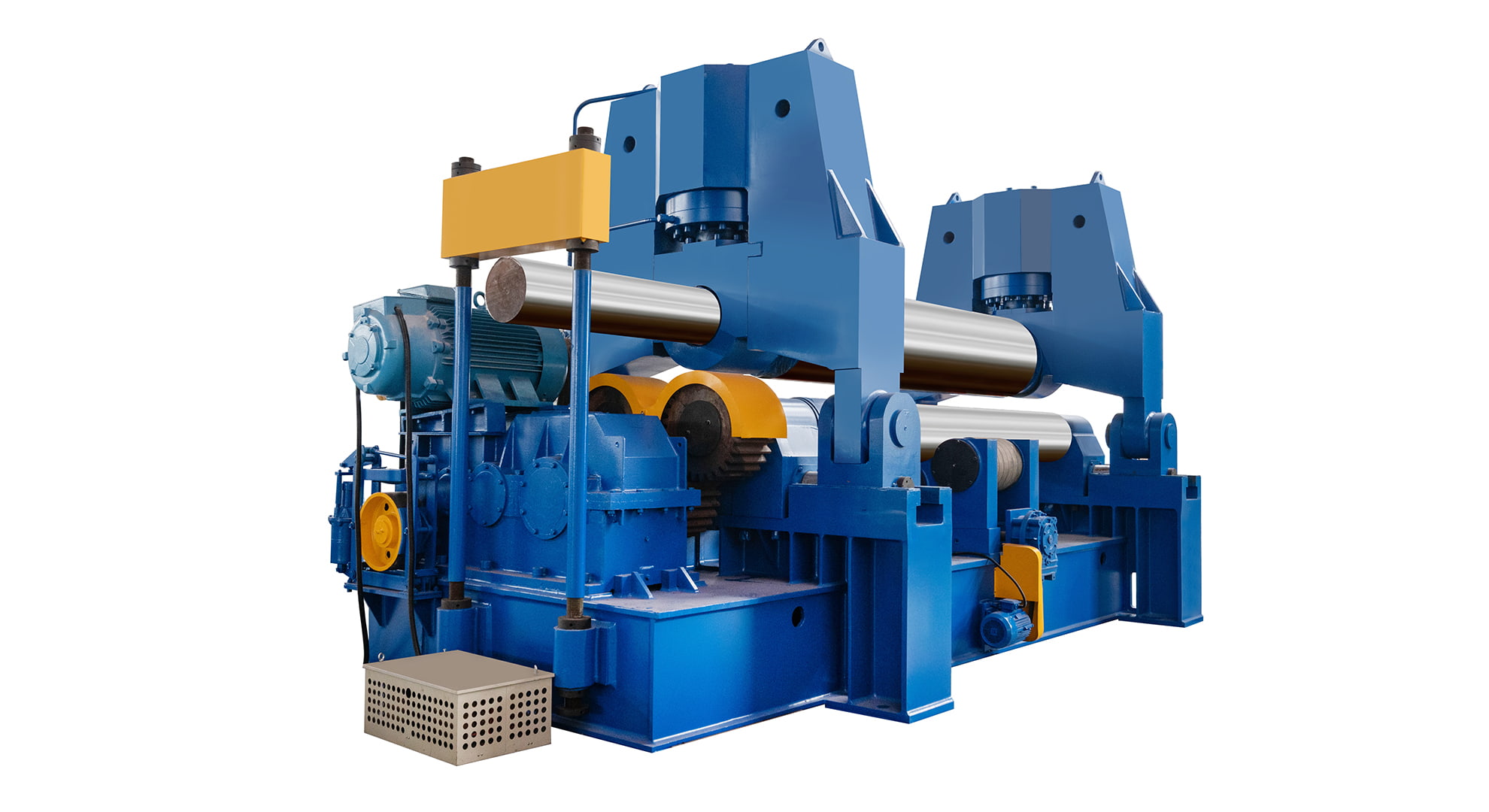
Before optimizing anything, operators must have a clear grasp of what the machine can realistically do. A 3 roller rolling machine uses a symmetrical or asymmetrical roller arrangement to apply continuous bending force as the plate passes through. The upper roller applies downward pressure while the two lower rollers provide drive torque and support.
Key parameters to know for your specific model include rated bending capacity (plate thickness × width), minimum bending diameter, motor power, and working speed. Operating consistently at or near the rated limit accelerates roller wear and increases the chance of workpiece distortion. A practical rule: keep daily loads at 80–90% of rated capacity to preserve both machine life and dimensional accuracy.
Optimize Roller Gap and Pressure Settings Before Each Run
One of the most common causes of rework and scrap is skipping the setup verification step between jobs. Different plate materials—carbon steel, stainless steel, aluminum—have significantly different yield strengths and springback characteristics. A gap and pressure setting dialed in for mild steel will produce oversized cylinders when used on aluminum without adjustment.
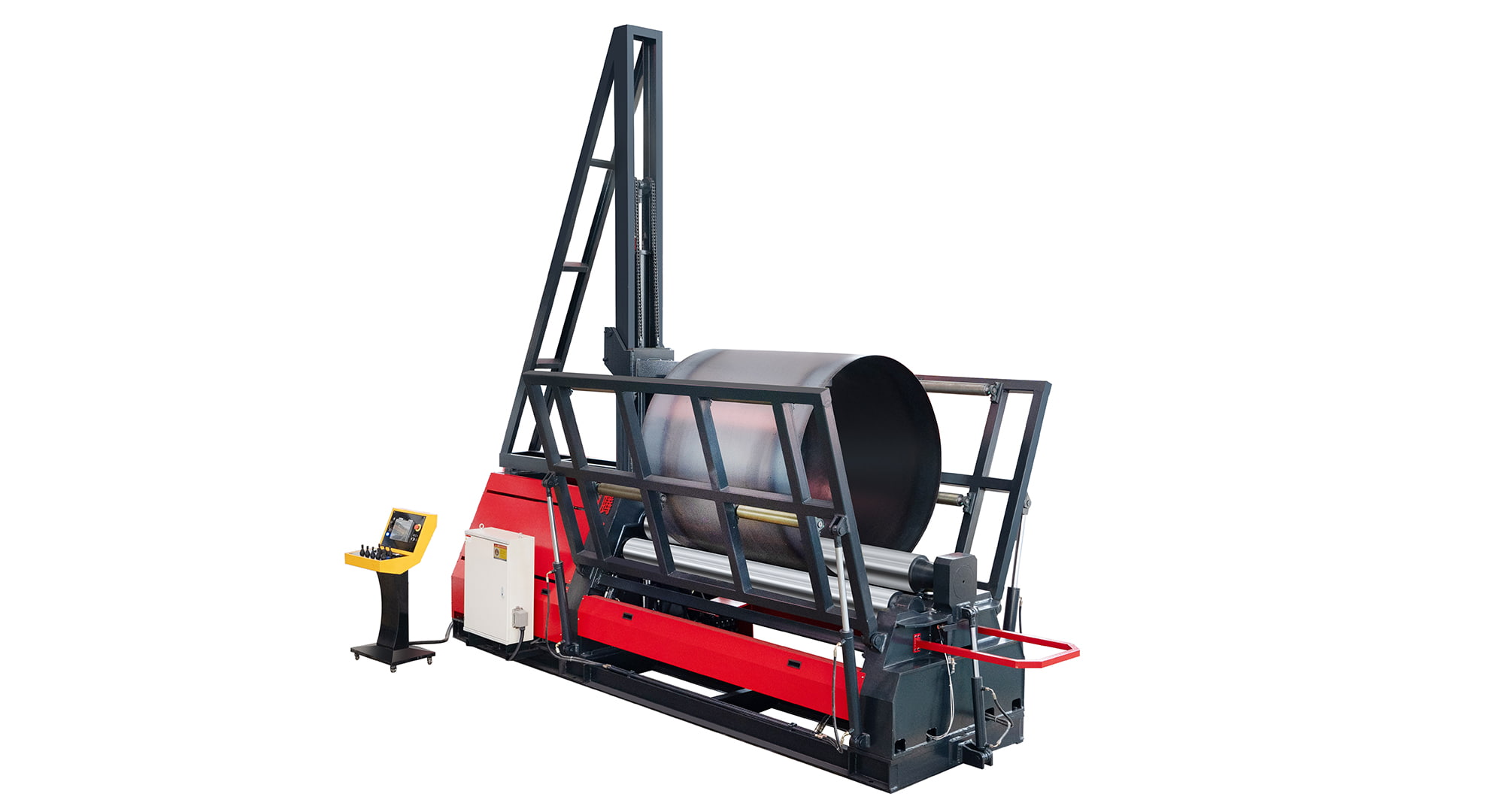
For the hydraulic 3 roller rolling machine, the CNC touch screen allows operators to input and store process parameters including upper roller displacement (Y-axis) and horizontal movement (X-axis). Taking five minutes to load a saved parameter set—rather than guessing—eliminates trial-and-error passes and recovers significant productive time across a full shift.
- Use saved CNC parameter sets for repeat jobs to eliminate setup guesswork.
- Always run a test pass on a scrap piece when switching to a new material grade.
- Account for springback by slightly over-bending, then measuring and correcting.
Master Pre-Bending to Reduce Flat-End Waste
The flat edge left at each end of a rolled plate is an inherent limitation of the 3-roller design. On a symmetrical machine, this unbent section can equal roughly half the distance between the two lower rollers. On asymmetric and hydraulic models, horizontal movement of the upper roller allows pre-bending of each end before the main rolling pass, substantially reducing this flat zone.
Operators who skip or rush pre-bending end up with longer flat sections that either require rework or result in scrap. A disciplined pre-bend routine—even if it adds one to two minutes per part—pays back in fewer rejected pieces and less secondary work. For high-volume runs on a plate rolling machine, this single habit can improve yield by a measurable margin.
Keep the Feed Process Smooth and Consistent
Uneven feeding is a leading cause of out-of-round cylinders and surface marking. Plates should enter the rollers square to the roll axis. Even a small angular misalignment of the plate at the start of the pass will produce a conical result instead of a true cylinder—requiring correction passes or outright rejection.
Practical steps for consistent feeding:
- Use guide stops or backstops where available to ensure square plate entry.
- Support the plate adequately on both the infeed and outfeed sides to prevent sagging, which causes uneven bending pressure.
- For long or heavy plates, assign a second operator or use roller conveyors to maintain controlled, stable material movement.
- Avoid sudden starts and stops mid-pass; maintain a steady, consistent roller speed throughout.
Implement a Structured Lubrication and Maintenance Schedule
Unplanned downtime from mechanical failure costs far more in lost output than scheduled maintenance ever will. The main wear points on a 3 roller rolling machine include roller bearings, drive gears, the main reducer, and sliding surfaces on the lower roller bearing seats.
A consistent lubrication routine is the single highest-return maintenance action available. Regular greasing of roller bearings ensures smooth operation and prevents the metal-on-metal contact that accelerates wear and increases rolling resistance—which in turn forces the machine to work harder and consume more energy per cycle.
Additional maintenance priorities to schedule:
- Inspect roller surfaces periodically for scoring, pitting, or uneven wear—surface defects transfer directly to the workpiece finish.
- Check hydraulic system pressure and fluid condition regularly; degraded fluid reduces actuation precision.
- Verify the PLC and electrical control system for relay wear and connection integrity—fewer relay failures mean more uptime.
- Confirm the tipping device and balancing device operate freely so finished parts can be removed without delay.
Train Operators on the Full Control System
A machine with CNC capability that is operated manually by habit is a machine running at half its potential. Modern hydraulic 3 roller rolling machines include real-time monitoring via touch screen, in-place control for precise roller positioning, and handheld remote control for safe operation during the rolling pass. Operators who are fully trained on these features achieve tighter tolerances and faster cycle times than those working from muscle memory alone.
Practical training investment areas:
- Reading and interpreting real-time displacement data from the touch screen during rolling.
- Setting and recalling stored parameter programs for different material and thickness combinations.
- Using the wireless remote controller correctly to maintain safe positioning relative to the moving plate.
A trained operator reduces the number of correction passes per part, catches setup errors before material is consumed, and completes the full rolling cycle—including pre-bending and part removal via the tipping device—with less dead time between pieces.
Match the Machine to the Job
Efficiency is also a question of job selection. A 3 roller rolling machine excels at medium-volume production of cylinders, arcs, and conical shapes from a wide range of plate thicknesses and materials. It is well-suited for shipbuilding, boiler fabrication, chemical vessel construction, steel structure work, and general metal fabrication where budget and flexibility are prioritized.
For jobs that demand very high precision, minimum flat-end length, or continuous CNC-controlled multi-pass forming, understand where the 3-roller design is the right tool and where it is being pushed beyond its optimal range. Routing the right jobs to the right machine keeps both output rates and quality where they need to be. Explore the full range of available plate rolling machines to ensure each production requirement is matched to the appropriate equipment.
Conclusion
Maximizing output from a 3 roller rolling machine is not about pushing harder—it is about working smarter. Consistent setup discipline, proper pre-bending technique, square material feeding, regular maintenance, and fully trained operators each contribute a measurable share of the efficiency gains available. Together, they allow a well-maintained machine to deliver reliable output, longer service life, and lower cost per part across every shift.

-
Phone
+86 131-4173-2687
-
Address
6 Jianghai Road,Libao Town, Haian. Jiangsu Province, China
-
Medla

Copyright o Nantong Tengzhong Machinery Manufacturing Co., Ltd. All Rights Reserved.
